Department of Microbiology and Immunology, Faculty of Pharmacy, Zagazig University, Zagazig, Egypt.
PLoS One. 2020 Apr 16;15(4):e0231625. doi: 10.1371/journal.pone.0231625. eCollection 2020.
Serratia marcescens is an emerging pathogen that causes a variety of health care associated infections. S. marcescens is equipped with an arsenal of virulence factors such as biofilm formation, swimming and swarming motilities, prodigiosin, protease and others which enable it to initiate and cause the infection. These virulence factors are orchestrated under the umbrella of an intercellular communication system named Quorum sensing (QS). QS allows bacterial population to synchronize the expression of virulence genes upon detection of a chemical signaling molecule. Targeting bacterial virulence is a promising approach to attenuate bacteria and enhances the ability of immune system to eradicate the bacterial infection. Drug repurposing is an advantageous strategy that confers new applications for drugs outside the scope of their original medical use. This promising strategy offers the use of safe approved compounds, which potentially lowers the costs and shortens the time than that needed for development of new drugs. Sitagliptin is dipeptidyl peptidase-4 (DPP-4) inhibitor, is used to treat diabetes mellitus type II as it increases the production of insulin and decreasing the production of glucagon by the pancreas. We aimed in this study to repurpose sitagliptin, investigating the anti-virulence activities of sitagliptin on S. marcescens.
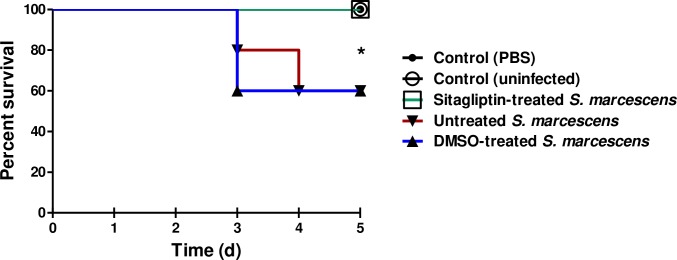
The effect of sub-inhibitory concentrations of sitagliptin on virulence factors; protease, prodigiosin, biofilm formation, swimming and swarming motilities was estimated phenotypically. The qRT-PCR was used to show the effect of sitagliptin on the expression of QS-regulated virulence genes. The in-vivo protective activity of sitagliptin on S. marcescens pathogenesis was evaluated on mice.
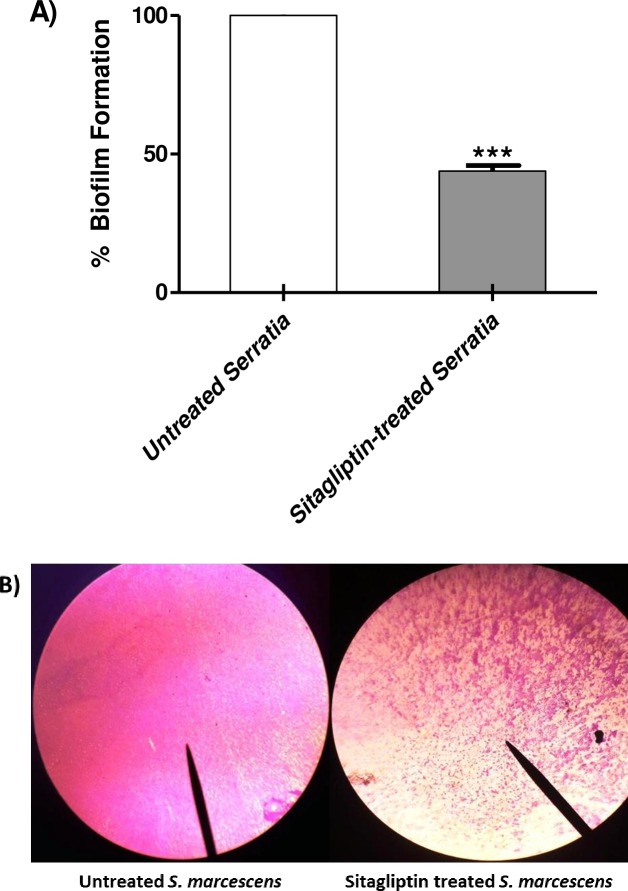
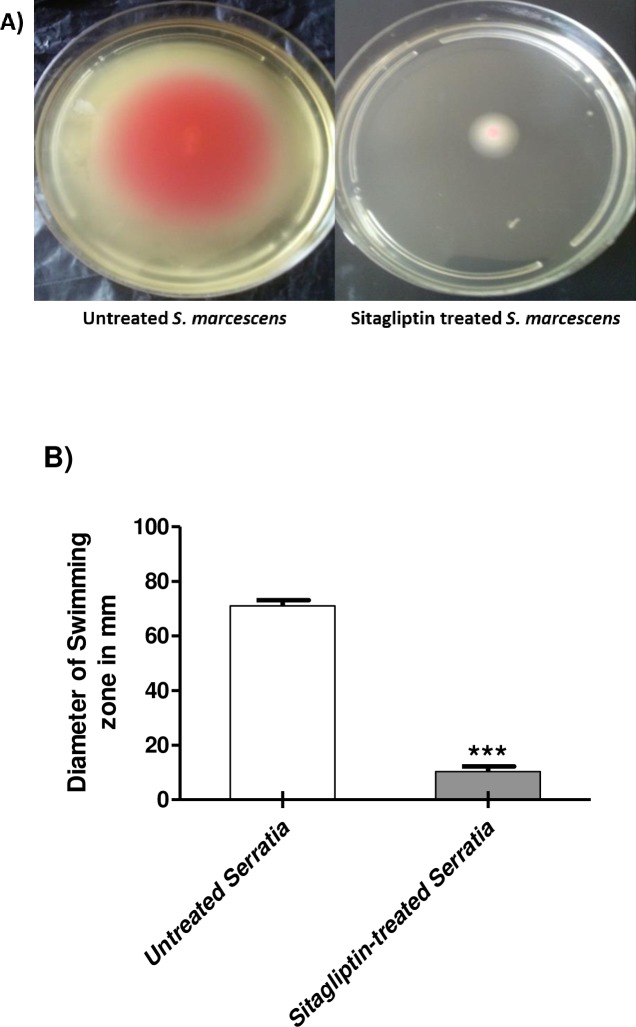
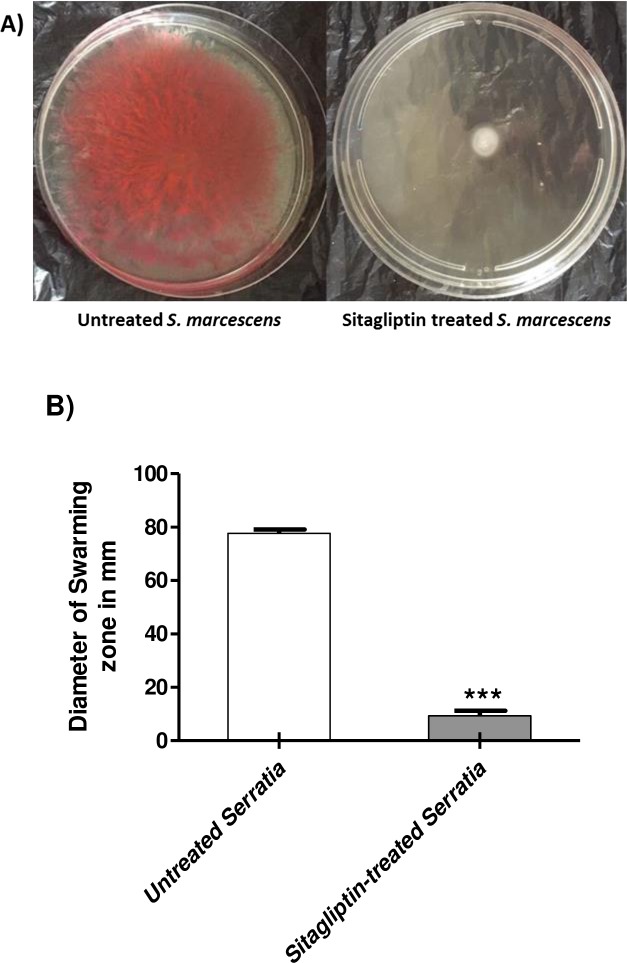
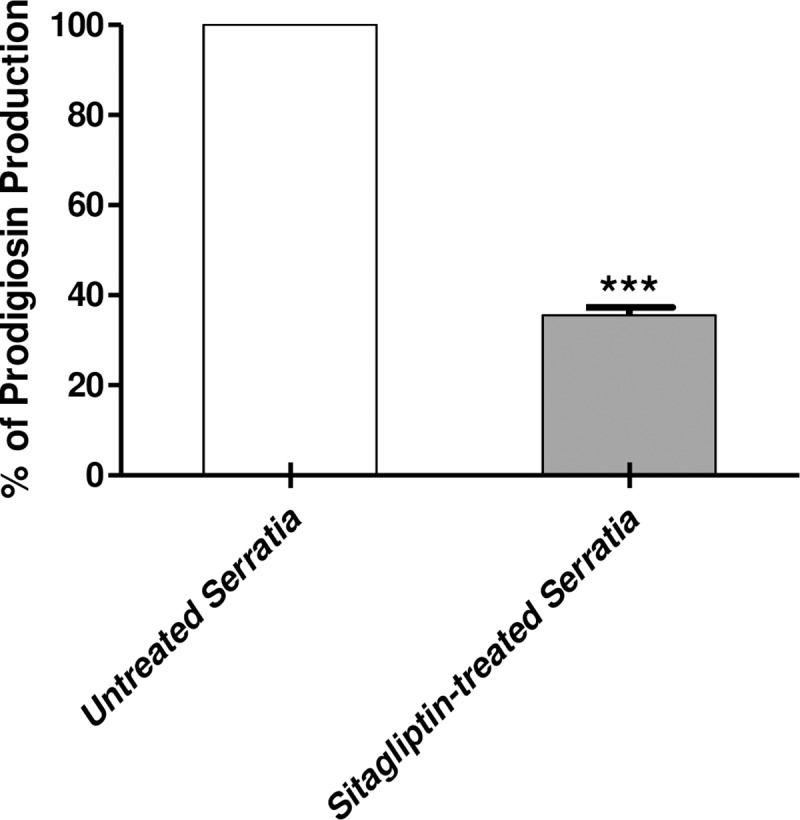
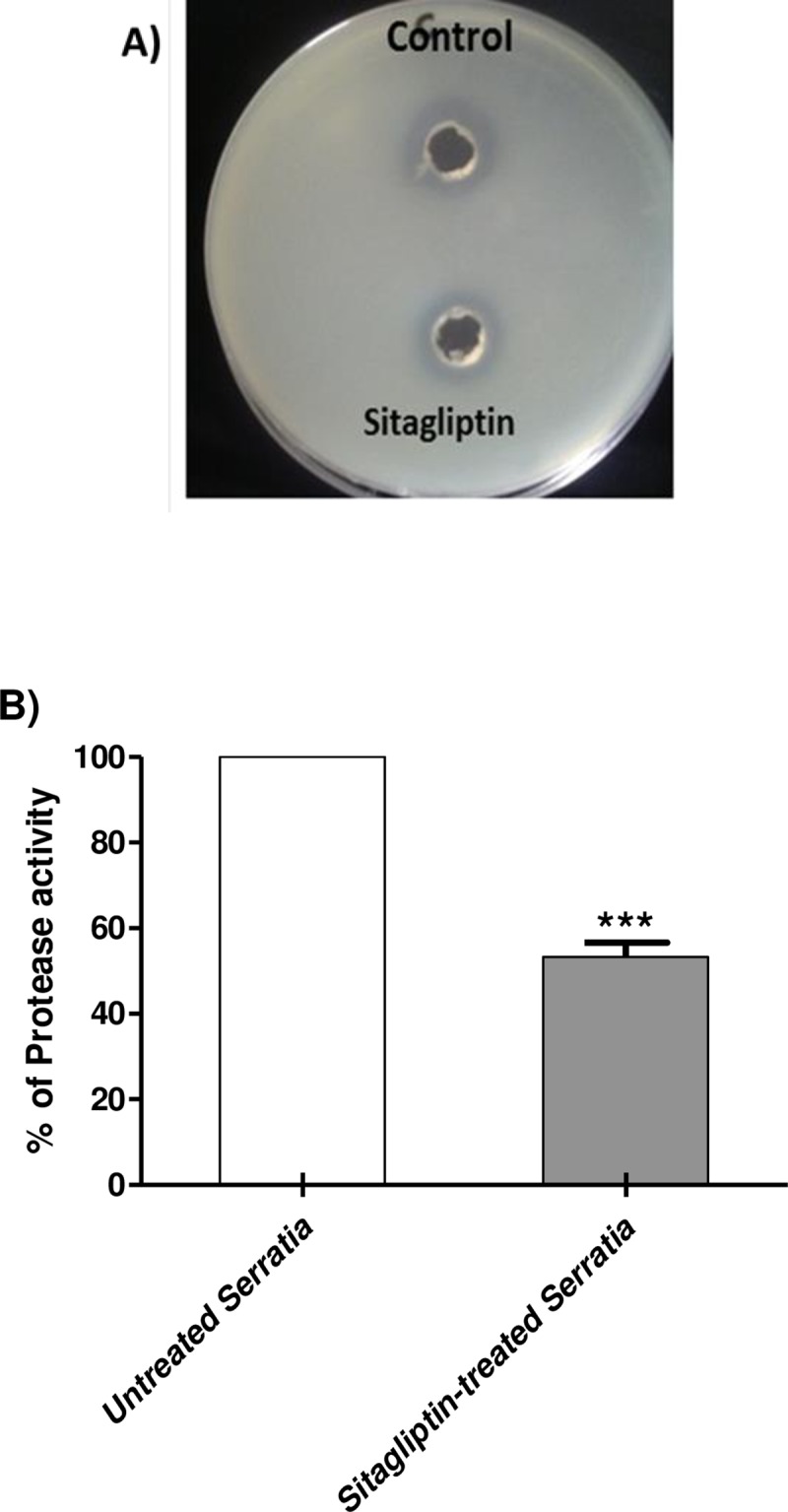
Sitagliptin (1 mg/ml) significantly reduced the biofilm formation, swimming and swarming motilities, prodigiosin and protease. The qRT-PCR confirmed the effect on virulence as shown by down regulating the expression of fimA, fimC, flhC, flhD, bsmB, rssB, rsmA, pigP, and shlA genes. Moreover, the in-vivo findings showed the efficient ability of sitagliptin to weaken S. marcescens pathogenesis.
Sitagliptin is a promising anti-virulence agent against S. marcescens that may be beneficial in the control of healthcare associated infections caused by S. marcescens.
粘质沙雷氏菌是一种新兴的病原体,可引起多种与医疗保健相关的感染。粘质沙雷氏菌拥有一系列毒力因子,如生物膜形成、游泳和群集运动、灵菌红素、蛋白酶等,使其能够引发和导致感染。这些毒力因子在一种称为群体感应(QS)的细胞间通讯系统的控制下协调。QS 允许细菌种群在检测到化学信号分子时同步表达毒力基因。靶向细菌毒力是一种有前途的方法,可以减弱细菌的作用,并增强免疫系统清除细菌感染的能力。药物再利用是一种有利的策略,它为药物在原医疗用途范围之外提供了新的应用。这种有前途的策略提供了使用安全批准的化合物的可能性,这可能降低成本并缩短开发新药所需的时间。西他列汀是二肽基肽酶-4(DPP-4)抑制剂,用于治疗 2 型糖尿病,因为它增加了胰岛素的产生,同时减少了胰腺产生的胰高血糖素。我们旨在本研究中重新利用西他列汀,研究西他列汀对粘质沙雷氏菌的抗毒力活性。
通过表型估计亚抑制浓度的西他列汀对蛋白酶、灵菌红素、生物膜形成、游泳和群集运动等毒力因子的影响。使用 qRT-PCR 显示西他列汀对 QS 调节的毒力基因表达的影响。在小鼠上评估西他列汀对粘质沙雷氏菌发病机制的体内保护活性。
西他列汀(1mg/ml)显著降低了生物膜形成、游泳和群集运动、灵菌红素和蛋白酶。qRT-PCR 证实了通过下调 fimA、fimC、flhC、flhD、bsmB、rssB、rsmA、pigP 和 shlA 基因的表达来发挥其对毒力的影响。此外,体内发现表明西他列汀有效地削弱了粘质沙雷氏菌的发病机制。
西他列汀是一种有前途的抗粘质沙雷氏菌的抗毒力药物,可能有益于控制由粘质沙雷氏菌引起的与医疗保健相关的感染。