Bagheri Mehdi, Fazli Mozhgan, Saeednia Sara, Gholami Kharanagh Majid, Ahmadiankia Naghmeh
Clinical Research Development Unit, Imam Hossein Hospital, Shahroud University of Medical Sciences, Shahroud, Iran.
School of Medicine, Shahroud University of Medical Sciences, Shahroud, Iran.
Iran J Public Health. 2020 Jan;49(1):77-85.
We aimed to assess the effect of sulforaphane (SFN) on breast cancer cell migration and also its effect on the expression of epithelial mesenchymal transition (EMT) markers and β-catenin.
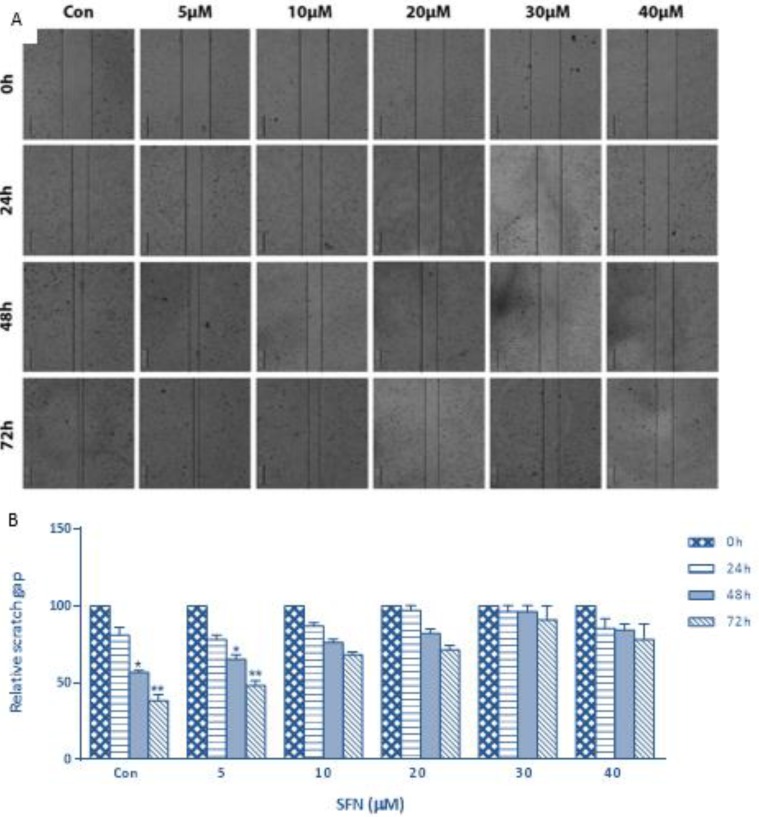
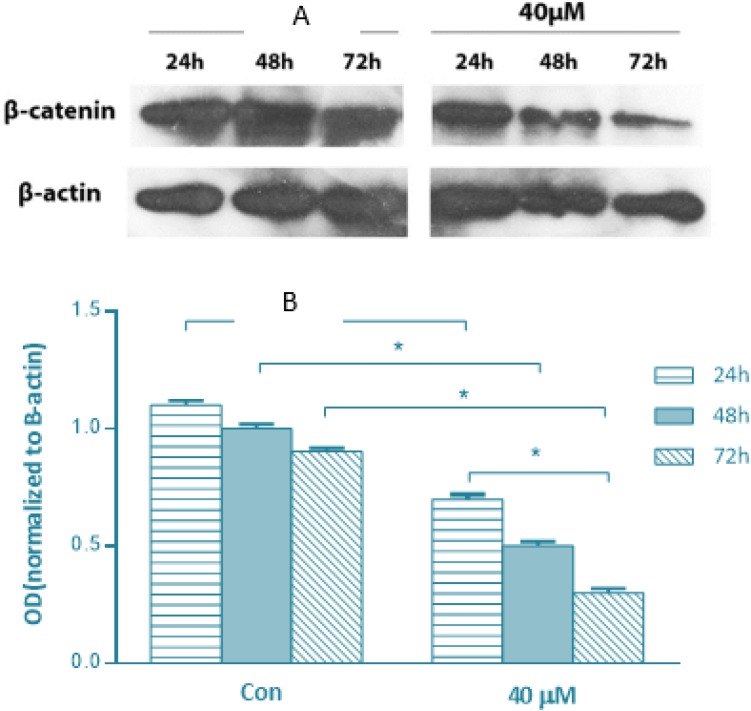
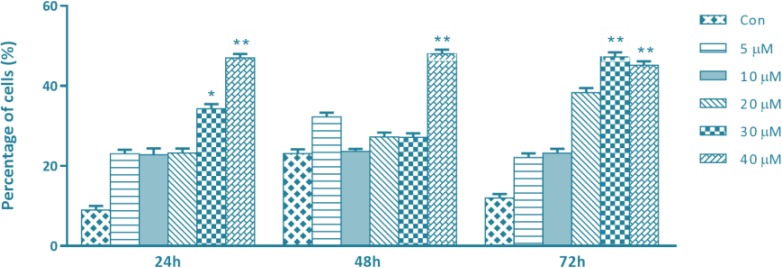
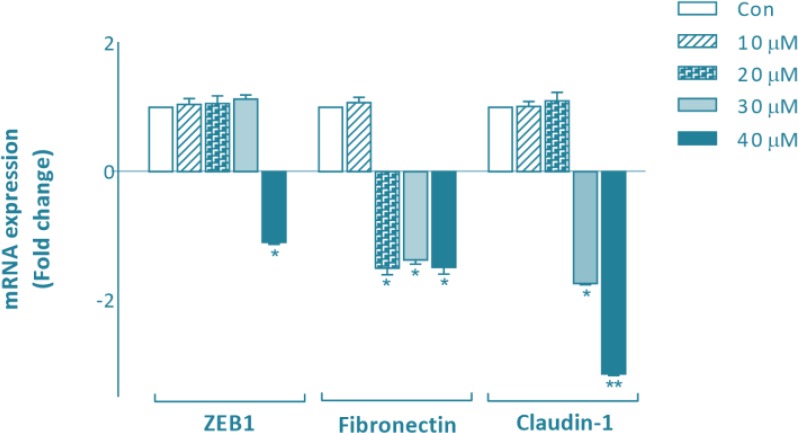
This study was performed in Shahroud University of Medical Sciences, Shahroud, Iran from 2017-2018. In this experimental study, MDA-MB-231 cells were treated with different concentrations of SFN (5, 10, 20, 30 and 40 μM) at different time points of 24, 48, and 72 h. The control group was untreated cells. The inhibitory effects of different concentrations of SFN on cell migration at different time points were evaluated using scratch assay. Moreover, apoptosis was assessed by using flow cytometric analysis. The expression of β-catenin and EMT markers of ZEB1, fibronectin, and claudin-1 were determined by real-time PCR. Western blotting analysis of β-catenin was applied to determine its changes after SFN treatment.
SFN markedly inhibited the migration of cells at concentrations of 10, 20, 30, and 40μM after 24, 48, and 72 h. At relatively, high concentrations (30, 40μM), SFN induced apoptosis. Moreover, SFN reduced the gene expression of ZEB1, fibronectin, and claudin-1 after 72 h. The expression of β-catenin revealed a time-dependent decrease at the concentration of 40 μM SFN.
Downregulation of EMT markers and β-catenin showed accordance with the inhibition of migration. SFN could be a promising drug candidate to reduce metastasis in breast cancer.
我们旨在评估萝卜硫素(SFN)对乳腺癌细胞迁移的影响,以及其对上皮-间质转化(EMT)标志物和β-连环蛋白表达的影响。
本研究于2017年至2018年在伊朗沙赫鲁德医科大学进行。在这项实验研究中,MDA-MB-231细胞在24、48和72小时的不同时间点用不同浓度的SFN(5、10、20、30和40μM)处理。对照组为未处理的细胞。使用划痕试验评估不同浓度的SFN在不同时间点对细胞迁移的抑制作用。此外,通过流式细胞术分析评估细胞凋亡。通过实时PCR测定β-连环蛋白以及ZEB1、纤连蛋白和闭合蛋白-1的EMT标志物的表达。应用β-连环蛋白的蛋白质印迹分析来确定SFN处理后其变化。
在24、48和72小时后,SFN在10、20、30和40μM浓度下显著抑制细胞迁移。在相对较高浓度(30、40μM)下,SFN诱导细胞凋亡。此外,72小时后SFN降低了ZEB1、纤连蛋白和闭合蛋白-1的基因表达。在40μM SFN浓度下,β-连环蛋白的表达呈时间依赖性下降。
EMT标志物和β-连环蛋白的下调与迁移抑制一致。SFN可能是一种有前景的药物候选物,可减少乳腺癌转移。