Yu Tianjia, Wang Yu, Cai Qiang, Wu Lin
Department of Prosthodontics, School and Hospital of Stomatology, China Medical University, Liaoning Provincial Key Laboratory of Oral Diseases, Shenyang 110002, China.
School of Materials Science & Engineering, Tsinghua University, Beijing 100084, China.
Ann Transl Med. 2020 Mar;8(5):173. doi: 10.21037/atm.2020.01.98.
Maintaining a long-term biological effect of dental materials on dentinal tubule occlusion is one of the great technical challenges in dental clinics. In addition to physical treatment, chemical treatment to produce insoluble precipitates to seal dentinal tubules has been used. As dentin is mostly composed of calcium and phosphate complexes, in this study, we have developed a novel tubule-occluding material [Ca/PO @mesoporous silica nanoparticles (MSNs)] by separately conjugating either Ca or PO with MSNs.
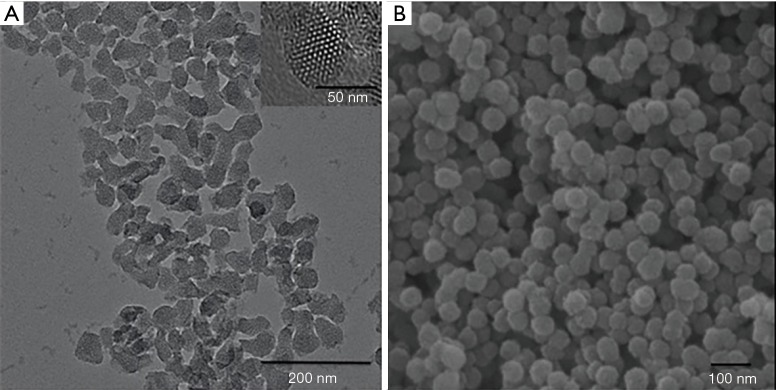
The shape and structure of the MSNs were examined using transmission electron microscopy (TEM) and scanning electron microscopy (SEM). The surface morphology and chemical compositions of Ca@MSNs/PO @MSNs and Ca/PO @MSNs were examined using SEM and X-ray fluorescence (XRF). The element distribution of Ca/PO @MSNs was detected using energy dispersive spectrometer (EDS). The sustained release ability of Ca@MSNs/PO @MSNs was detected using inductively coupled plasma atomic emission spectrometry (ICP-AES). The efficacy of Ca/PO @MSNs on dentinal tubule sealing was evaluated using SEM, and the results were analyzed by Image-Pro software to determine the best water-powder ratio. We also compared the sealing efficacy between Ca/PO @MSNs and NovaMin, which is currently used in clinics, under the simulated conditions of oral acidic corrosion and mechanical friction.
Ca/PO @MSNs are a new type of tubule-occluding material with sustained release properties. The ratio of Ca@MSNs: PO @MSNs: HO =0.015 g: 0.015 g: 150 µL exhibited an excellent sealing effect on dentinal tubules as well as resistance to oral acid corrosion and daily oral friction.
The novel dental material Ca/PO @MSNs demonstrates potential long-term effectiveness in sealing dentinal tubules and reducing dentin sensitivity, which is one of the most important problems in dental clinics.
维持牙科材料对牙本质小管封闭的长期生物学效应是牙科临床中的重大技术挑战之一。除了物理处理外,还采用化学处理来产生不溶性沉淀物以封闭牙本质小管。由于牙本质主要由钙和磷酸盐复合物组成,在本研究中,我们通过将钙或磷分别与介孔二氧化硅纳米颗粒(MSNs)结合,开发了一种新型的小管封闭材料[Ca/PO@介孔二氧化硅纳米颗粒(MSNs)]。
使用透射电子显微镜(TEM)和扫描电子显微镜(SEM)检查MSNs的形状和结构。使用SEM和X射线荧光(XRF)检查Ca@MSNs/PO@MSNs和Ca/PO@MSNs的表面形态和化学成分。使用能量色散光谱仪(EDS)检测Ca/PO@MSNs的元素分布。使用电感耦合等离子体原子发射光谱法(ICP-AES)检测Ca@MSNs/PO@MSNs的缓释能力。使用SEM评估Ca/PO@MSNs对牙本质小管封闭的效果,并通过Image-Pro软件分析结果以确定最佳水粉比。我们还在模拟口腔酸性腐蚀和机械摩擦的条件下,比较了Ca/PO@MSNs与目前临床使用的NovaMin之间的封闭效果。
Ca/PO@MSNs是一种具有缓释特性的新型小管封闭材料。Ca@MSNs:PO@MSNs:HO的比例为0.015 g:0.015 g:150 μL时,对牙本质小管表现出优异的封闭效果以及对口腔酸腐蚀和日常口腔摩擦的抵抗力。
新型牙科材料Ca/PO@MSNs在封闭牙本质小管和降低牙本质敏感性方面显示出潜在的长期有效性,牙本质敏感性是牙科临床中最重要的问题之一。