Falentin-Daudré Céline, Aitouakli Mounia, Baumann Jean Sébastien, Bouchemal Nadia, Humblot Vincent, Migonney Véronique, Spadavecchia Jolanda
CNRS, UMR 7244, NBD-LBPS-CSPBAT, Laboratoire de Chimie, Structures et Propriétés de Biomatériaux et d'Agents Thérapeutiques Université Paris 13, Sorbonne Paris Cité, 93000 Bobigny, France.
FEMTO-ST Institute, UMR CNRS 6174, Université Bourgogne Franche-Comté, 15B avenue des Montboucons, 25030 Besançon Cedex, France.
ACS Omega. 2020 Apr 2;5(14):8137-8145. doi: 10.1021/acsomega.0c00376. eCollection 2020 Apr 14.
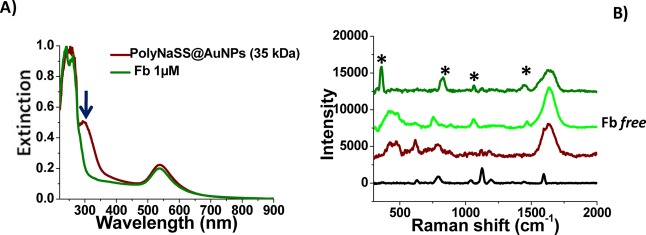
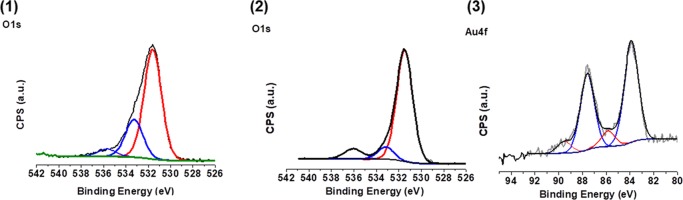
This study highlights recent advances in the synthesis of nanoconjugates based on gold (Au(III)) complex with a bioactive polymer bearing sulfonate groups called thiol-poly(sodium styrene sulfonate) (PolyNaSS-SH) with various molecular weights (5, 10, and 35 kDa). The three nanomaterials differ substantially in shape and structure. In particular, for PolyNaSS-SH of 35 kDa, we obtained a characteristic core-shell flower shape after chelation of the Au(III) ions and successively reduction with sodium borohydride (NaBH). The mechanism of formation of the hybrid nanoparticles (PolyNaSS-SH@AuNPs (35 kDa) and their interactions between plasmatic proteins (human serum albumin (HSA), collagen I (Col 1), and fibronectin (Fn)) were deeply studied from a chemical and physical point of view by using several analytical techniques such as Raman spectroscopy, UV-visible, transmission electron microscopy (TEM), H NMR, and X-ray photoelectron spectroscopy (XPS).
本研究重点介绍了基于金(Au(III))配合物与一种带有磺酸基团的生物活性聚合物(称为硫醇-聚(苯乙烯磺酸钠)(PolyNaSS-SH))合成纳米共轭物的最新进展,该聚合物具有不同的分子量(5、10和35 kDa)。这三种纳米材料在形状和结构上有很大差异。特别是对于35 kDa的PolyNaSS-SH,在Au(III)离子螯合并随后用硼氢化钠(NaBH)还原后,我们得到了一种特征性的核壳花状结构。通过使用拉曼光谱、紫外可见光谱、透射电子显微镜(TEM)、核磁共振氢谱(H NMR)和X射线光电子能谱(XPS)等多种分析技术,从化学和物理角度深入研究了杂化纳米粒子(PolyNaSS-SH@AuNPs(35 kDa))的形成机制及其与血浆蛋白(人血清白蛋白(HSA)、胶原蛋白I(Col 1)和纤连蛋白(Fn))之间的相互作用。