Sukhanova Alyona, Bozrova Svetlana, Sokolov Pavel, Berestovoy Mikhail, Karaulov Alexander, Nabiev Igor
Laboratoire de Recherche en Nanosciences, LRN-EA4682, Université de Reims Champagne-Ardenne, 51100, Reims, France.
Laboratory of Nano-Bioengineering, National Research Nuclear University MEPhI (Moscow Engineering Physics Institute), 31 Kashirskoe shosse, Moscow, Russian Federation, 115521.
Nanoscale Res Lett. 2018 Feb 7;13(1):44. doi: 10.1186/s11671-018-2457-x.
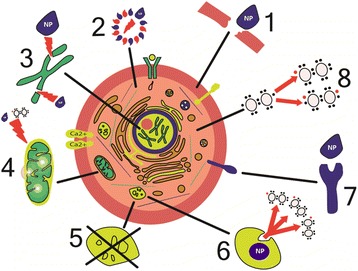
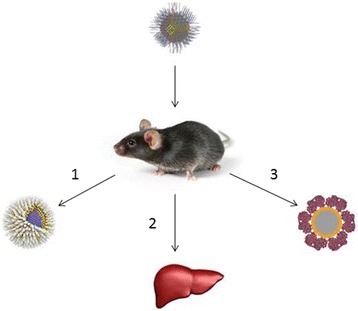
Studies on the methods of nanoparticle (NP) synthesis, analysis of their characteristics, and exploration of new fields of their applications are at the forefront of modern nanotechnology. The possibility of engineering water-soluble NPs has paved the way to their use in various basic and applied biomedical researches. At present, NPs are used in diagnosis for imaging of numerous molecular markers of genetic and autoimmune diseases, malignant tumors, and many other disorders. NPs are also used for targeted delivery of drugs to tissues and organs, with controllable parameters of drug release and accumulation. In addition, there are examples of the use of NPs as active components, e.g., photosensitizers in photodynamic therapy and in hyperthermic tumor destruction through NP incorporation and heating. However, a high toxicity of NPs for living organisms is a strong limiting factor that hinders their use in vivo. Current studies on toxic effects of NPs aimed at identifying the targets and mechanisms of their harmful effects are carried out in cell culture models; studies on the patterns of NP transport, accumulation, degradation, and elimination, in animal models. This review systematizes and summarizes available data on how the mechanisms of NP toxicity for living systems are related to their physical and chemical properties.
纳米颗粒(NP)合成方法的研究、其特性分析以及新应用领域的探索处于现代纳米技术的前沿。设计水溶性纳米颗粒的可能性为其在各种基础和应用生物医学研究中的应用铺平了道路。目前,纳米颗粒用于诊断多种遗传和自身免疫性疾病、恶性肿瘤及许多其他疾病的分子标记成像。纳米颗粒还用于将药物靶向递送至组织和器官,具有可控的药物释放和积累参数。此外,有纳米颗粒用作活性成分的例子,例如光动力疗法中的光敏剂以及通过纳米颗粒掺入和加热进行热疗肿瘤破坏。然而,纳米颗粒对生物体的高毒性是阻碍其体内应用的一个强大限制因素。目前关于纳米颗粒毒性作用的研究旨在确定其有害作用的靶点和机制,这些研究在细胞培养模型中进行;关于纳米颗粒在动物模型中的运输、积累、降解和消除模式的研究。本综述系统整理并总结了关于纳米颗粒对生物系统毒性机制如何与其物理和化学性质相关的现有数据。