Research Center for Zoonosis Control, Hokkaido University, Hokkaido 001-0020, Japan.
Graduate School of Advanced Integrated Studies in Human Survivability, Kyoto University, Yoshida-Nakaadachi-cho, Sakyo-ku, Kyoto, Japan; Hakubi Center for Advanced Research, Kyoto University, Yoshidahonmachi, Sakyo-ku, Kyoto, Japan.
Int J Infect Dis. 2020 May;94:116-118. doi: 10.1016/j.ijid.2020.04.021. Epub 2020 Apr 19.
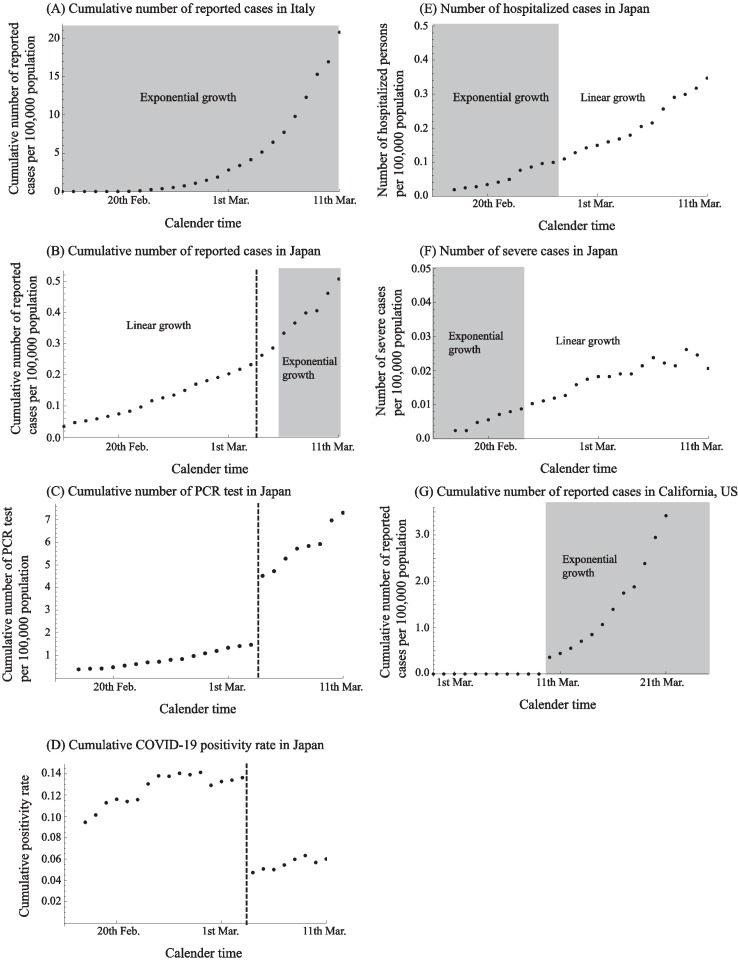
Since the novel coronavirus disease (COVID-19) emerged in December 2019 in China, it has rapidly spread around the world, leading to one of the most significant pandemic events of recent history. Deriving reliable estimates of the COVID-19 epidemic growth rate is quite important to guide the timing and intensity of intervention strategies. Indeed, many studies have quantified the epidemic growth rate using time-series of reported cases during the early phase of the outbreak to estimate the basic reproduction number, R. Using daily time series of COVID-19 incidence, we illustrate how epidemic curves of reported cases may not always reflect the true epidemic growth rate due to changes in testing rates, which could be influenced by limited diagnostic testing capacity during the early epidemic phase.
自 2019 年 12 月在中国出现新型冠状病毒病(COVID-19)以来,它已迅速在全球范围内传播,导致最近历史上最重大的大流行事件之一。可靠估计 COVID-19 疫情增长率对于指导干预策略的时机和强度非常重要。实际上,许多研究都使用暴发初期报告病例的时间序列来量化疫情增长率,以估计基本繁殖数 R。通过使用 COVID-19 发病率的每日时间序列,我们说明了由于检测率的变化,报告病例的疫情曲线并不总是反映真实的疫情增长率,因为在疫情早期阶段诊断检测能力有限可能会影响检测率。