Department of Statistics, Umeå School of Business, Economics and Statistics, Umeå University, Umeå, Sweden.
Department of Neurology, Lund University, Lund, Sweden.
BMC Public Health. 2020 Apr 25;20(1):554. doi: 10.1186/s12889-020-08629-1.
Although it has been established that low socioeconomic status is linked to increased risk of death after stroke, the mechanisms behind this link are still unclear. In this study we aim to shed light on the relationship between income level and survival after stroke by investigating the extent to which differences in stroke severity account for differences in survival.
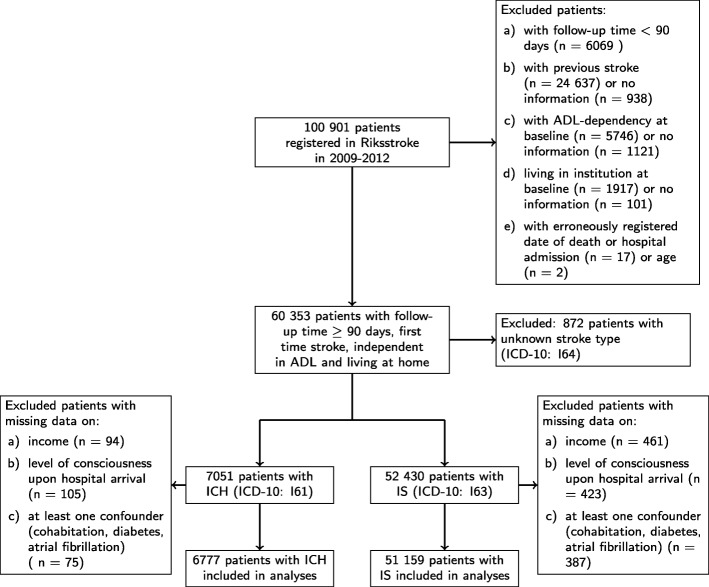
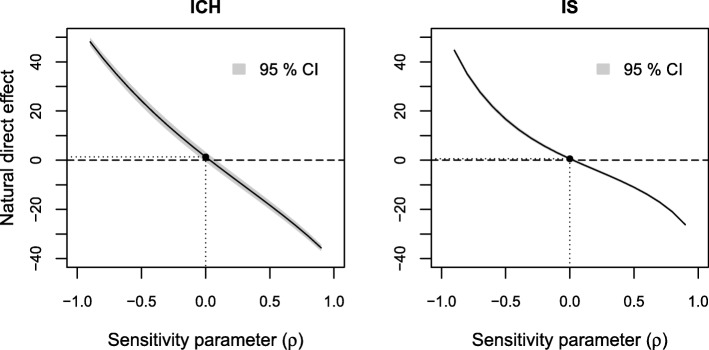
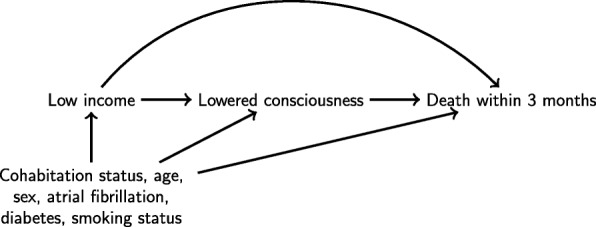
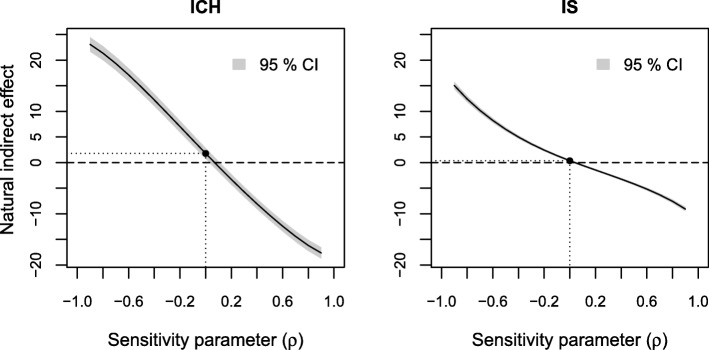
The study was based on patients registered in Riksstroke (the Swedish stroke register) with first time ischemic stroke (n = 51,159) or intracerebral hemorrhage (n = 6777) in 2009-2012. We used causal mediation analysis to decompose the effect of low income on 3-month case fatality into a direct effect and an indirect effect due to stroke severity. Since causal mediation analysis relies on strong assumptions regarding residual confounding of the relationships involved, recently developed methods for sensitivity analysis were used to assess the robustness of the results to unobserved confounding.
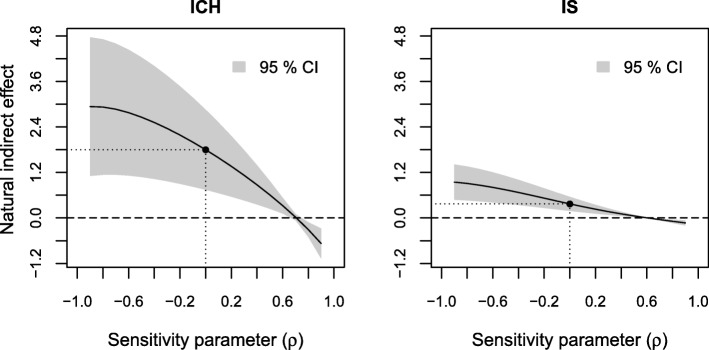
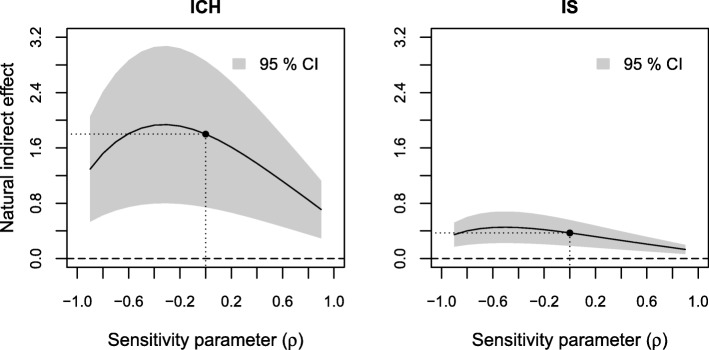
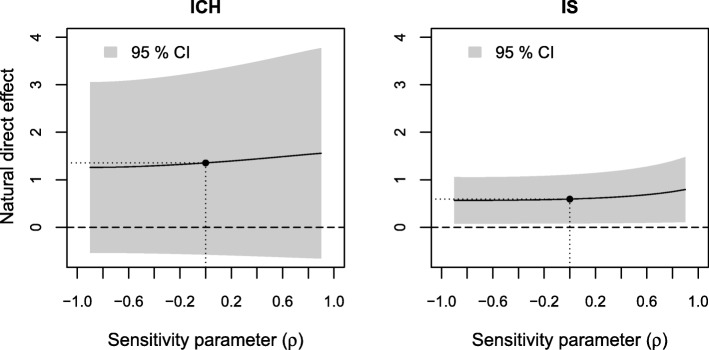
After adjustment for observed confounders, patients in the lowest income tertile had a 3.2% (95% CI: 0.9-5.4%) increased absolute risk of 3-month case fatality after intracerebral hemorrhage compared to patients in the two highest tertiles. The corresponding increase for case fatality after ischemic stroke was 1% (0.4-1.5%). The indirect effect of low income, mediated by stroke severity, was 1.8% (0.7-2.9%) for intracerebral hemorrhage and 0.4% (0.2-0.6%) for ischemic stroke. Unobserved confounders affecting the risk of low income, more severe stroke and case fatality in the same directions could explain the indirect effect, but additional adjustment to observed confounders did not alter the conclusions.
This study provides evidence that as much as half of income-related inequalities in stroke case fatality is mediated through differences in stroke severity. Targeting stroke severity could therefore lead to a substantial reduction in inequalities and should be prioritized. Sensitivity analysis suggests that additional adjustment for a confounder of greater impact than age would be required to considerably alter our conclusions.
尽管已经确定,低社会经济地位与中风后死亡风险增加有关,但这种联系的机制仍不清楚。在这项研究中,我们旨在通过研究中风严重程度差异在多大程度上导致生存差异,来阐明收入水平与中风后生存之间的关系。
该研究基于 2009-2012 年在 Riksstroke(瑞典中风登记处)登记的首次缺血性中风(n=51159)或颅内出血(n=6777)患者。我们使用因果中介分析来分解低收入对 3 个月病死率的影响,分为直接效应和中风严重程度引起的间接效应。由于因果中介分析依赖于涉及的关系中残留混杂的严格假设,因此使用最近开发的敏感性分析方法来评估结果对未观察到的混杂的稳健性。
调整观察到的混杂因素后,与两个较高三分位组相比,最低收入三分位组的颅内出血患者 3 个月病死率绝对风险增加 3.2%(95%CI:0.9-5.4%)。缺血性中风患者病死率的相应增加为 1%(0.4-1.5%)。低收入通过中风严重程度产生的间接效应,颅内出血为 1.8%(0.7-2.9%),缺血性中风为 0.4%(0.2-0.6%)。以相同方向影响低收入、更严重中风和病死率的未观察到的混杂因素可以解释间接效应,但对观察到的混杂因素的进一步调整并没有改变结论。
这项研究提供了证据表明,收入相关的中风病死率不平等有一半以上是通过中风严重程度的差异来介导的。因此,针对中风严重程度可能会大大减少不平等现象,应优先考虑。敏感性分析表明,需要进一步调整比年龄更有影响的混杂因素,才能大大改变我们的结论。