Freie Universität Berlin, Institute of Chemistry and Biochemistry, Laboratory of RNA Biochemistry, Berlin, Germany.
Institute of Cell Biology and Neurobiology, Charité-Universitätsmedizin Berlin, corporate member of Freie Universität Berlin, Humboldt-Universität zu Berlin, and Berlin Institute of Health, Berlin, Germany.
Elife. 2020 Apr 27;9:e56075. doi: 10.7554/eLife.56075.
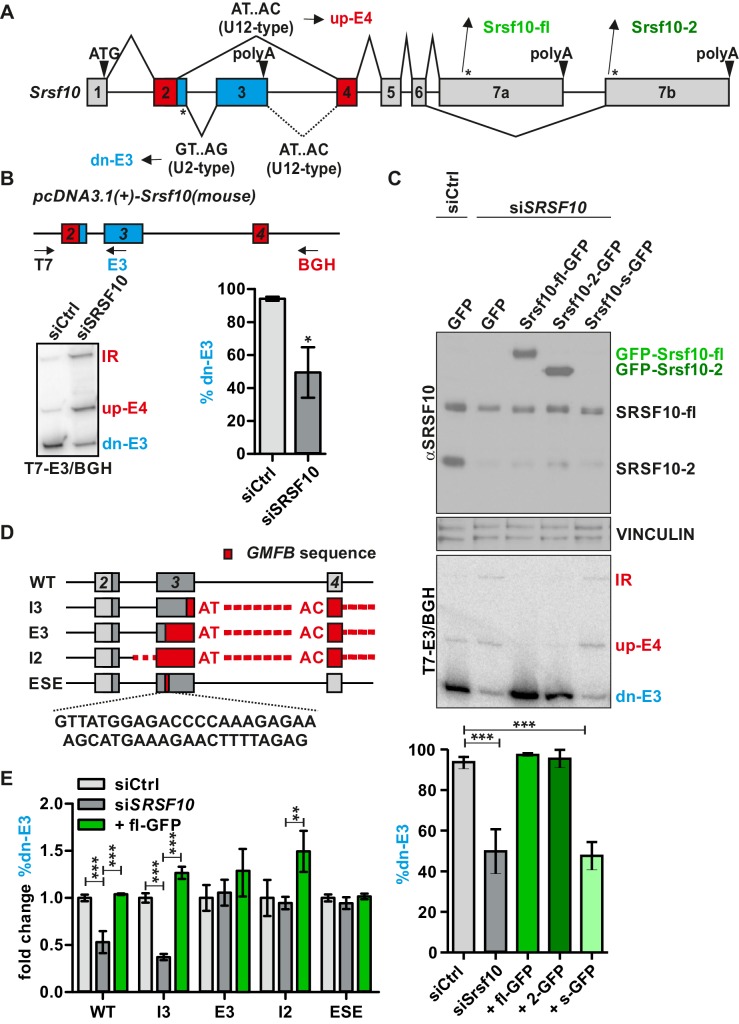
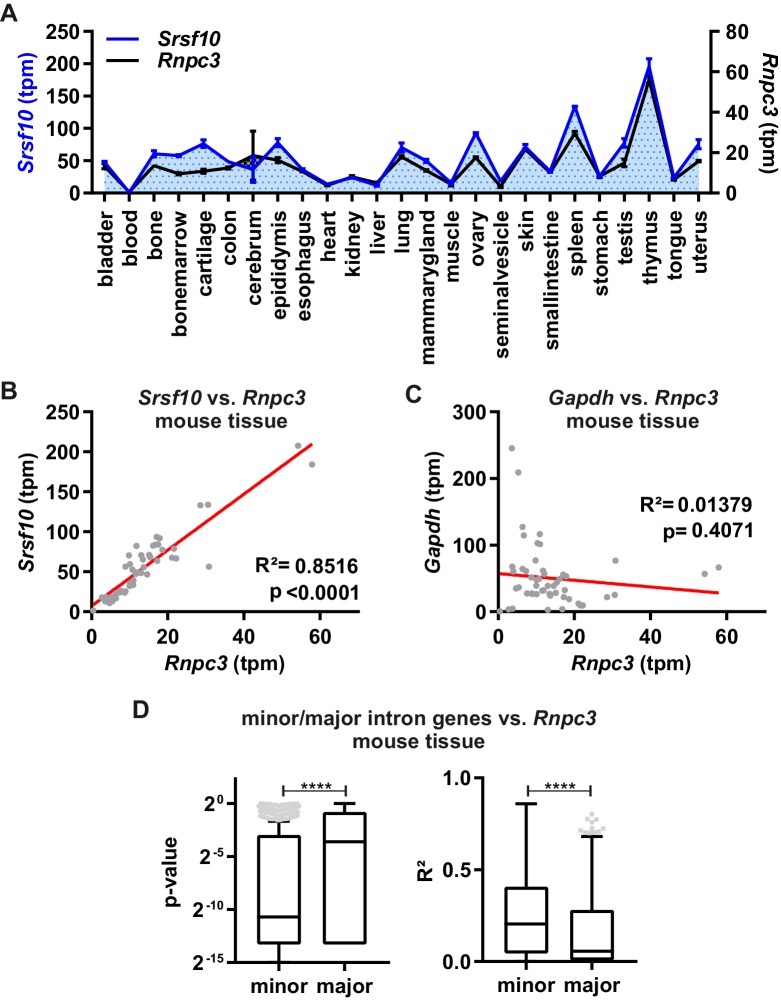
Minor and major spliceosomes control splicing of distinct intron types and are thought to act largely independent of one another. SR proteins are essential splicing regulators mostly connected to the major spliceosome. Here, we show that expression is controlled through an autoregulated minor intron, tightly correlating Srsf10 with minor spliceosome abundance across different tissues and differentiation stages in mammals. Surprisingly, all other SR proteins also correlate with the minor spliceosome and , and abolishing autoregulation by Crispr/Cas9-mediated deletion of the autoregulatory exon induces expression of all SR proteins in a human cell line. Our data thus reveal extensive crosstalk and a global impact of the minor spliceosome on major intron splicing.
小核和大核剪接体控制不同类型内含子的剪接,并且被认为彼此之间在很大程度上是独立的。SR 蛋白是主要与大剪接体相关的必需剪接调节因子。在这里,我们表明,通过一个自我调控的小内含子来控制表达,该内含子将 Srsf10 与哺乳动物不同组织和分化阶段的小剪接体丰度紧密相关。令人惊讶的是,所有其他的 SR 蛋白也与小剪接体和相关,并且通过 Crispr/Cas9 介导的自我调控外显子的缺失消除自我调控,会在人类细胞系中诱导所有 SR 蛋白的表达。因此,我们的数据揭示了小剪接体对主要内含子剪接的广泛串扰和全局影响。