Physiology and Neurobiology Department, University of Connecticut, 75 N. Eagleville Road, Storrs, CT 06269, USA.
Epigenetics and Development Division, Walter and Eliza Hall Institute of Medical Research, Parkville, VIC 3052, Australia.
Nucleic Acids Res. 2021 Apr 6;49(6):3524-3545. doi: 10.1093/nar/gkab118.
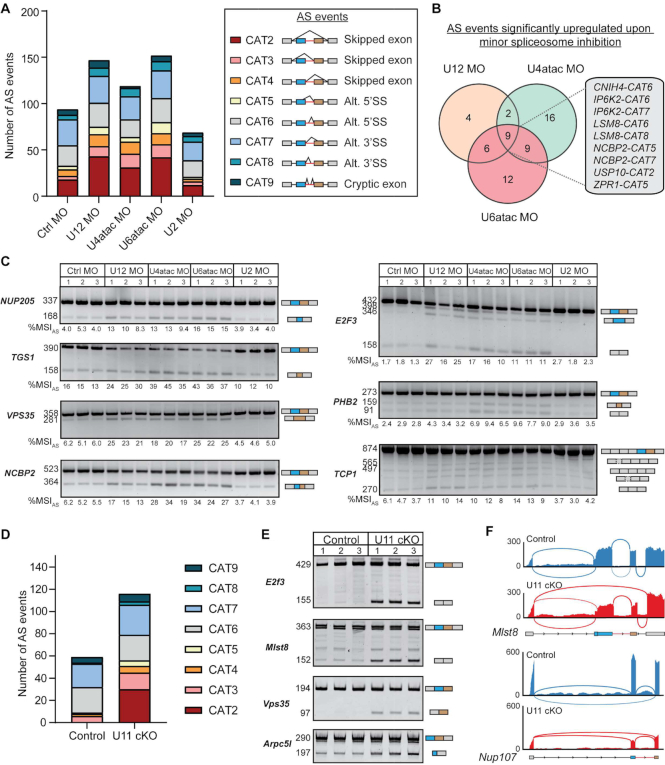
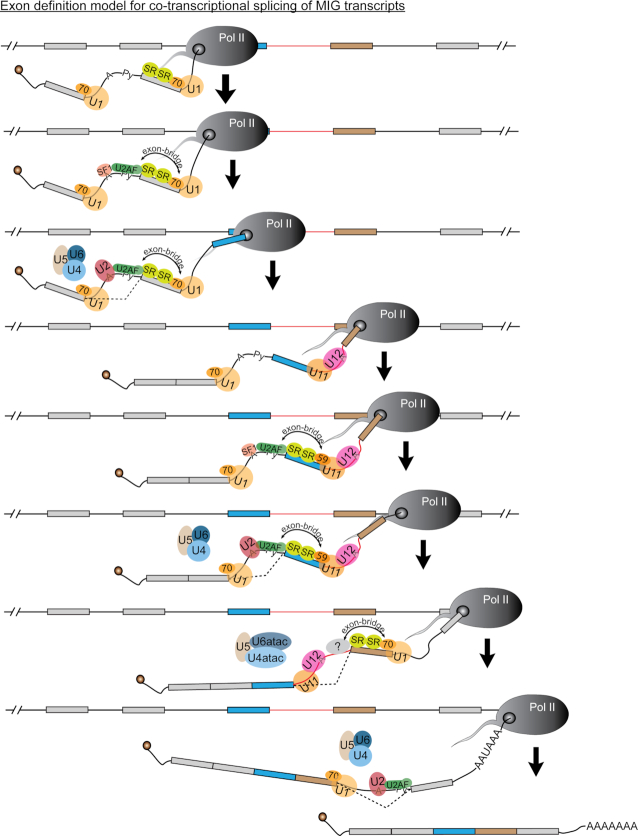
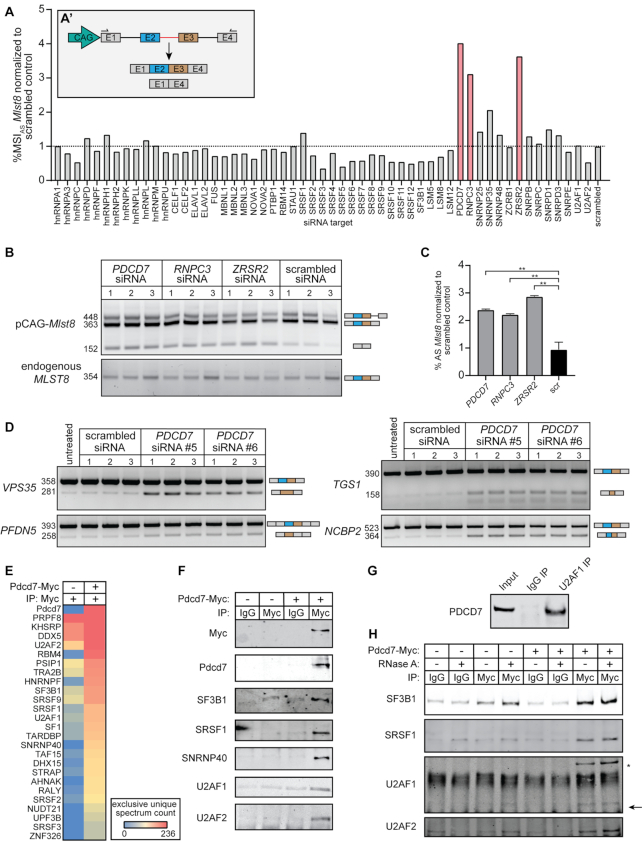
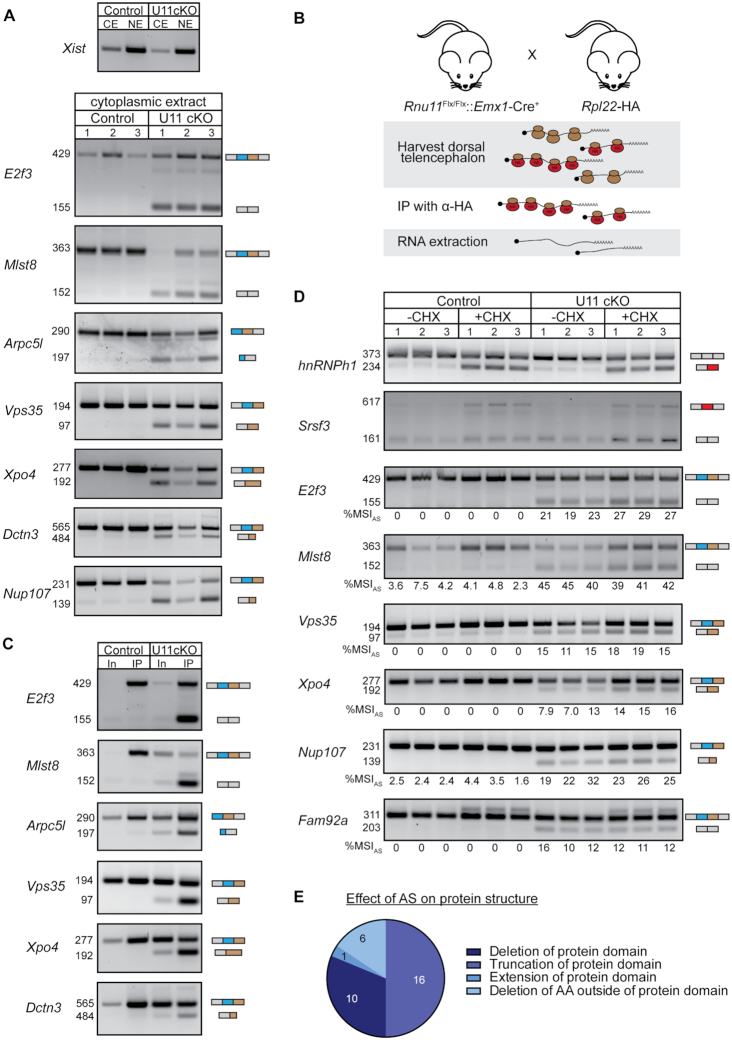
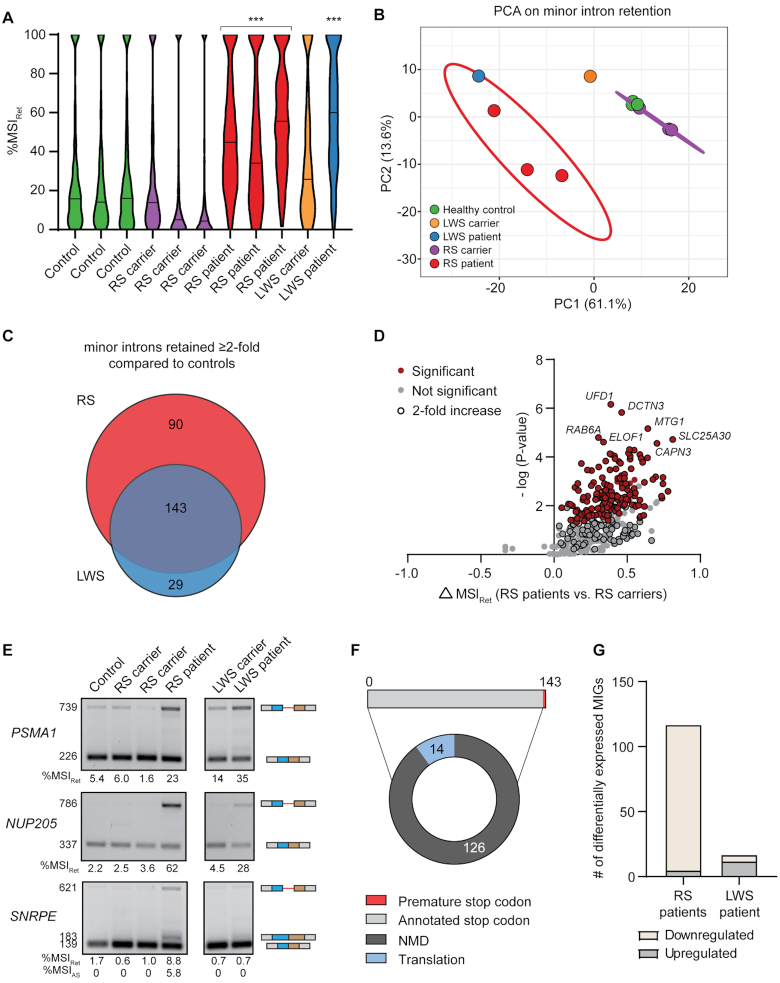
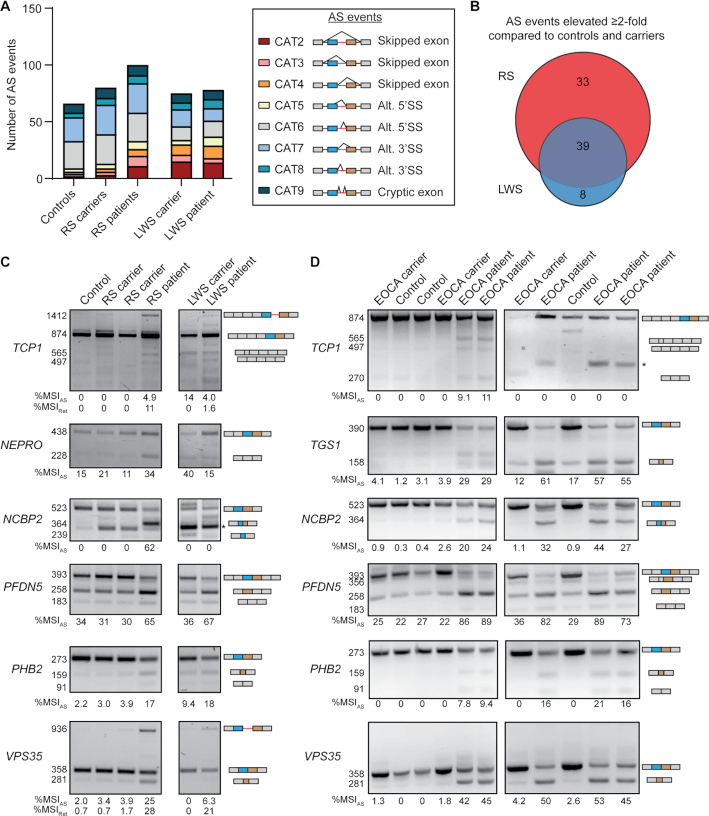
Vertebrate genomes contain major (>99.5%) and minor (<0.5%) introns that are spliced by the major and minor spliceosomes, respectively. Major intron splicing follows the exon-definition model, whereby major spliceosome components first assemble across exons. However, since most genes with minor introns predominately consist of major introns, formation of exon-definition complexes in these genes would require interaction between the major and minor spliceosomes. Here, we report that minor spliceosome protein U11-59K binds to the major spliceosome U2AF complex, thereby supporting a model in which the minor spliceosome interacts with the major spliceosome across an exon to regulate the splicing of minor introns. Inhibition of minor spliceosome snRNAs and U11-59K disrupted exon-bridging interactions, leading to exon skipping by the major spliceosome. The resulting aberrant isoforms contained a premature stop codon, yet were not subjected to nonsense-mediated decay, but rather bound to polysomes. Importantly, we detected elevated levels of these alternatively spliced transcripts in individuals with minor spliceosome-related diseases such as Roifman syndrome, Lowry-Wood syndrome and early-onset cerebellar ataxia. In all, we report that the minor spliceosome informs splicing by the major spliceosome through exon-definition interactions and show that minor spliceosome inhibition results in aberrant alternative splicing in disease.
脊椎动物基因组包含主要(>99.5%)和次要(<0.5%)内含子,分别由主要剪接体和次要剪接体进行剪接。主要内含子的剪接遵循外显子定义模型,即主要剪接体成分首先跨外显子组装。然而,由于大多数具有次要内含子的基因主要由主要内含子组成,因此在这些基因中形成外显子定义复合物将需要主要剪接体和次要剪接体之间的相互作用。在这里,我们报告说,次要剪接体蛋白 U11-59K 与主要剪接体 U2AF 复合物结合,从而支持这样一种模型,即次要剪接体通过外显子与主要剪接体相互作用,从而调节次要内含子的剪接。抑制次要剪接体 snRNA 和 U11-59K 破坏了外显子桥接相互作用,导致主要剪接体跳过外显子。由此产生的异常异构体含有一个过早的终止密码子,但不受无义介导的衰变,而是与多核糖体结合。重要的是,我们在患有与次要剪接体相关的疾病(如 Roifman 综合征、Lowry-Wood 综合征和早发性小脑共济失调)的个体中检测到这些选择性剪接转录本的水平升高。总之,我们报告说,次要剪接体通过外显子定义相互作用通知主要剪接体的剪接,并表明次要剪接体抑制导致疾病中异常的选择性剪接。