Suntory Global Innovation Center Ltd. Research Institute, 8-1-1 Seikadai, Seika-cho, Soraku-gun, Kyoto 619-0284, Japan.
Department of Medical Management and Informatics, Hokkaido Information University, Nishi-Nopporo 59-2, Ebetsu, Hokkaido 069-8585, Japan.
Nutrients. 2020 Apr 23;12(4):1191. doi: 10.3390/nu12041191.
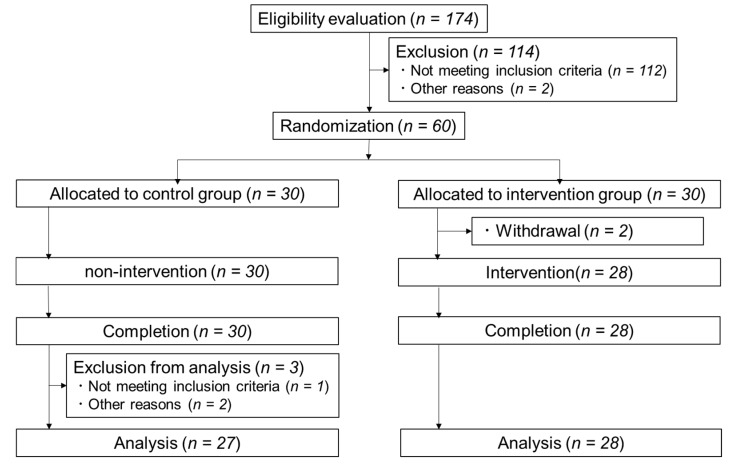
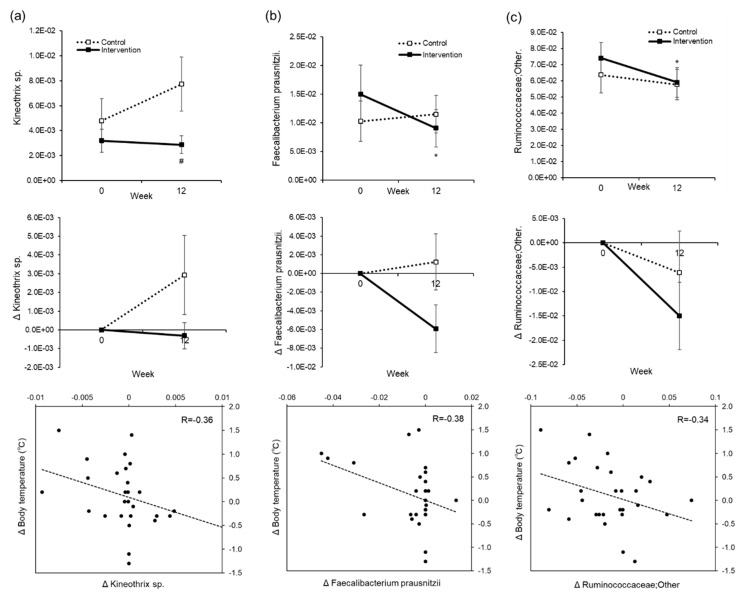
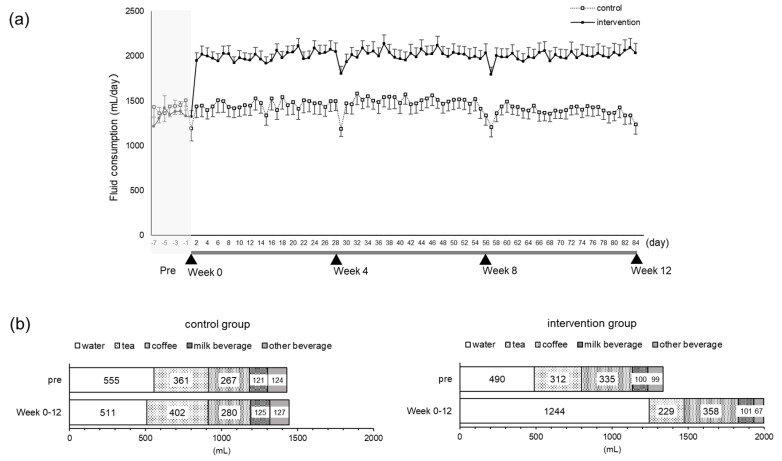
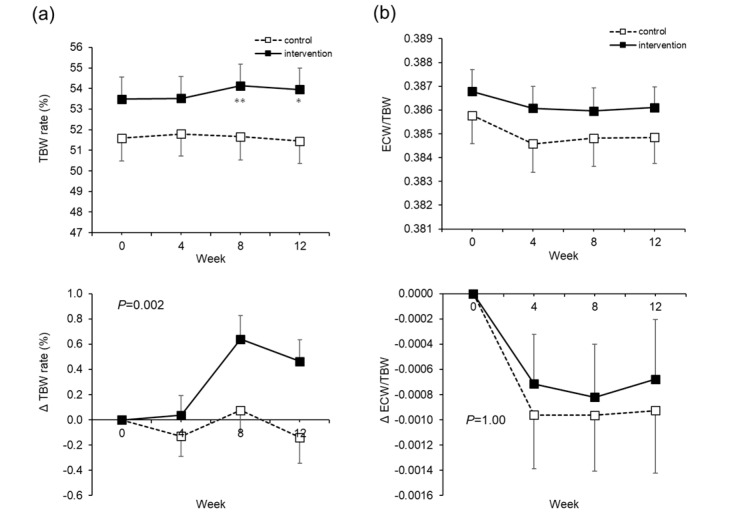
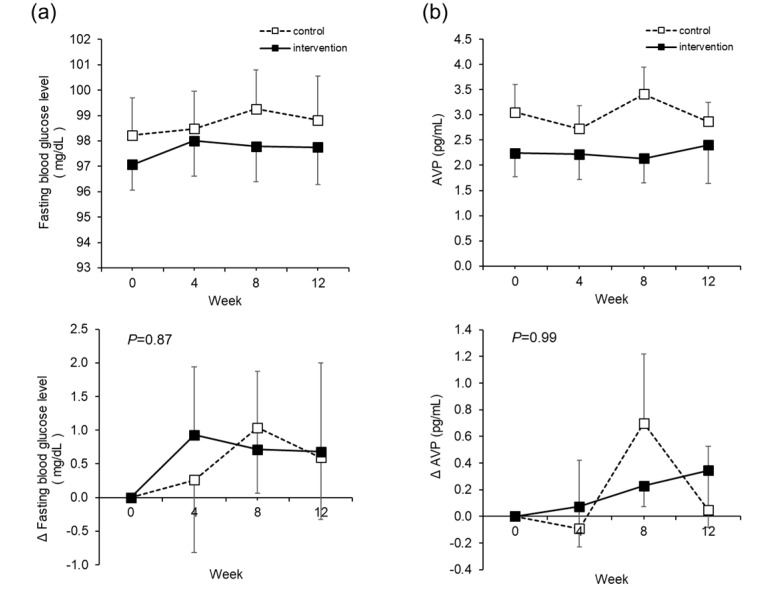
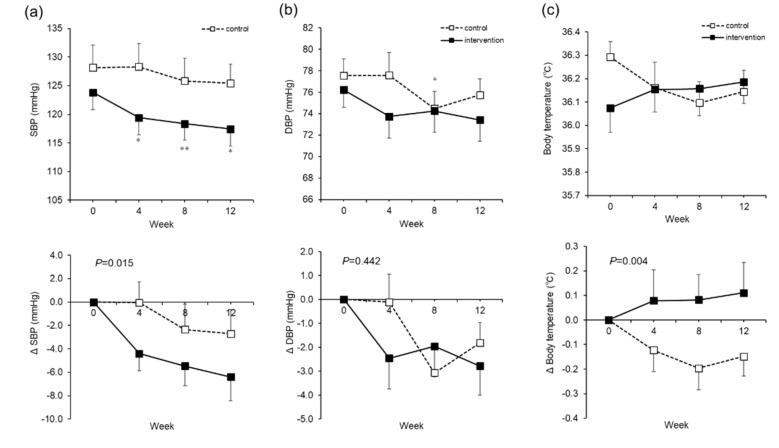
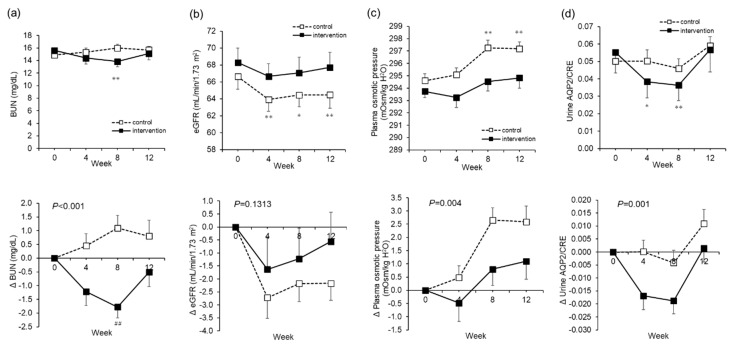
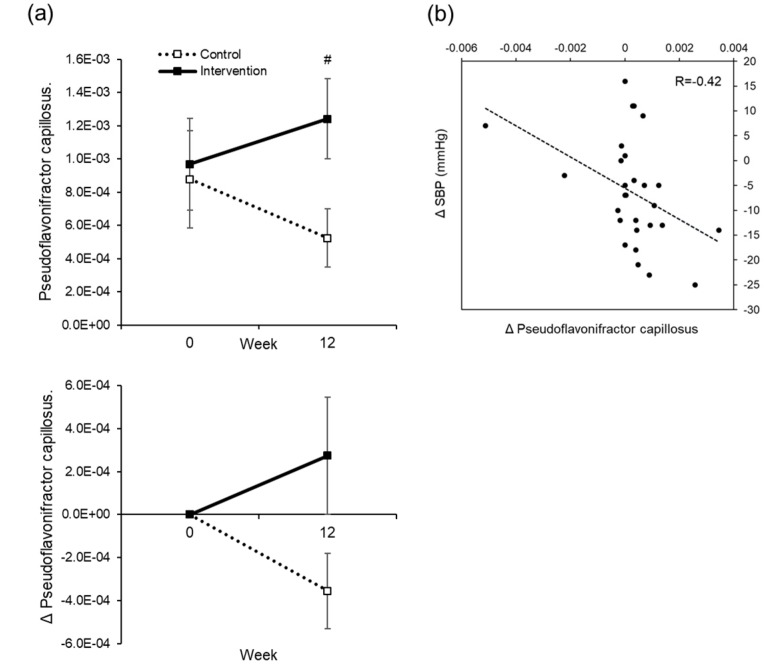
Increased hydration is recommended as healthy habit with several merits. However, supportive data are sparse. To assess the efficacy of increased daily water intake, we tested the effect of water supplementation on biomarkers in blood, urine, and saliva. Twenty-four healthy Japanese men and 31 healthy Japanese women with fasting blood glucose levels ranging from 90-125 mg/dL were included. An open-label, two-arm, randomized controlled trial was conducted for 12 weeks. Two additional 550 mL bottles of water on top of habitual fluid intake were consumed in the intervention group. The subjects drank one bottle of water (550 mL) within 2 h of waking, and one bottle (550 mL) 2 h before bedtime. Subjects increased mean fluid intake from 1.3 L/day to 2.0 L/day, without changes in total energy intake. Total body water rate increased with associated water supplementation. There were no significant changes in fasting blood glucose and arginine vasopressin levels, but systolic blood pressure was significantly decreased in the intervention group. Furthermore, water supplementation increased body temperature, reduced blood urea nitrogen concentration, and suppressed estimated glomerular filtration rate reduction. Additionally, existence of an intestinal microbiome correlated with decreased systolic blood pressure and increased body temperature. Habitual water supplementation after waking up and before bedtime in healthy subjects with slightly elevated fasting blood glucose levels is not effective in lowering these levels. However, it represents a safe and promising intervention with the potential for lowering blood pressure, increasing body temperature, diluting blood waste materials, and protecting kidney function. Thus, increasing daily water intake could provide several health benefits.
增加水合作用被推荐为一种健康习惯,具有多种益处。然而,支持性数据较为缺乏。为了评估增加每日水摄入量的效果,我们测试了水补充对血液、尿液和唾液生物标志物的影响。研究纳入了 24 名空腹血糖水平在 90-125mg/dL 之间的健康日本男性和 31 名健康日本女性。进行了为期 12 周的开放性、双臂、随机对照试验。干预组在习惯性液体摄入的基础上额外饮用 2 个 550 毫升的瓶装水。研究对象在醒来后 2 小时内饮用一瓶水(550 毫升),睡前 2 小时内饮用一瓶水(550 毫升)。研究对象的平均液体摄入量从 1.3L/天增加到 2.0L/天,而总能量摄入没有变化。全身水率随着水的补充而增加。空腹血糖和精氨酸加压素水平没有显著变化,但干预组的收缩压显著降低。此外,水补充增加了体温,降低了血尿素氮浓度,并抑制了估算肾小球滤过率的降低。此外,肠道微生物组的存在与收缩压降低和体温升高相关。对于空腹血糖水平略有升高的健康受试者,在晨起后和睡前习惯性补充水分并不能有效降低这些水平。然而,它代表了一种安全且有前景的干预措施,具有降低血压、升高体温、稀释血液废物和保护肾功能的潜力。因此,增加每日水摄入量可能会带来多种健康益处。