Processes Development Department, Egyptian Petroleum Research Institute (EPRI), Nasr City, Cairo 11727, Egypt.
Petrochemical Department, Egyptian Petroleum Research Institute (EPRI), Nasr City, Cairo 11727, Egypt.
Molecules. 2020 Apr 25;25(9):2007. doi: 10.3390/molecules25092007.
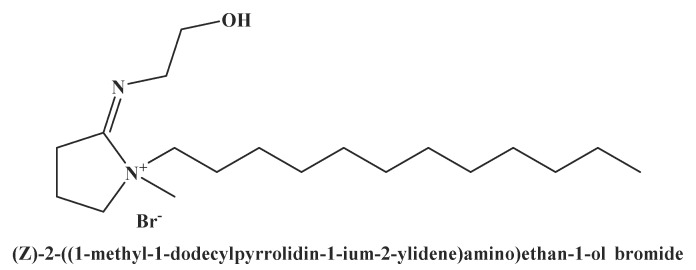
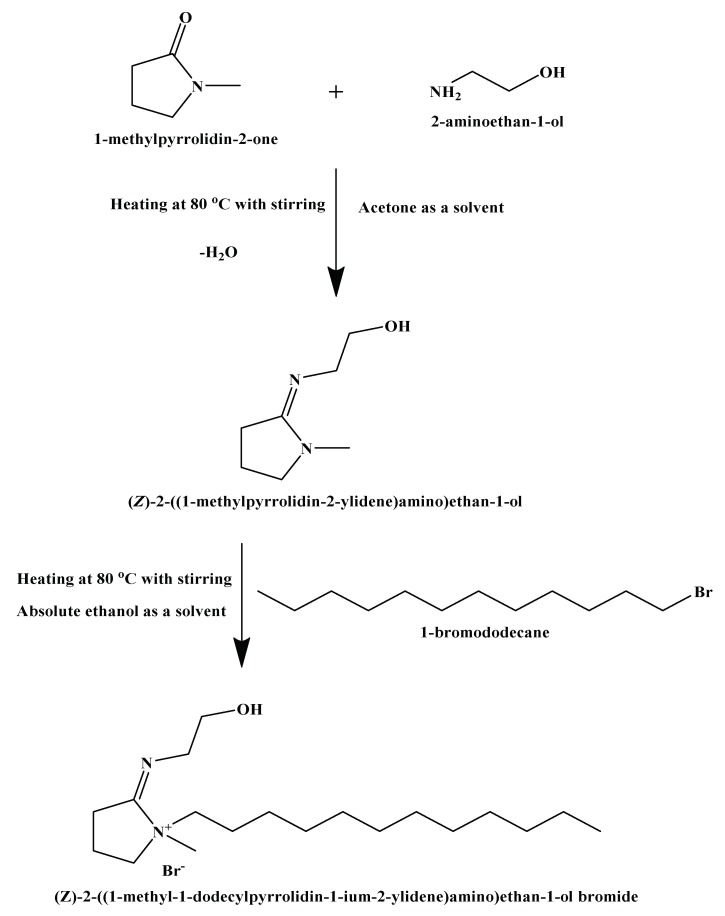
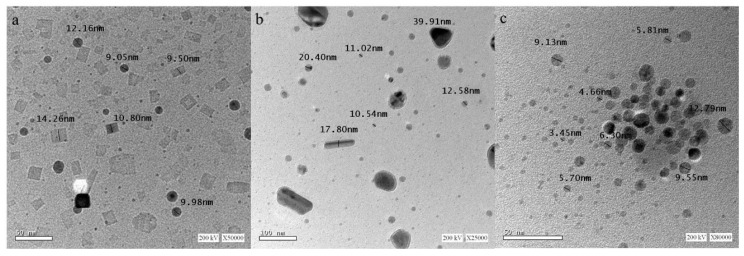
There is scarce information on cationic surfactants' biocidal and corrosion inhbibition effects on Slime-Forming Bacteria (SFB) isolated from oil field formation water. Therefore, this work focused on the the synthesis of a cationic surfactant (CS) to increase its features by capping different metal nanoparticles (zinc, ZnNPs-C-CS; manganese, MnNPs-C-CS and tin, SnNPs-C-CS) and used them as biocides and corrosion inhibitors. The cationic surfactant was synthesized and characterized by Fourier-Transform Infrared (FTIR) and Nuclear Magnetic Resonance (NMR) spectroscopy. Afterwards, different nanoparticles were synthesized, characterized, and exploited to cap by the CS. The CS and the different nanoparticles capped by the CS were tested for their antimicrobial susceptibility against standard bacterial and yeast strains. The synthesized compounds were further evaluated as anti-biofilms agents against positively-developed bacterial biofilms. Moreover, the CS and the ZnNPs-C-CS, MnNPs-C-CS, and SnNPs-C-CS were assessed as potential biocides against SFB, particularly sp. (isolated from contaminated formation water), and as corrosion inhibitors against cultivated salinity. The results revealed the great effect of the different CS-capped NPs as broad-spectrum antimicrobial and anti-biofilm agents at lower Minimum Inhibitory Concentrations (MICs), Minimum Bactericidal Concentrations (MBCs), Minimum Fungicidal Concentrations (MFCs) and Minimum Biofilm Inhibitory Concentrations (MBICs), and the activities were reported in order of SnNPs-C-CS > MnNPs-C-CS > ZnNPs-C-CS > CS. Furthermore, the ZnNPs-C-CS, MnNPs-C-CS, and SnNPs-C-CS demonstrated biocidal and corrosion inhibition effects against sp. at a salinity of 3.5% NaCl, with metal corrosion inhibition efficiencies of 88.6, 94.0 and 96.9%, in comparison to a CS efficiency of 85.7%. In conclusion, the present work provides a newly synthesized cationic surfactant and has enhanced its antimicrobial and its metal corrosion inhibition effects by capping different nanoparticles, and it has been successfully applied against slime-forming bacteria at a salinity of 3.5% NaCl.
关于阳离子表面活性剂对从油田地层水中分离出的粘液形成菌(SFB)的杀菌和腐蚀抑制作用,信息很少。因此,本工作重点合成一种阳离子表面活性剂(CS),通过包覆不同的金属纳米粒子(锌、ZnNPs-C-CS;锰、MnNPs-C-CS 和锡、SnNPs-C-CS)来提高其特性,并将其用作杀菌剂和腐蚀抑制剂。阳离子表面活性剂通过傅里叶变换红外(FTIR)和核磁共振(NMR)光谱进行合成和表征。随后,合成了不同的纳米粒子,对其进行了表征,并利用 CS 对其进行了包覆。测试了 CS 和 CS 包覆的不同纳米粒子对标准细菌和酵母菌株的抗菌敏感性。合成的化合物进一步作为抗细菌生物膜剂进行评价,以对抗正向发育的细菌生物膜。此外,CS 和 ZnNPs-C-CS、MnNPs-C-CS 和 SnNPs-C-CS 被评估为针对 SFB(特别是从受污染的地层水中分离出的 sp.)的潜在杀菌剂,以及针对培养盐度的腐蚀抑制剂。结果表明,不同的 CS 包覆的 NPs 作为广谱抗菌和抗生物膜剂具有很大的效果,其最低抑菌浓度(MIC)、最低杀菌浓度(MBC)、最低抑菌浓度(MFC)和最低生物膜抑制浓度(MBIC)较低,活性按 SnNPs-C-CS > MnNPs-C-CS > ZnNPs-C-CS > CS 的顺序报告。此外,ZnNPs-C-CS、MnNPs-C-CS 和 SnNPs-C-CS 对 sp.在 3.5%NaCl 的盐度下表现出杀菌和腐蚀抑制作用,金属腐蚀抑制效率分别为 88.6%、94.0%和 96.9%,而 CS 的效率为 85.7%。总之,本工作提供了一种新合成的阳离子表面活性剂,并通过包覆不同的纳米粒子增强了其抗菌和金属腐蚀抑制作用,并已成功应用于 3.5%NaCl 盐度下的粘液形成菌。