Berkeley Air Monitoring Group, Berkeley, California, USA.
Gangarosa Department of Environmental Health, Rollins School of Public Health, Emory University, Atlanta, Georgia, USA.
Environ Health Perspect. 2020 Apr;128(4):47009. doi: 10.1289/EHP6422. Epub 2020 Apr 29.
High quality personal exposure data is fundamental to understanding the health implications of household energy interventions, interpreting analyses across assigned study arms, and characterizing exposure-response relationships for household air pollution. This paper describes the exposure data collection for the Household Air Pollution Intervention Network (HAPIN), a multicountry randomized controlled trial of liquefied petroleum gas stoves and fuel among 3,200 households in India, Rwanda, Guatemala, and Peru.
The primary objectives of the exposure assessment are to estimate the exposure contrast achieved following a clean fuel intervention and to provide data for analyses of exposure-response relationships across a range of personal exposures.
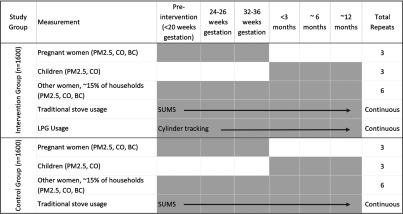
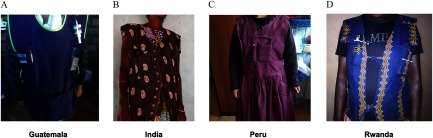
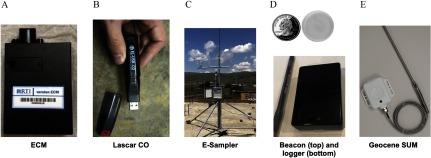
Exposure measurements are being conducted over the 3-y time frame of the field study. We are measuring fine particulate matter [PM in aerodynamic diameter ()] with the Enhanced Children's MicroPEM™ (RTI International), carbon monoxide (CO) with the USB-EL-CO (Lascar Electronics), and black carbon with the OT21 transmissometer (Magee Scientific) in pregnant women, adult women, and children of age, primarily via multiple 24-h personal assessments (three, six, and three measurements, respectively) over the course of the 18-month follow-up period using lightweight monitors. For children we are using an indirect measurement approach, combining data from area monitors and locator devices worn by the child. For a subsample (up to 10%) of the study population, we are doubling the frequency of measurements in order to estimate the accuracy of subject-specific typical exposure estimates. In addition, we are conducting ambient air monitoring to help characterize potential contributions of exposure from background concentration. Stove use monitors (Geocene) are being used to assess compliance with the intervention, given that stove stacking (use of traditional stoves in addition to the intervention gas stove) may occur.
The tools and approaches being used for HAPIN to estimate personal exposures build on previous efforts and take advantage of new technologies. In addition to providing key personal exposure data for this study, we hope the application and learnings from our exposure assessment will help inform future efforts to characterize exposure to household air pollution and for other contexts. https://doi.org/10.1289/EHP6422.
高质量的个人暴露数据对于理解家庭能源干预措施对健康的影响、解释各研究组的分析结果以及描述家庭空气污染的暴露-反应关系至关重要。本文描述了 Household Air Pollution Intervention Network(HAPIN)的暴露数据收集情况,这是一项在印度、卢旺达、危地马拉和秘鲁的 3200 户家庭中开展的液化石油气炉和燃料的多国家随机对照试验。
暴露评估的主要目的是估计清洁燃料干预后实现的暴露对比,并提供数据以分析一系列个人暴露水平下的暴露-反应关系。
暴露测量正在进行中,时间跨度为野外研究的 3 年。我们使用增强型儿童 MicroPEM™(RTI 国际公司)测量细颗粒物(PM in 空气动力学直径()),使用 USB-EL-CO(Lascar Electronics)测量一氧化碳(CO),使用 OT21 透射仪(Magee Scientific)测量黑碳,主要通过在 18 个月的随访期间使用轻便监测仪对孕妇、成年女性和 岁的儿童进行多次 24 小时个人评估(分别为三次、六次和三次测量)。对于儿童,我们使用间接测量方法,结合区域监测仪和儿童佩戴的定位器设备的数据。对于研究人群的一个子样本(最多 10%),我们将增加测量频率,以估计特定个体典型暴露估计的准确性。此外,我们还进行了环境空气监测,以帮助描述背景浓度对 暴露的潜在贡献。正在使用 Geocene 炉具使用监测器来评估干预措施的依从性,因为可能会发生炉灶叠加(除了干预用煤气炉外,还使用传统炉灶)。
HAPIN 用于估计个人暴露的工具和方法是在前人的努力基础上构建的,并利用了新技术。除了为本研究提供关键的个人暴露数据外,我们还希望暴露评估的应用和经验教训将有助于为未来描述家庭空气污染暴露以及其他情况下的暴露提供信息。https://doi.org/10.1289/EHP6422。