Department of Mathematics, University of California, Irvine, Irvine, CA, 92697, USA.
The NSF-Simons Center for Multiscale Cell Fate Research, University of California, Irvine, Irvine, CA, 92697, USA.
Nat Commun. 2020 Apr 29;11(1):2084. doi: 10.1038/s41467-020-15968-5.
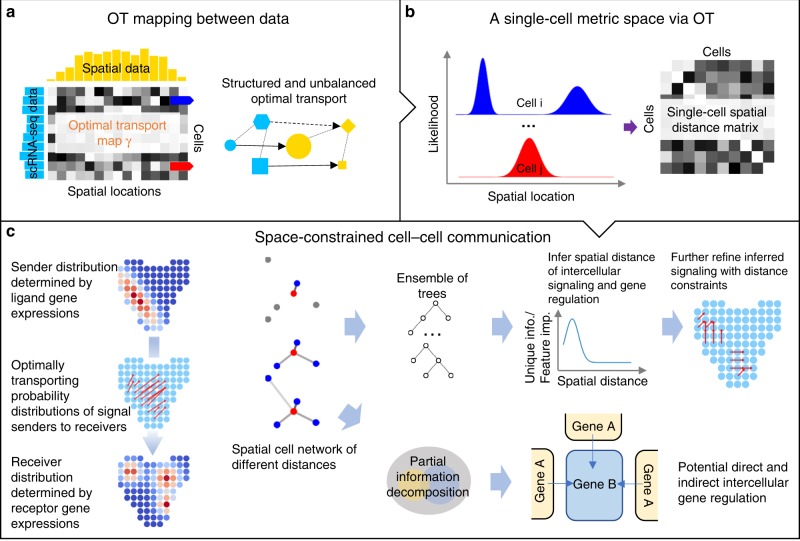
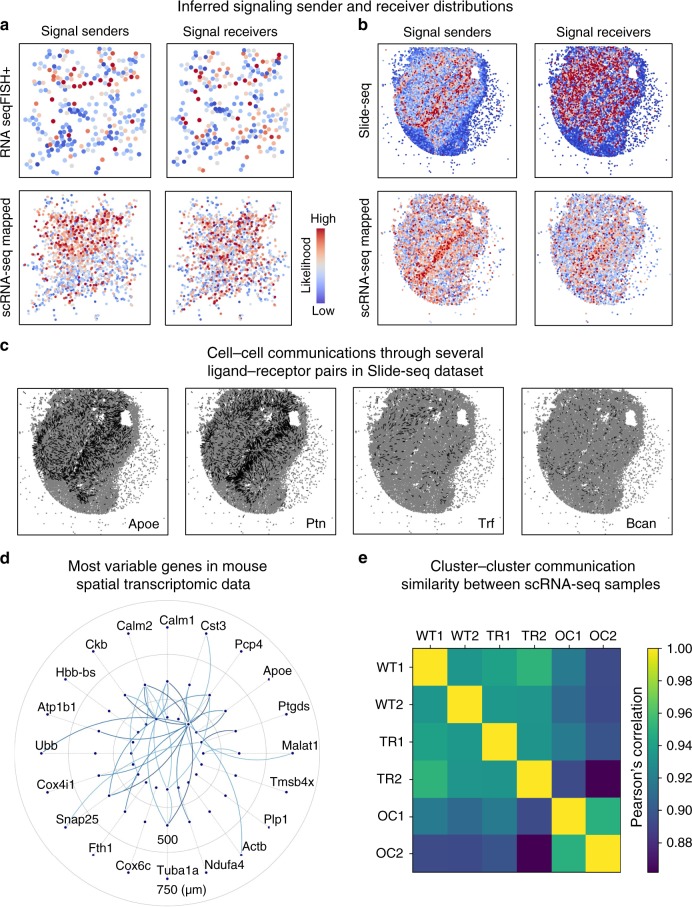
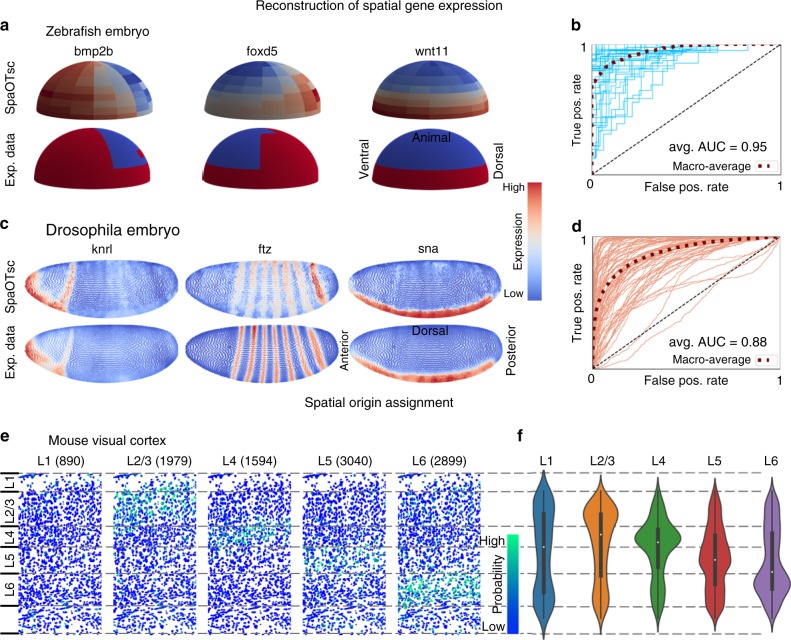
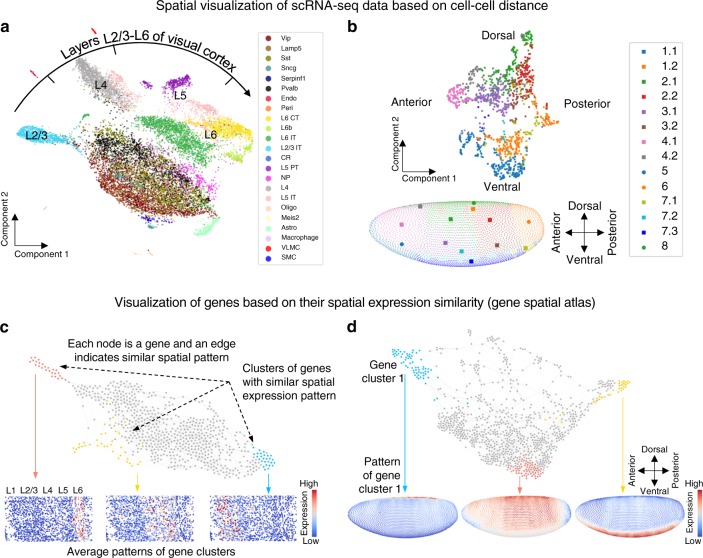
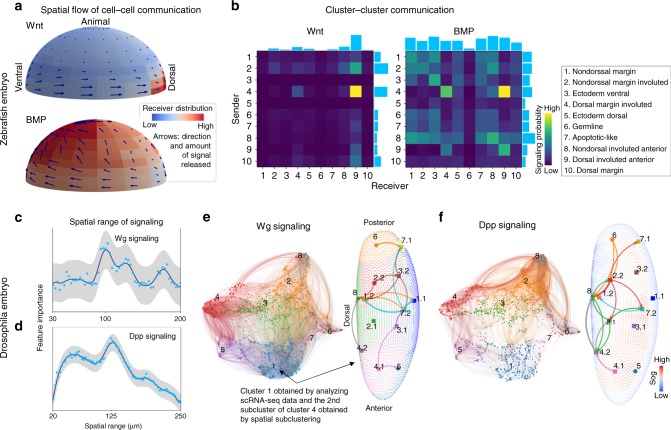
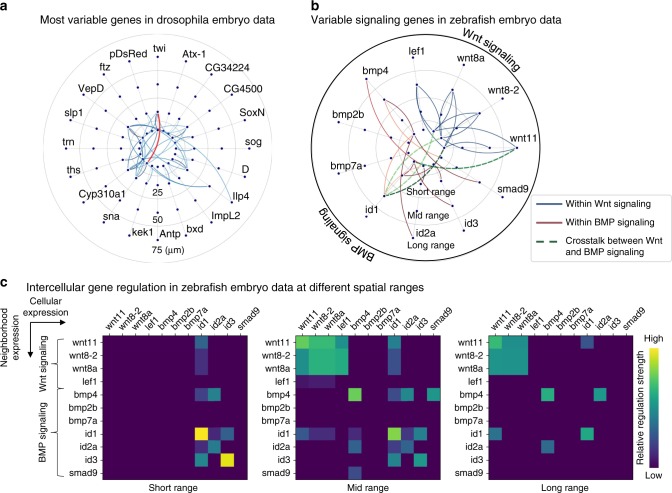
Single-cell RNA sequencing (scRNA-seq) provides details for individual cells; however, crucial spatial information is often lost. We present SpaOTsc, a method relying on structured optimal transport to recover spatial properties of scRNA-seq data by utilizing spatial measurements of a relatively small number of genes. A spatial metric for individual cells in scRNA-seq data is first established based on a map connecting it with the spatial measurements. The cell-cell communications are then obtained by "optimally transporting" signal senders to target signal receivers in space. Using partial information decomposition, we next compute the intercellular gene-gene information flow to estimate the spatial regulations between genes across cells. Four datasets are employed for cross-validation of spatial gene expression prediction and comparison to known cell-cell communications. SpaOTsc has broader applications, both in integrating non-spatial single-cell measurements with spatial data, and directly in spatial single-cell transcriptomics data to reconstruct spatial cellular dynamics in tissues.
单细胞 RNA 测序(scRNA-seq)为单个细胞提供了详细信息;然而,关键的空间信息通常会丢失。我们提出了 SpaOTsc 方法,该方法依赖于结构最优传输,通过利用相对少量基因的空间测量值来恢复 scRNA-seq 数据的空间特性。首先基于连接细胞与其空间测量值的图谱,为 scRNA-seq 数据中的单个细胞建立空间度量。然后通过“最优传输”在空间中将信号发送器“传输”到目标信号接收器,从而获得细胞间的通讯。接下来,通过部分信息分解,计算细胞间的基因-基因信息流,以估计跨细胞基因之间的空间调控。使用四个数据集进行空间基因表达预测的交叉验证,并与已知的细胞间通讯进行比较。SpaOTsc 具有更广泛的应用,既可以整合非空间单细胞测量值与空间数据,也可以直接在空间单细胞转录组学数据中重建组织中的空间细胞动力学。