School of Public Health, Jilin University, Xinmin Street 1163, Changchun, 130021, China.
School of Mathematics, Jilin University, Qianjin Street 2699, Changchun, 130012, China.
Theor Biol Med Model. 2020 May 4;17(1):6. doi: 10.1186/s12976-020-00124-9.
Tuberculosis (TB) is one of the most important health topics in the world. Directly observed treatment and short course chemotherapy (DOTS) strategy combines medicine care and modern health system firmly, and it has been carried out by World Health Organization (WHO) since 1997. In the struggle with TB, China has promoted the process of controlling the disease actively, and the full coverage of DOTS strategy has been reached around 2004. Mathematical modeling is a very useful tool to study the transmission of diseases. Understanding the impact of DOTS strategy on the control of TB is important for designing further prevention strategy.
We investigate the impact of control strategy on the transmission of TB in China by dynamic model. Then we discuss further control for TB aiming at developing new vaccine and improving treatment. The optimal control problem, minimizing the total number of infectious individuals with the lowest cost, is proposed and analyzed by Pontryagin's maximum principle. Numerical simulations are provided to illustrate the theoretical results.
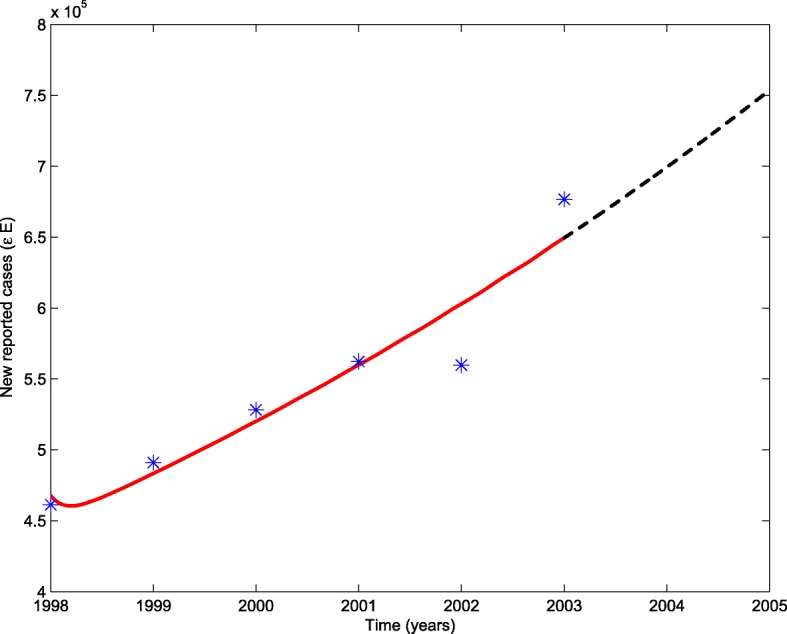
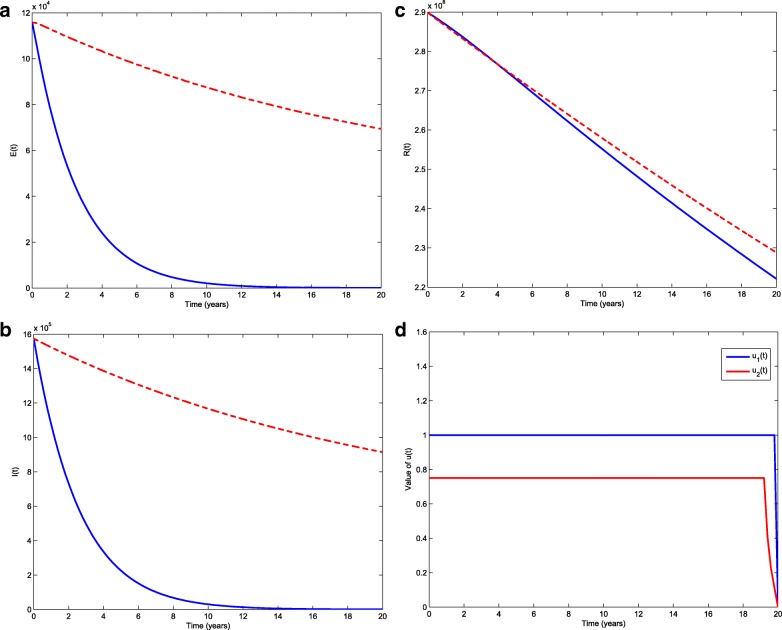
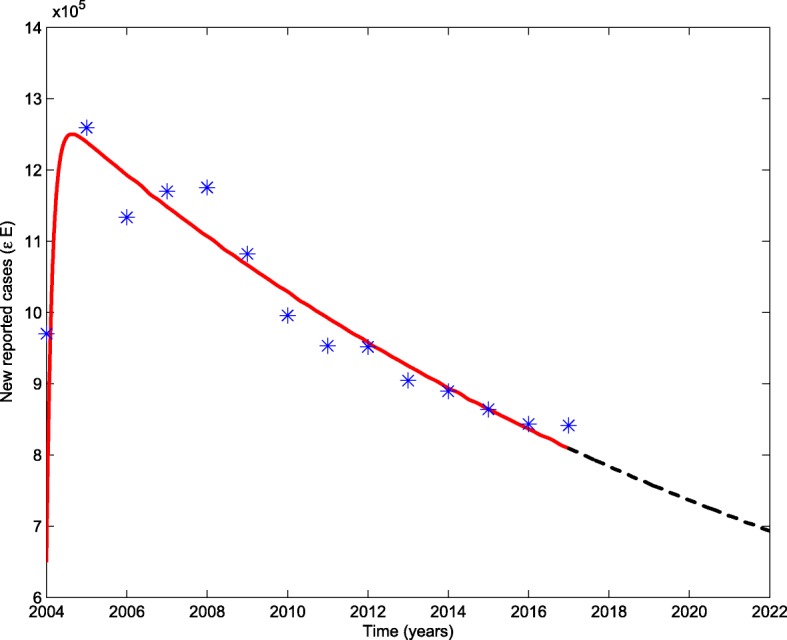
Theoretical analysis for the epidemic model is given. Based on the data reported by National Bureau of Statistics of China (NBSC), the basic reproduction number of each stage is estimated and compared, and they are [Formula: see text] and [Formula: see text], respectively. Optimal control strategy for further control is designed and proved well. An intuitionistic comparison between the optimal control strategy and the current control strategy is given.
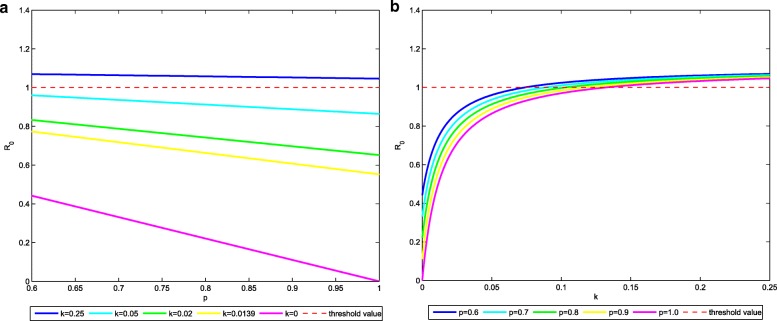
The diagnosis and treatment of TB in China have been promoted a lot and the [Formula: see text] is reduced by the full coverage of DOTS strategy. However, the [Formula: see text] in China is still greater than 1 now. The relationship between [Formula: see text] and vaccination strategy is shown. Optimal strategy aiming at exposed and infected population is suggested for further control.
结核病(TB)是世界上最重要的健康议题之一。直接观察治疗和短程化疗(DOTS)策略将医学护理和现代卫生系统紧密结合,自 1997 年以来一直由世界卫生组织(WHO)实施。在中国与结核病的斗争中,积极推动了疾病控制进程,到 2004 年左右全面覆盖了 DOTS 策略。数学建模是研究疾病传播的非常有用的工具。了解 DOTS 策略对结核病控制的影响对于设计进一步的预防策略很重要。
我们通过动态模型研究了控制策略对中国结核病传播的影响。然后,我们讨论了进一步控制结核病的措施,旨在开发新疫苗和改进治疗方法。通过庞特里亚金极大值原理提出并分析了最小化具有最低成本的感染个体总数的最优控制问题。提供了数值模拟来说明理论结果。
给出了流行模型的理论分析。基于国家统计局(NBSC)报告的数据,估计并比较了每个阶段的基本再生数,分别为[Formula: see text]和[Formula: see text]。设计并证明了进一步控制的最优控制策略是有效的。还给出了最优控制策略与当前控制策略之间的直观比较。
中国的结核病诊断和治疗得到了很大的推动,DOTS 策略的全面覆盖使[Formula: see text]降低。然而,目前中国的[Formula: see text]仍然大于 1。还展示了[Formula: see text]与疫苗接种策略之间的关系。建议针对暴露和感染人群的最优策略以进一步控制。