Liu Xiaoji, Teixeira Januana S, Ner Saurabh, Ma Kassandra V, Petronella Nicholas, Banerjee Swapan, Ronholm Jennifer
Faculty of Agricultural and Environmental Sciences, McGill University, Sainte-Anne-de-Bellevue, QC, Canada.
Health Canada, Ottawa, ON, Canada.
Front Microbiol. 2020 Apr 17;11:696. doi: 10.3389/fmicb.2020.00696. eCollection 2020.
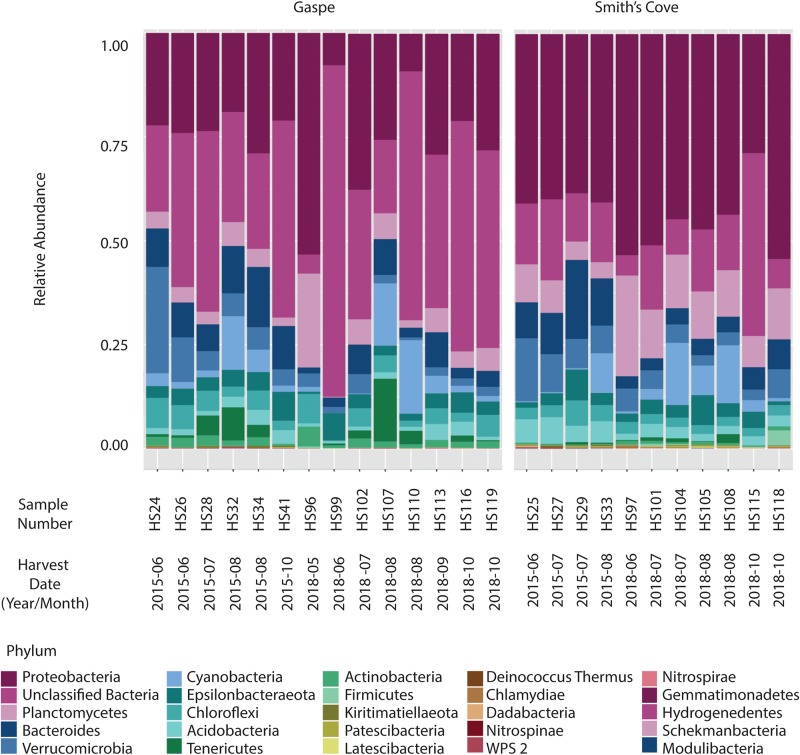
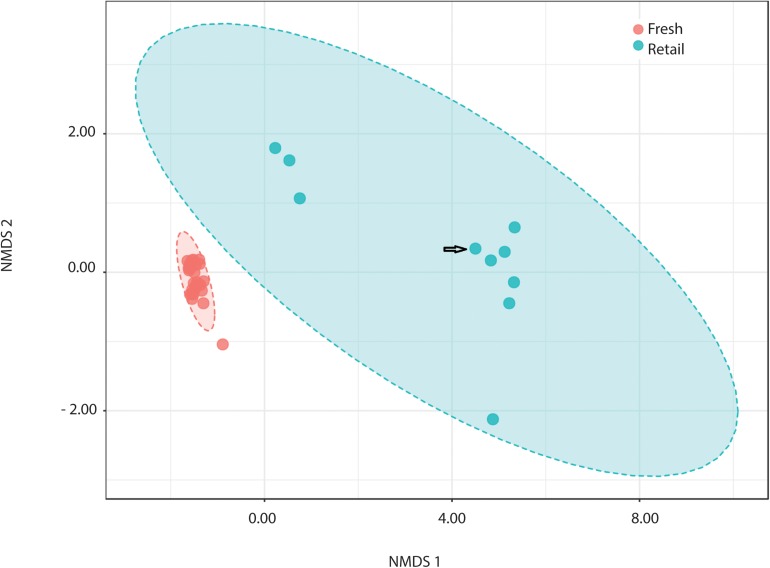
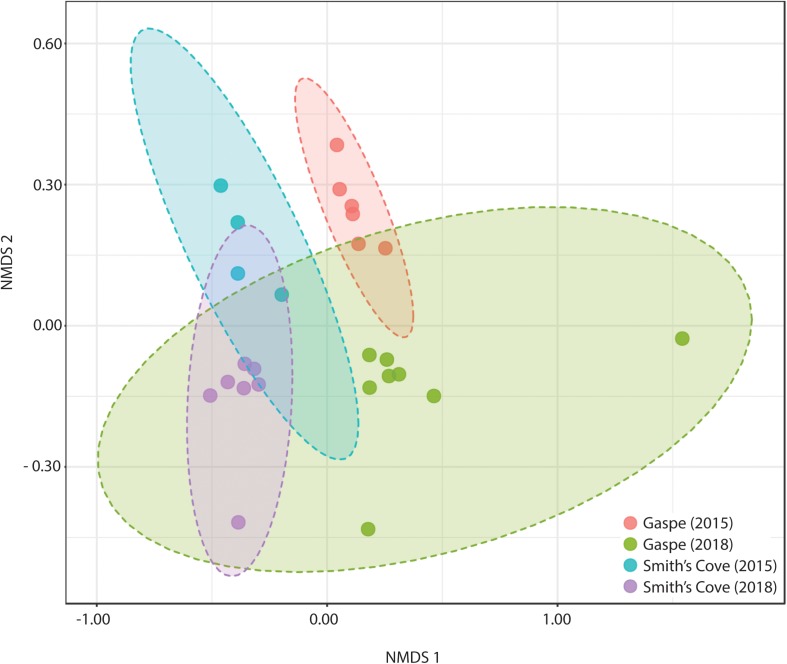
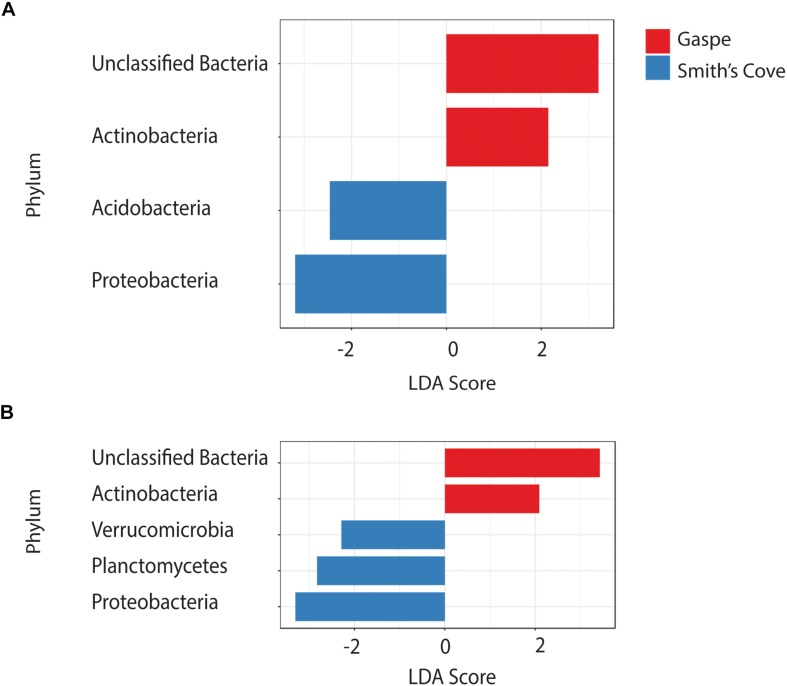
Geographic food fraud - misrepresenting the geographic origin of a food item, is very difficult to detect, and therefore this type of fraud tends to go undetected. This potentially negatively impacts the health of Canadians and economic success of our seafood industry. Surveillance studies have shown that up to a significant portion of commercially sold seafood items in Canada are mislabeled or otherwise misrepresented in some way. The current study aimed to determine if the microbiome of fresh shellfish could be used as an accurate marker of harvest location. Total DNA was extracted from the homogenate of 25 batches of fresh soft-shell clams () harvested in 2015 and 2018 from two locations on the East Coast of Canada and the microbiome of each homogenate was characterized using 16S rRNA targeted amplicon sequencing. Clams harvested from Nova Scotia in both years had a higher abundance of and ( < 0.05), but a lower abundance of ( < 0.05) than those from Quebec. Alpha-diversity also differed significantly between sites. Samples harvested from Nova Scotia had greater diversity ( < 0.0001) than those from Quebec. Beta-diversity analysis showed that the microbial community composition was significantly different between the samples from Nova Scotia and Quebec and indicated that 16S rRNA targeted amplicon sequencing might be an effective tool for elucidating the geographic origin of unprocessed shellfish. To evaluate if the microbiome of shellfish experiences a loss of microbial diversity during processing and storage - which would limit the ability of this technique to link retail samples to geographic origin, 10 batches of retail clams purchased from grocery stores were also examined. Microbial diversity and species richness was significantly lower in retail clams, and heavily dominated by , a typical spoilage organism for fresh seafood, this may make determining the geographic origin of seafood items more difficult in retail clams than in freshly harvested clams.
地域食品欺诈——歪曲食品的地理来源,很难被察觉,因此这类欺诈往往未被发现。这可能会对加拿大人的健康以及我们海产品行业的经济成功产生负面影响。监测研究表明,在加拿大商业销售的海产品中,高达相当大比例的产品在某种程度上被错误标注或以其他方式被歪曲。当前的研究旨在确定新鲜贝类的微生物群是否可作为收获地点的准确标志物。从2015年和2018年在加拿大东海岸两个地点收获的25批新鲜软壳蛤()的匀浆中提取总DNA,并使用16S rRNA靶向扩增子测序对每个匀浆的微生物群进行表征。这两年从新斯科舍省收获的蛤中, 和 的丰度较高(<0.05),但与来自魁北克的蛤相比, 的丰度较低(<0.05)。不同地点之间的α多样性也存在显著差异。从新斯科舍省收获的样本比来自魁北克的样本具有更高的多样性(<0.0001)。β多样性分析表明,新斯科舍省和魁北克省样本之间的微生物群落组成存在显著差异,这表明16S rRNA靶向扩增子测序可能是阐明未加工贝类地理来源的有效工具。为了评估贝类的微生物群在加工和储存过程中是否会出现微生物多样性丧失的情况——这会限制该技术将零售样本与地理来源联系起来的能力,还检查了从杂货店购买的10批零售蛤。零售蛤中的微生物多样性和物种丰富度显著较低,并且主要由 主导, 是新鲜海产品的典型腐败菌,这可能使得确定零售蛤中海产品的地理来源比新鲜收获的蛤更加困难。