Wang Xiaoju, Wang Qingbo, Xu Chunlin
Laboratory of Natural Materials Technology, Åbo Akademi University, Porthaninkatu 3-5, 20500 Turku, Finland.
Bioengineering (Basel). 2020 Apr 29;7(2):40. doi: 10.3390/bioengineering7020040.
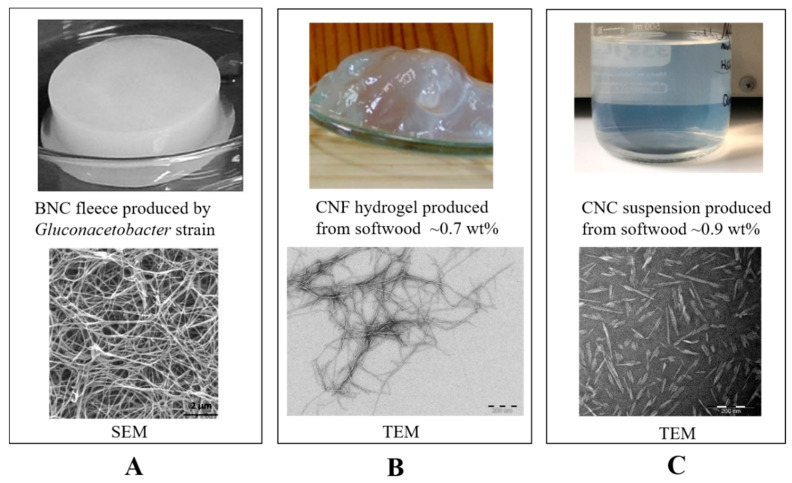
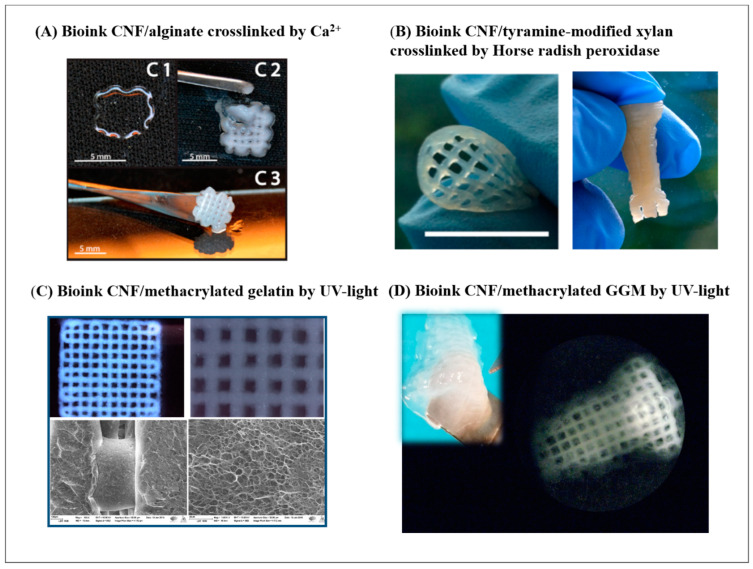
Nanocelluloses have emerged as a catalogue of renewable nanomaterials for bioink formulation in service of 3D bioprinting, thanks to their structural similarity to extracellular matrices and excellent biocompatibility of supporting crucial cellular activities. From a material scientist's viewpoint, this mini-review presents the key research aspects of the development of the nanocellulose-based bioinks in 3D (bio)printing. The nanomaterial properties of various types of nanocelluloses, including bacterial nanocellulose, cellulose nanofibers, and cellulose nanocrystals, are reviewed with respect to their origins and preparation methods. Different cross-linking strategies to integrate into multicomponent nanocellulose-based bioinks are discussed in terms of regulating ink fidelity in direct ink writing as well as tuning the mechanical stiffness as a bioactive cue in the printed hydrogel construct. Furthermore, the impact of surface charge and functional groups on nanocellulose surface on the crucial cellular activities (e.g., cell survival, attachment, and proliferation) is discussed with the cell-matrix interactions in focus. Aiming at a sustainable and cost-effective alternative for end-users in biomedical and pharmaceutical fields, challenging aspects such as biodegradability and potential nanotoxicity of nanocelluloses call for more fundamental comprehension of the cell-matrix interactions and further validation in in vivo models.
由于纳米纤维素与细胞外基质结构相似,且在支持关键细胞活动方面具有出色的生物相容性,它们已成为用于3D生物打印生物墨水配方的可再生纳米材料目录。从材料科学家的角度来看,这篇综述介绍了3D(生物)打印中基于纳米纤维素的生物墨水开发的关键研究方面。本文综述了包括细菌纳米纤维素、纤维素纳米纤维和纤维素纳米晶体在内的各种纳米纤维素的纳米材料特性,以及它们的来源和制备方法。讨论了不同的交联策略,以整合到多组分纳米纤维素基生物墨水中,这些策略涉及在直接墨水书写中调节墨水保真度,以及在打印水凝胶结构中调整机械刚度作为生物活性线索。此外,重点讨论了纳米纤维素表面的表面电荷和官能团对关键细胞活动(如细胞存活、附着和增殖)的影响以及细胞-基质相互作用。为了为生物医学和制药领域的终端用户提供一种可持续且经济高效的替代方案,纳米纤维素的生物降解性和潜在的纳米毒性等具有挑战性的方面需要对细胞-基质相互作用有更深入的理解,并在体内模型中进行进一步验证。