Dept of Infectious Disease, Imperial College London, London, UK
IFHAD: Innovation for Health and Development, Laboratory for Research and Development, Universidad Peruana Cayetano Heredia, Lima, Peru.
Eur Respir J. 2020 Aug 6;56(2). doi: 10.1183/13993003.00495-2019. Print 2020 Aug.
Global tuberculosis policy increasingly emphasises broad tuberculosis impacts and highlights the lack of evidence concerning tuberculosis-related quality of life (QOL).
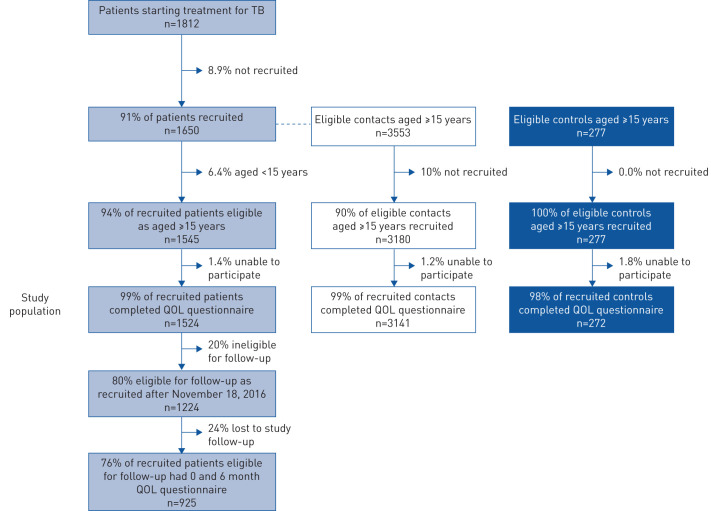
Participants were recruited in 32 Peruvian communities between July 13, 2016 and February 24, 2018 and followed-up until November 8, 2019. Inclusion criteria were age ≥15 years for "patients" (n=1545) starting treatment for tuberculosis disease in health centres; "contacts" (n=3180) who shared a patient's household for ≥6 h·week; and randomly selected "controls" (n=277). The EUROHIS-QOL questionnaire quantified satisfaction with QOL, health, energy, activities of daily living (ADL), self, relationships, money and living place.
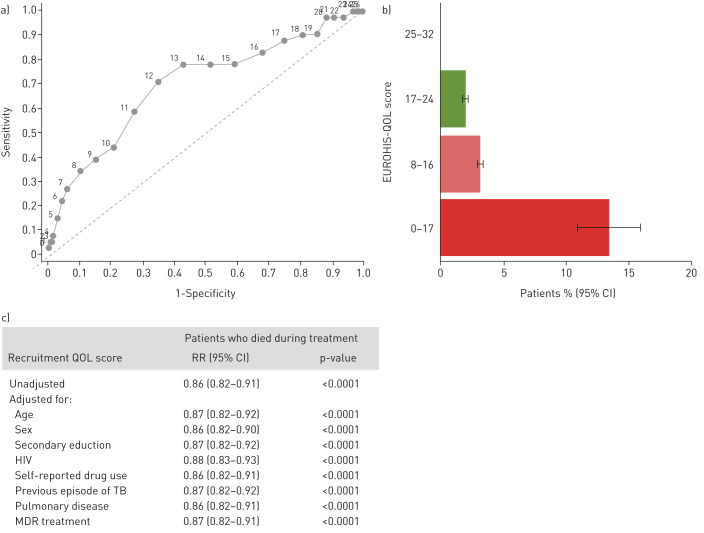
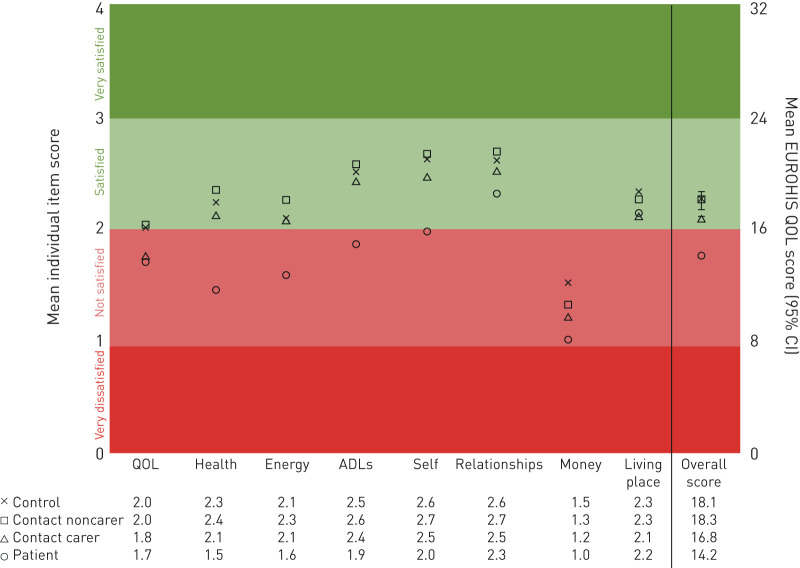
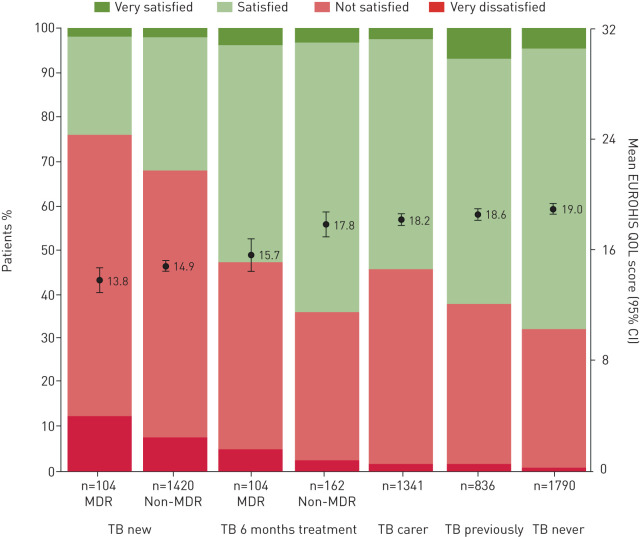
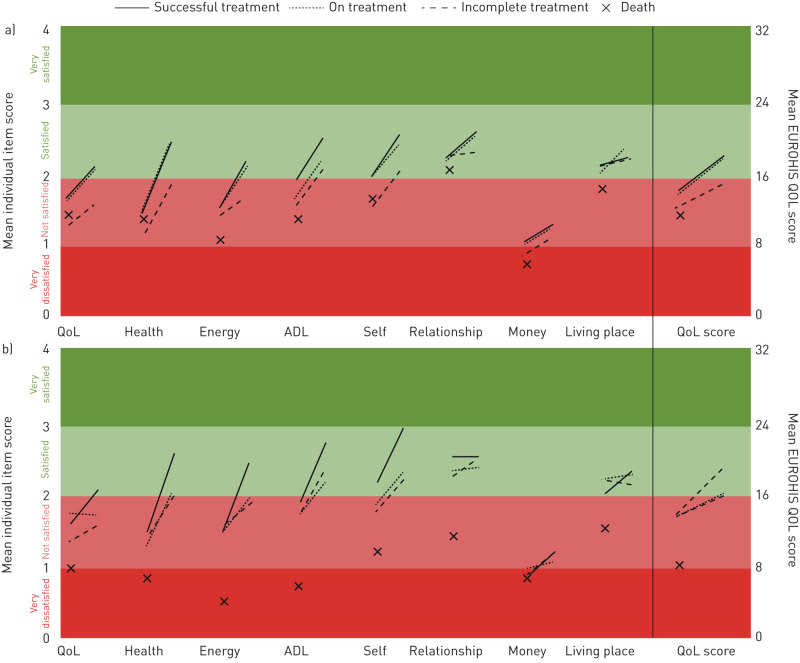
Newly diagnosed tuberculosis was most strongly associated with lower QOL scores (p<0.001). Patients initially had lower QOL than controls for all EUROHIS-QOL questions (p≤0.01), especially concerning health, ADL and self. Lower initial QOL in patients predicted adverse treatment outcomes and scores <13 points had 4.2-fold (95% CI 2.3-7.6) increased risk of death those with higher QOL scores (both p<0.001). Patient QOL was re-assessed 6 months later, and for patients with successful treatment QOL became similar to participants who had never had tuberculosis, whereas patients who did not complete treatment continued to have low QOL (p<0.001). Multidrug-resistant tuberculosis was associated with lower QOL before and during treatment (both p<0.001). Contacts had lower QOL if they lived with a patient who had low QOL score (p<0.0001) or were a caregiver for the patient (p<0.001).
Tuberculosis was associated with impaired psychosocioeconomic QOL which recovered with successful treatment. Low QOL scores predicted adverse treatment outcome. This brief EUROHIS-QOL eight-item questionnaire quantified the holistic needs of tuberculosis-affected people, potentially guiding patient-centred care.
全球结核病政策越来越强调结核病的广泛影响,并强调缺乏与结核病相关生活质量(QOL)相关的证据。
参与者于 2016 年 7 月 13 日至 2018 年 2 月 24 日在秘鲁 32 个社区招募,并随访至 2019 年 11 月 8 日。纳入标准为在卫生中心开始治疗结核病疾病的年龄≥15 岁的“患者”(n=1545);与患者同住≥6h·周的“接触者”(n=3180);以及随机选择的“对照”(n=277)。EUROHIS-QOL 问卷定量了对生活质量、健康、能量、日常生活活动(ADL)、自我、人际关系、金钱和生活场所的满意度。
新发结核病与 QOL 评分较低(p<0.001)关系最密切。患者最初在所有 EUROHIS-QOL 问题上的 QOL 均低于对照组(p≤0.01),特别是在健康、ADL 和自我方面。患者最初较低的 QOL 预示着治疗结果不良,评分<13 分的患者死亡风险增加 4.2 倍(95%CI 2.3-7.6),而 QOL 评分较高的患者(均 p<0.001)。6 个月后重新评估了患者的 QOL,对于成功治疗的患者,QOL 变得与从未患过结核病的参与者相似,而未完成治疗的患者继续保持较低的 QOL(p<0.001)。耐多药结核病在治疗前后均与较低的 QOL 相关(均 p<0.001)。如果接触者与 QOL 评分较低的患者同住(p<0.0001)或照顾患者(p<0.001),则接触者的 QOL 较低。
结核病与心理健康受损相关,成功治疗后恢复。低 QOL 评分预示着治疗结果不良。这种简短的 EUROHIS-QOL 八项问卷量化了受结核病影响人群的整体需求,可能指导以患者为中心的护理。