International Centre of Insect Physiology and Ecology (ICIPE), Kasarani, Nairobi, Kenya.
MRC-University of Glasgow Centre for Virus Research, 464 Bearsden Road, Glasgow, G61 1QH, UK.
Nat Commun. 2020 May 4;11(1):2187. doi: 10.1038/s41467-020-16121-y.
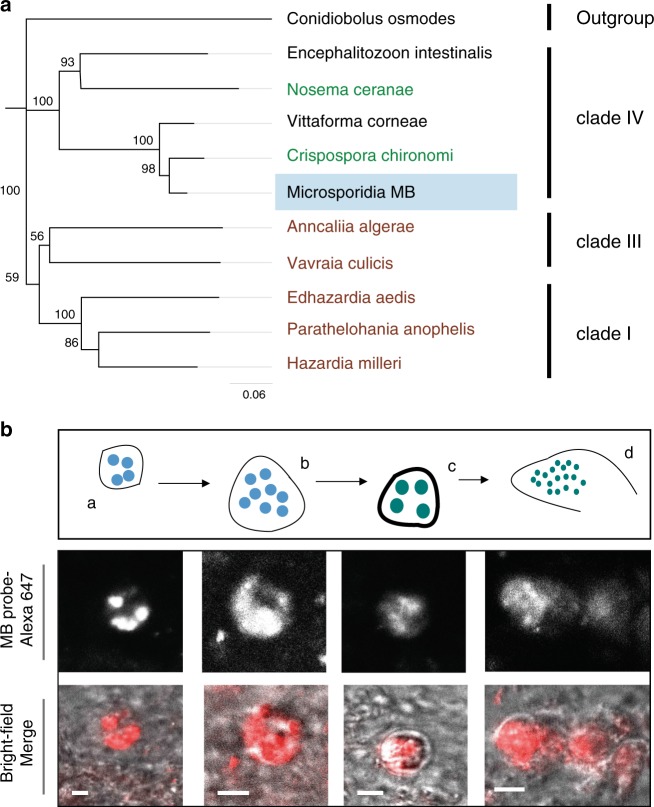
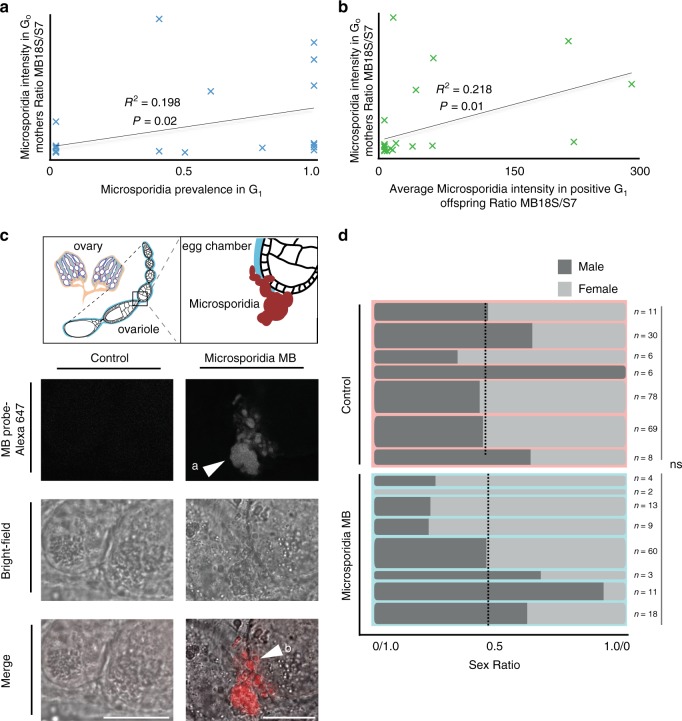
A possible malaria control approach involves the dissemination in mosquitoes of inherited symbiotic microbes to block Plasmodium transmission. However, in the Anopheles gambiae complex, the primary African vectors of malaria, there are limited reports of inherited symbionts that impair transmission. We show that a vertically transmitted microsporidian symbiont (Microsporidia MB) in the An. gambiae complex can impair Plasmodium transmission. Microsporidia MB is present at moderate prevalence in geographically dispersed populations of An. arabiensis in Kenya, localized to the mosquito midgut and ovaries, and is not associated with significant reductions in adult host fecundity or survival. Field-collected Microsporidia MB infected An. arabiensis tested negative for P. falciparum gametocytes and, on experimental infection with P. falciparum, sporozoites aren't detected in Microsporidia MB infected mosquitoes. As a microbe that impairs Plasmodium transmission that is non-virulent and vertically transmitted, Microsporidia MB could be investigated as a strategy to limit malaria transmission.
一种可能的疟疾控制方法是在蚊子中传播遗传共生微生物,以阻断疟原虫的传播。然而,在冈比亚按蚊复合体中,疟疾的主要非洲传播媒介,关于会损害传播的遗传共生体的报道有限。我们表明,在冈比亚按蚊复合体中垂直传播的微孢子虫共生体(微孢子虫 MB)可以损害疟原虫的传播。微孢子虫 MB 在肯尼亚地理上分散的阿拉伯按蚊种群中以中等流行率存在,定位于蚊子的中肠和卵巢,并且与成年宿主繁殖力或存活率的显著降低无关。从野外采集的感染微孢子虫 MB 的阿拉伯按蚊对恶性疟原虫配子体检测呈阴性,并且在感染恶性疟原虫的实验中,在感染微孢子虫 MB 的蚊子中未检测到孢子虫。作为一种非致病且垂直传播的损害疟原虫传播的微生物,微孢子虫 MB 可以作为限制疟疾传播的策略进行研究。