Sundararajan Vignesh, Tan Ming, Zea Tan Tuan, Pang Qing You, Ye Jieru, Chung Vin Yee, Huang Ruby Yun-Ju
Cancer Science Institute of Singapore, National University of Singapore, Center for Translational Medicine, Singapore 117599, Singapore.
Department of Obstetrics and Gynaecology, Yong Loo Lin School of Medicine, National University of Singapore, Singapore 119077, Singapore.
Cancers (Basel). 2020 May 2;12(5):1140. doi: 10.3390/cancers12051140.
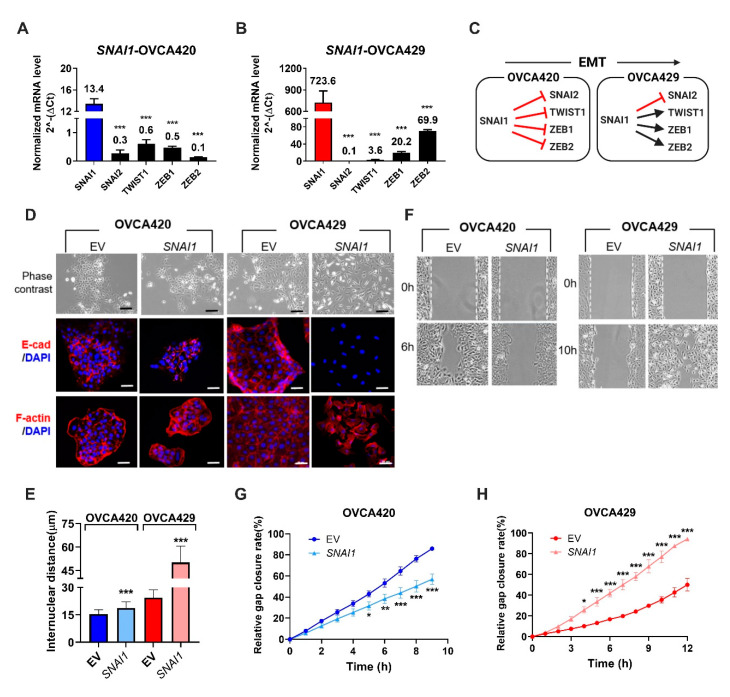
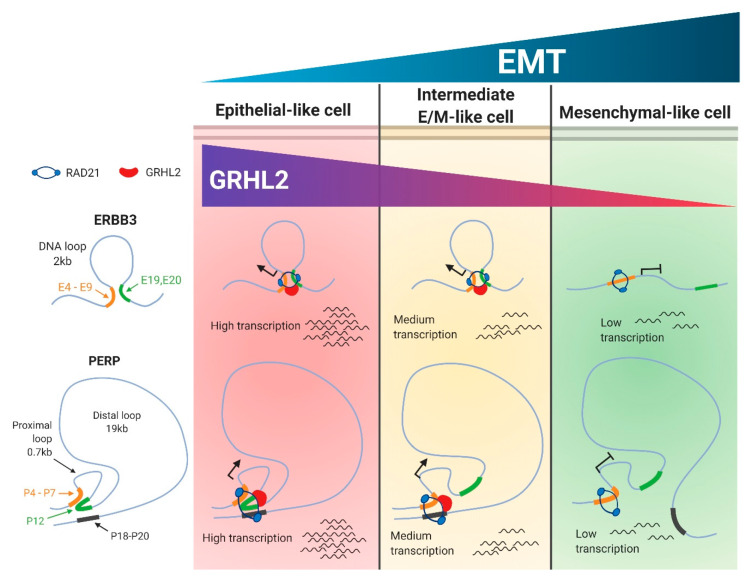
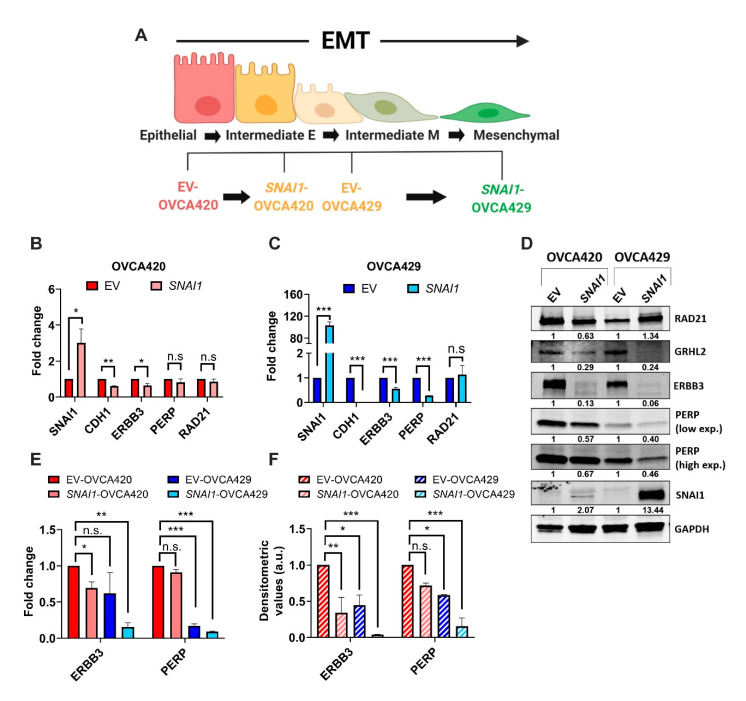
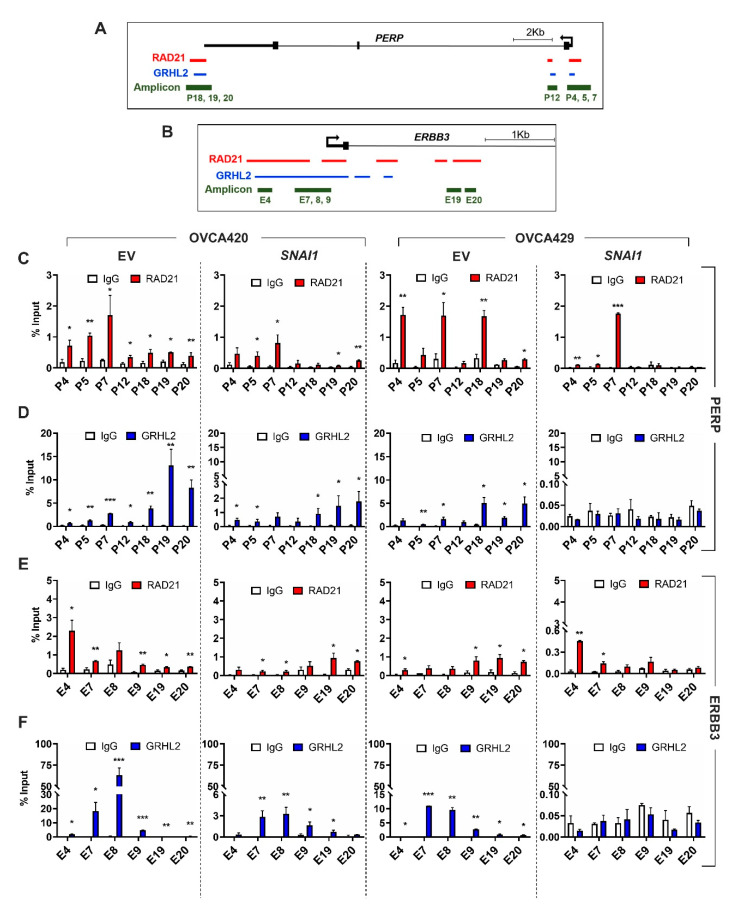
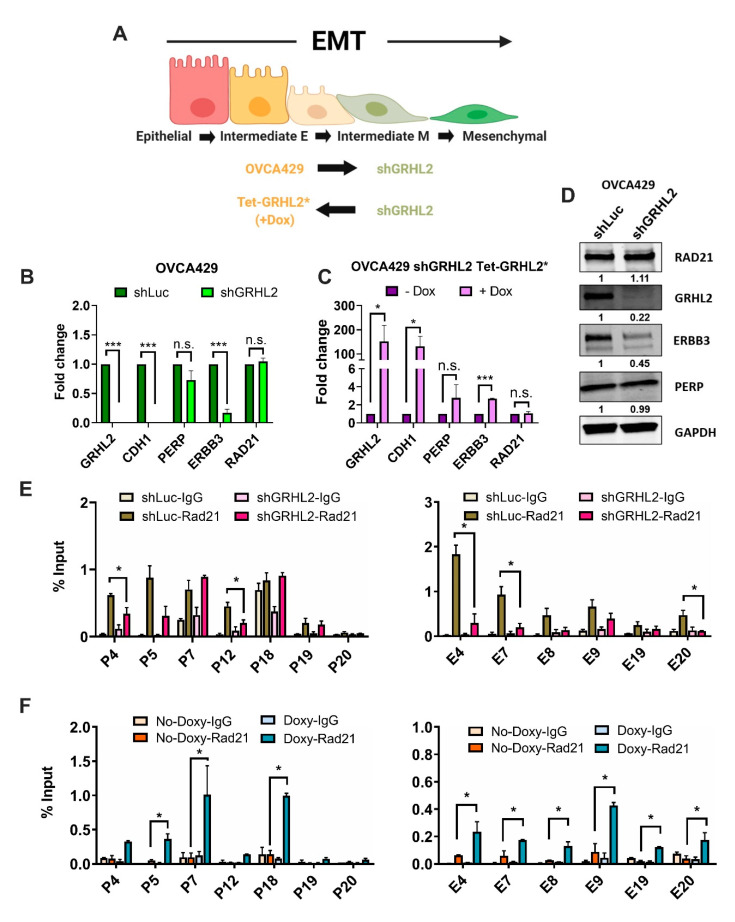
Over two decades of research on cancer-associated epithelial-mesenchymal transition (EMT) led us to ascertain the occurrence of transitional intermediate states (collectively referred to as the EMT spectrum). Among the molecular factors that drive EMT, SNAI1 plays an indispensable role in regulating other core transcription factors, and this regulation is highly context-dependent. However, molecular investigation on this context-dependent regulation is still lacking. Using two ovarian cancer cell lines, we show that SNAI1 regulation on other core EMT-TFs switches from a repressive control in highly epithelial cells to an activation signaling in intermediate epithelial cells. Upon further scrutiny, we identify that the expression of early epithelial genes and are differentially regulated in SNAI1-induced sequential EMT changes. Mechanistically, we show that changes in and transcript levels could be correlated to the selective enrichment loss of RAD21, a cohesin component, at the distal enhancer sites of and , which precedes that of the proximal promoter-associated sites. Furthermore, the RAD21 enrichment at the distal enhancer sites is dependent on GRHL2 expression. In a nutshell, the alteration of GRHL2-associated RAD21 enrichment in epithelial genes is crucial to redefine the transition of cellular states along the EMT spectrum.
二十多年来对癌症相关上皮-间质转化(EMT)的研究使我们确定了过渡中间状态(统称为EMT谱)的存在。在驱动EMT的分子因素中,SNAI1在调节其他核心转录因子方面发挥着不可或缺的作用,而且这种调节高度依赖于背景环境。然而,针对这种背景依赖性调节的分子研究仍然缺乏。利用两种卵巢癌细胞系,我们发现SNAI1对其他核心EMT转录因子的调节从在高度上皮细胞中的抑制性控制转变为在中间上皮细胞中的激活信号。经过进一步研究,我们发现早期上皮基因 和 的表达在SNAI1诱导的连续EMT变化中受到不同的调节。从机制上讲,我们表明 和 转录水平的变化可能与黏连蛋白组分RAD21在 和 远端增强子位点的选择性富集缺失相关,这发生在近端启动子相关位点之前。此外,RAD21在远端增强子位点的富集依赖于GRHL2的表达。简而言之,上皮基因中与GRHL2相关的RAD21富集的改变对于重新定义沿EMT谱的细胞状态转变至关重要。