Division of Clinical Psychology and Psychotherapy, Department of Psychology, Philipps University Marburg, Gutenbergstrasse 18, 35032, Marburg, Germany.
HSD Hochschule Döpfer, University of Applied Sciences, Waidmarkt 3 und 9, DE-50676, Köln, Germany.
Trials. 2020 May 5;21(1):382. doi: 10.1186/s13063-020-04309-y.
Tinnitus is a particularly common condition and can have debilitating psychological consequences for certain people. Although several interventions have been helpful in teaching individuals to better cope with tinnitus, no cure exists at present. Neurofeedback is an emerging treatment modality in tinnitus. Previous studies, utilising an alpha/delta training protocol, have shown promise. However, they were characterised by small sample sizes and a lack of neurofeedback control conditions. Therefore, the aim of this study is to investigate whether an alpha/delta neurofeedback training protocol, compared to beta/theta neurofeedback or a diary control group, is effective in reducing not only the tinnitus sound perception but also the psychological symptoms associated with the condition.
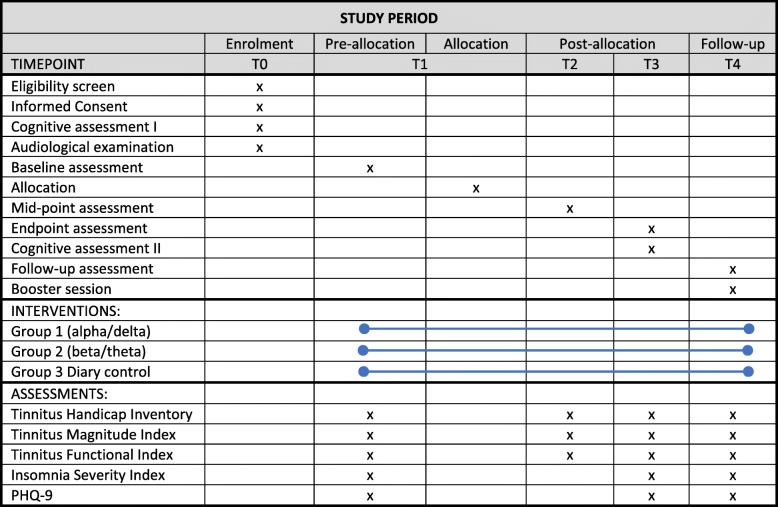
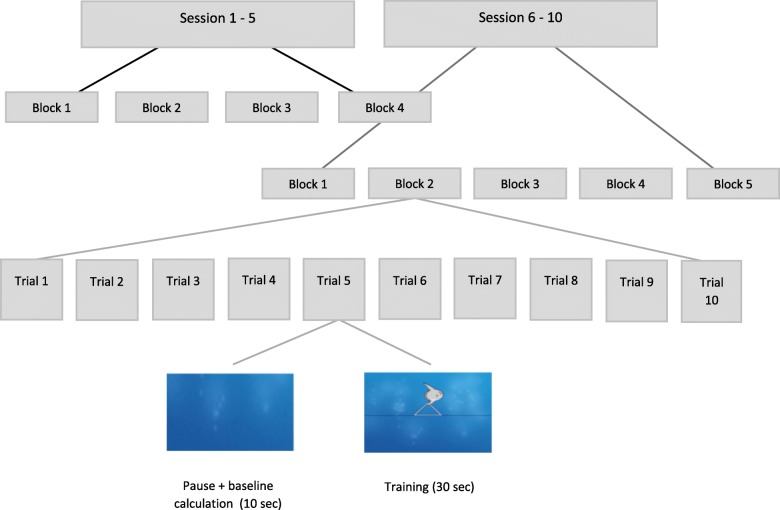
The study is designed as a three-armed randomised controlled trial. Participants are randomly assigned to a) an established neurofeedback protocol for tinnitus (alpha/delta training), b) an active control group (beta/theta training) or c) a diary control group. In the 4-week intervention period, participants in both neurofeedback groups undergo 10 sessions, whereas participants in the diary control group complete a bi-weekly diary. The primary outcomes are between group differences in tinnitus sound perception change, as measured with the Tinnitus Magnitude Index (TMI), and changes in tinnitus distress, measured with the Tinnitus Handicap Inventory (THI), 4 weeks after the start of the intervention. Secondary outcome measures include changes in tinnitus distress, sleep quality, depressive symptoms and whether neurofeedback leads to specific power changes in the trained frequency bands.
This is the first randomised controlled trial examining the efficacy of an alpha/delta neurofeedback training protocol in reducing tinnitus sound perception and the distress associated with the condition. Compared to former studies, the present study is designed to assess both the specificity of an alpha/delta neurofeedback training protocol by including an active comparator and beta/theta neurofeedback training, in addition to controlling for placebo effects by the inclusion of a diary control group. This study aims to contribute to an understanding of the influences of both specific and non-specific effects in neurofeedback treatment for tinnitus.
ClinicalTrials.gov: NCT03550430. Registered on 27 May 2018.
耳鸣是一种特别常见的病症,对某些人来说可能会产生严重的心理后果。虽然有几种干预措施有助于教会个体更好地应对耳鸣,但目前尚无治愈方法。神经反馈是耳鸣治疗的一种新兴方法。以前的研究使用阿尔法/德尔塔训练方案表明有一定的效果。然而,这些研究的特点是样本量小,缺乏神经反馈对照条件。因此,本研究旨在探讨与贝塔/theta 神经反馈或日记对照组相比,阿尔法/德尔塔神经反馈训练方案是否不仅能有效降低耳鸣声音感知,还能降低与耳鸣相关的心理症状。
该研究设计为三臂随机对照试验。参与者被随机分配到 a) 经证实的耳鸣神经反馈方案(阿尔法/德尔塔训练)、b) 主动对照组(贝塔/theta 训练)或 c) 日记对照组。在 4 周的干预期间,两个神经反馈组的参与者都要进行 10 次治疗,而日记对照组的参与者则要完成每两周一次的日记。主要结果是在干预开始后 4 周,使用耳鸣度量指数(Tinnitus Magnitude Index,TMI)测量的耳鸣声音感知变化的组间差异,以及使用耳鸣残疾量表(Tinnitus Handicap Inventory,THI)测量的耳鸣困扰变化。次要结果包括耳鸣困扰、睡眠质量、抑郁症状的变化,以及神经反馈是否导致训练频率带的特定功率变化。
这是第一项评估阿尔法/德尔塔神经反馈训练方案降低耳鸣声音感知和相关困扰的有效性的随机对照试验。与以前的研究相比,本研究旨在通过包括主动对照和贝塔/theta 神经反馈训练来评估阿尔法/德尔塔神经反馈训练方案的特异性,同时通过包括日记对照组来控制安慰剂效应。本研究旨在为理解神经反馈治疗耳鸣的特异性和非特异性影响做出贡献。
ClinicalTrials.gov:NCT03550430。于 2018 年 5 月 27 日注册。