Li Xiaobing, Mo Nan, Li Zhenzhen
College of Basic Medicine, Henan University of Traditional Chinese Medicine, Zhengzhou, China.
Medical Research Center, The First Affiliated Hospital of Zhengzhou University, Zhengzhou, China.
J Ginseng Res. 2020 May;44(3):386-398. doi: 10.1016/j.jgr.2019.12.003. Epub 2019 Dec 17.
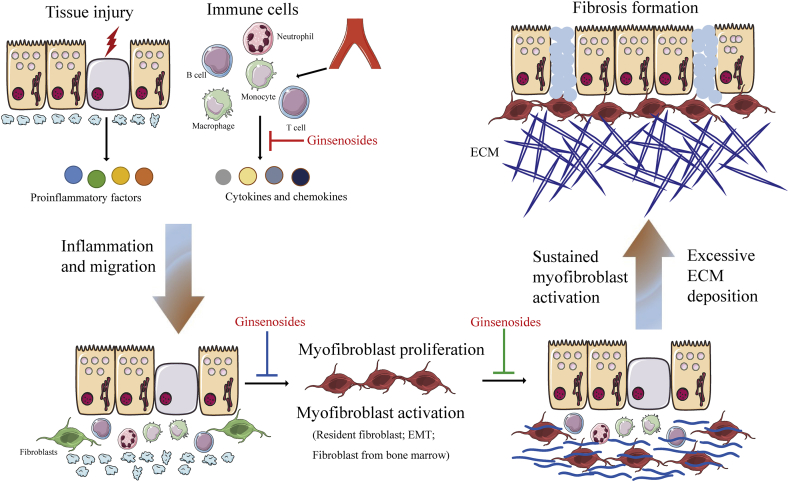
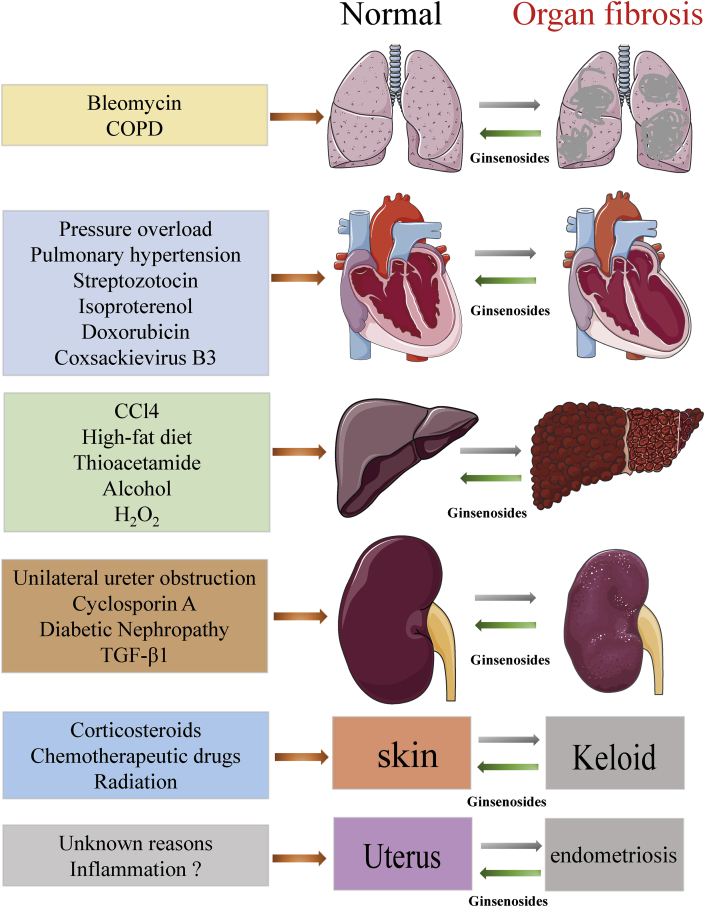
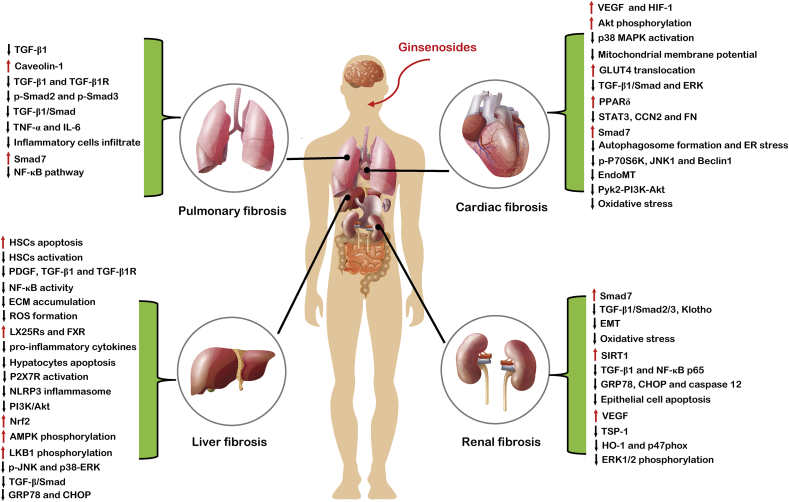
Tissue fibrosis is an eventual pathologic change of numerous chronic illnesses, which is characterized by resident fibroblasts differentiation into myofibroblasts during inflammation, coupled with excessive extracellular matrix deposition in tissues, ultimately leading to failure of normal organ function. Now, there are many mechanistic insights into the pathogenesis of tissue fibrosis, which facilitate the discovery of effective antifibrotic drugs. Moreover, many chronic diseases remain a significant clinical unmet need. For the past five years, many research works have undoubtedly addressed the functional dependency of ginsenosides in different types of fibrosis and the successful remission in various animal models treated with ginsenosides. Caveolin-1, interleukin, thrombospondin-1 (TSP-1), liver X receptors (LXRs), Nrf2, microRNA-27b, PPARδ-STAT3, liver kinase B1 (LKB1)-AMPK, and TGF-β1/Smads are potential therapy targeting using ginsenosides. Ginsenosides can play a targeting role and suppress chronic inflammatory response, collagen deposition, and epithelial-mesenchymal transition (EMT), as well as myofibroblast activation to attenuate fibrosis. In this report, our aim was to focus on the therapeutic prospects of ginsenosides in fibrosis-related human diseases making use of results acquired from various animal models. These findings should provide important therapeutic clues and strategies for the exploration of new drugs for fibrosis treatment.
组织纤维化是众多慢性疾病最终的病理变化,其特征是在炎症过程中,驻留的成纤维细胞分化为肌成纤维细胞,同时组织中细胞外基质过度沉积,最终导致正常器官功能衰竭。目前,对于组织纤维化的发病机制已有许多深入的认识,这有助于发现有效的抗纤维化药物。此外,许多慢性疾病在临床上仍存在重大未满足需求。在过去五年中,许多研究工作无疑已经探讨了人参皂苷在不同类型纤维化中的功能依赖性,以及在用人参皂苷治疗的各种动物模型中取得的成功缓解情况。小窝蛋白-1、白细胞介素、血小板反应蛋白-1(TSP-1)、肝脏X受体(LXRs)、核因子E2相关因子2(Nrf2)、微小RNA-27b、过氧化物酶体增殖物激活受体δ-信号转导和转录激活因子3(PPARδ-STAT3)、肝脏激酶B1(LKB1)-腺苷酸活化蛋白激酶(AMPK)以及转化生长因子-β1/信号转导和转录激活因子(TGF-β1/Smads)是人参皂苷潜在的治疗靶点。人参皂苷可以发挥靶向作用,抑制慢性炎症反应、胶原蛋白沉积和上皮-间质转化(EMT),以及肌成纤维细胞活化,从而减轻纤维化。在本报告中,我们的目的是利用从各种动物模型中获得的结果,重点关注人参皂苷在纤维化相关人类疾病中的治疗前景。这些发现应为探索纤维化治疗新药提供重要的治疗线索和策略。