Coenen Ashley R, Hu Sarah K, Luo Elaine, Muratore Daniel, Weitz Joshua S
School of Physics, Georgia Institute of Technology, Atlanta, GA, United States.
Woods Hole Oceanographic Institution, Marine Chemistry and Geochemistry, Woods Hole, MA, United States.
Front Genet. 2020 Apr 21;11:310. doi: 10.3389/fgene.2020.00310. eCollection 2020.
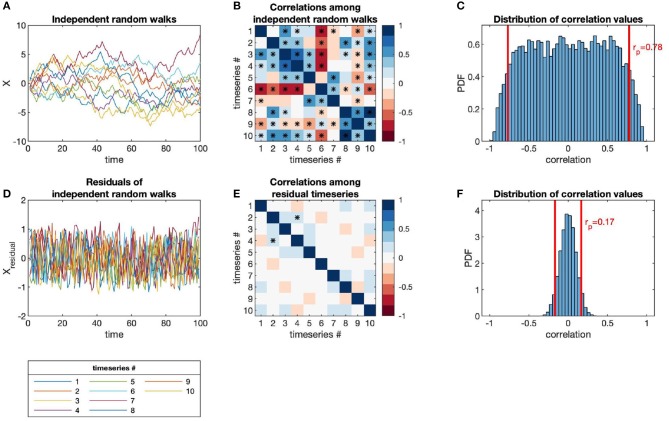
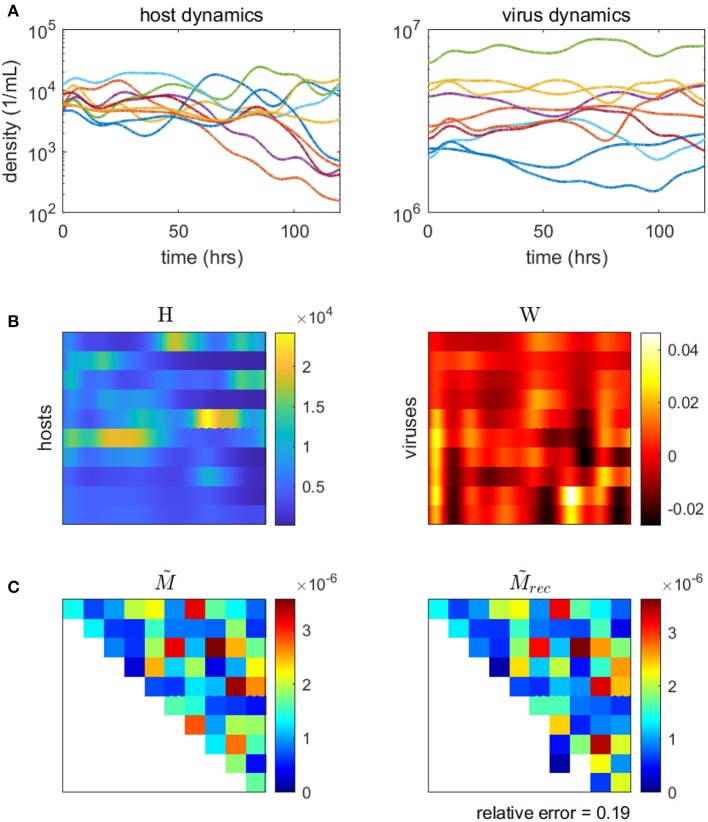
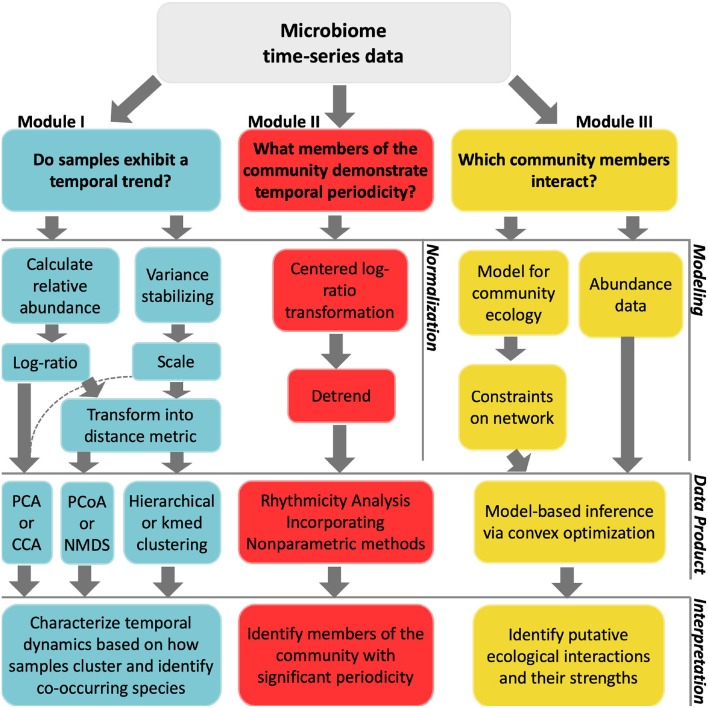
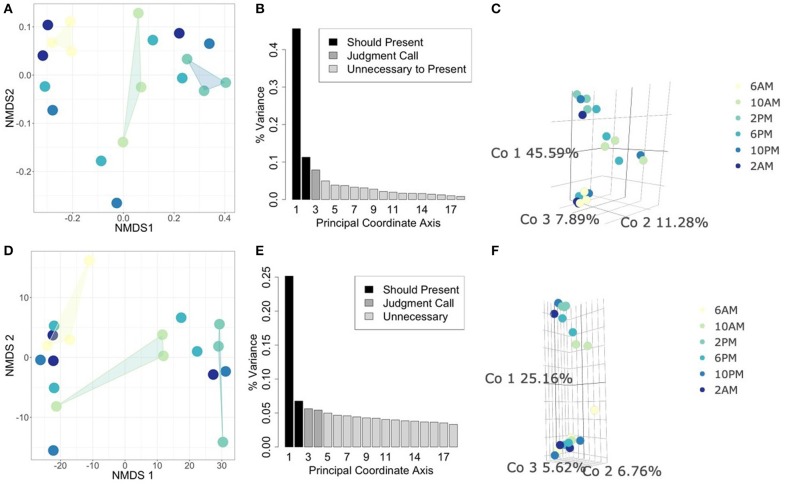
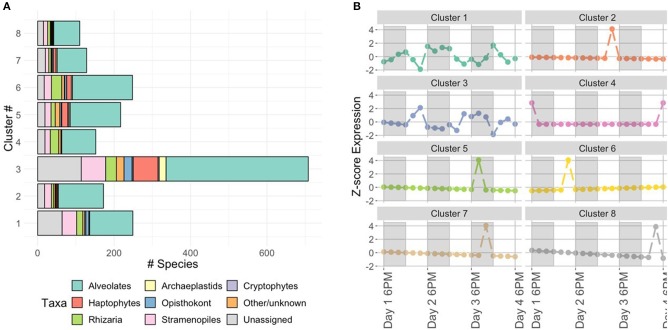
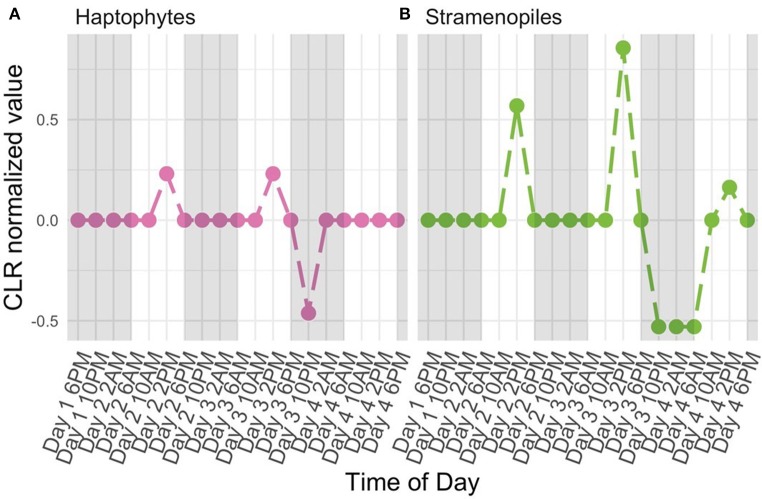
Time-series can provide critical insights into the structure and function of microbial communities. The analysis of temporal data warrants statistical considerations, distinct from comparative microbiome studies, to address ecological questions. This primer identifies unique challenges and approaches for analyzing microbiome time-series. In doing so, we focus on (1) identifying compositionally similar samples, (2) inferring putative interactions among populations, and (3) detecting periodic signals. We connect theory, code and data via a series of hands-on modules with a motivating biological question centered on marine microbial ecology. The topics of the modules include characterizing shifts in community structure and activity, identifying expression levels with a diel periodic signal, and identifying putative interactions within a complex community. Modules are presented as self-contained, open-access, interactive tutorials in R and Matlab. Throughout, we highlight statistical considerations for dealing with autocorrelated and compositional data, with an eye to improving the robustness of inferences from microbiome time-series. In doing so, we hope that this primer helps to broaden the use of time-series analytic methods within the microbial ecology research community.
时间序列可以为微生物群落的结构和功能提供关键见解。与比较微生物组研究不同,对时间数据的分析需要进行统计考量,以解决生态学问题。本入门指南确定了分析微生物组时间序列的独特挑战和方法。在此过程中,我们专注于:(1)识别组成相似的样本;(2)推断种群之间的假定相互作用;(3)检测周期性信号。我们通过一系列实践模块将理论、代码和数据联系起来,这些模块围绕一个以海洋微生物生态学为中心的具有启发性的生物学问题展开。模块主题包括表征群落结构和活动的变化、识别具有昼夜周期性信号的表达水平以及识别复杂群落中的假定相互作用。模块以R和Matlab中独立的、开放获取的交互式教程形式呈现。在整个过程中,我们强调处理自相关数据和成分数据的统计考量,旨在提高微生物组时间序列推断的稳健性。通过这样做,我们希望本入门指南有助于扩大时间序列分析方法在微生物生态学研究领域的应用。