Wang Anqiang, Li Zhongwu, Wang Meng, Jia Shuqin, Chen Jiahu, Ji Ke, Ji Xin, Zong Xianglong, Wu Xiaojiang, Zhang Ji, Li Ziyu, Zhang Lianhai, Hu Ying, Bu Zhaode, Zheng Qi, Ji Jiafu
Department of Gastrointestinal Surgery, Key Laboratory of Carcinogenesis and Translational Research (Ministry of Education), Peking University Cancer Hospital & Institute, Beijing 100142, China.
Department of Pathology, Key Laboratory of Carcinogenesis and Translational Research (Ministry of Education), Peking University Cancer Hospital & Institute, Beijing 100142, China.
Theranostics. 2020 Apr 7;10(12):5489-5500. doi: 10.7150/thno.42814. eCollection 2020.
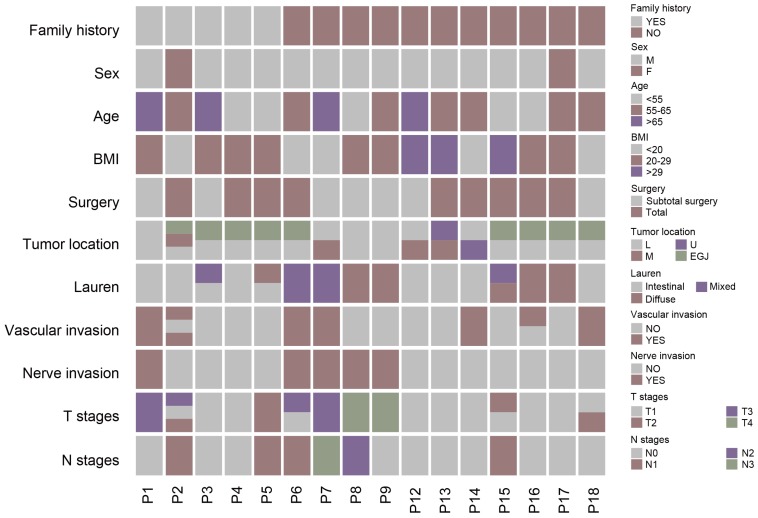
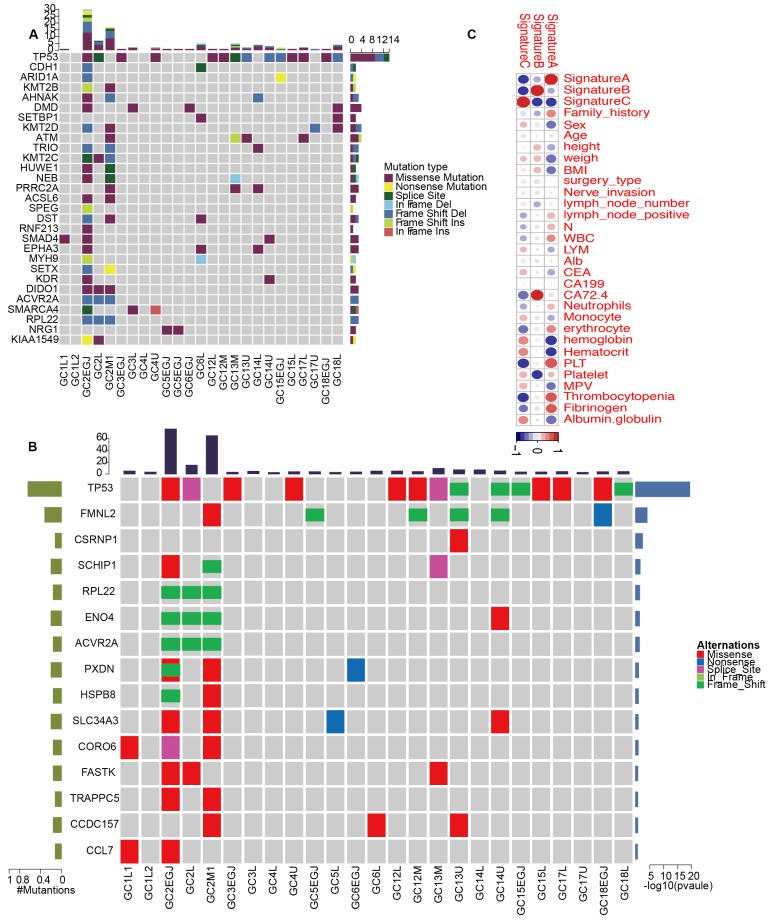
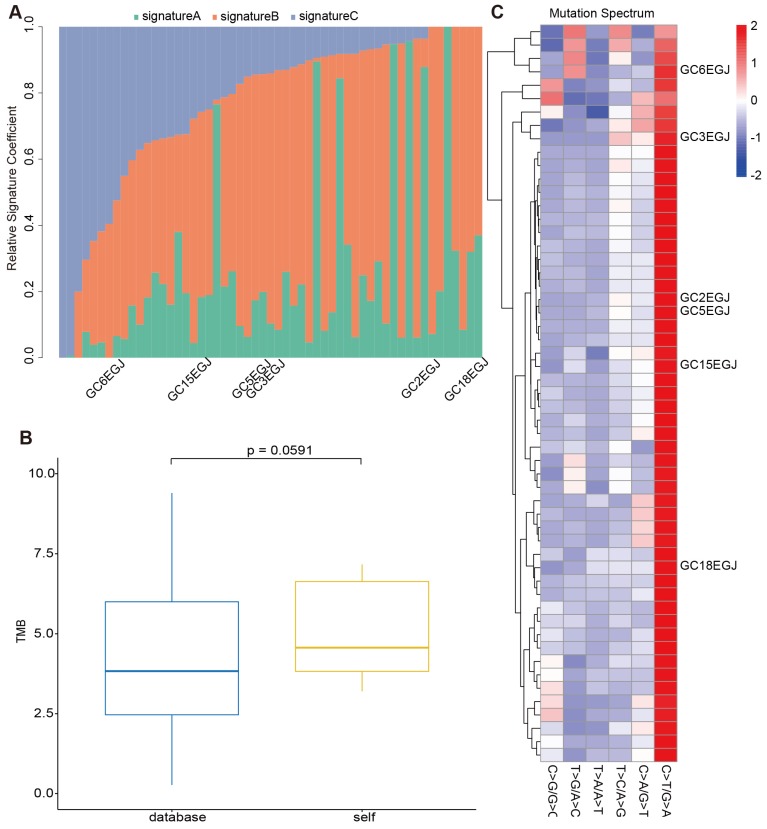
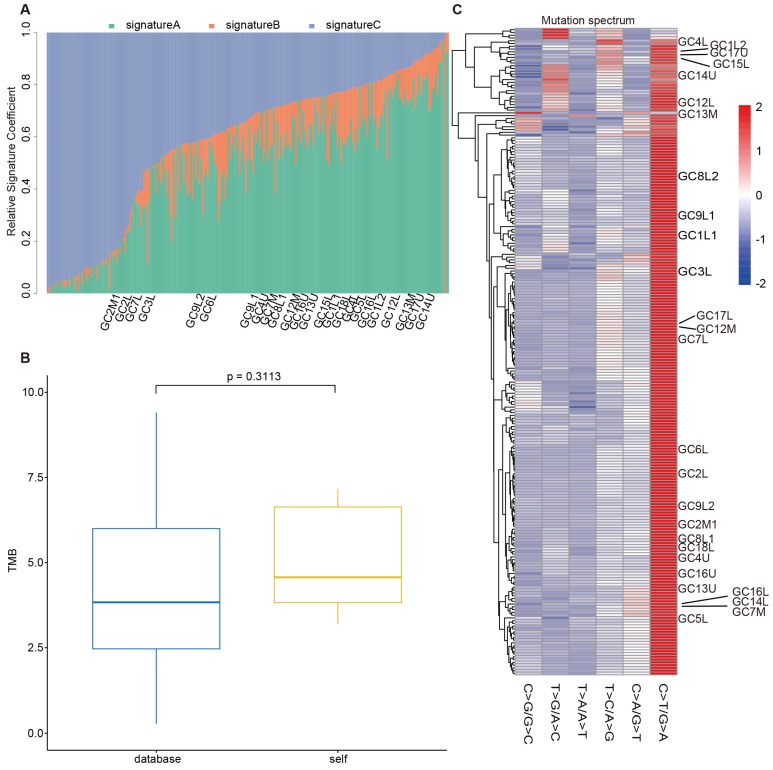
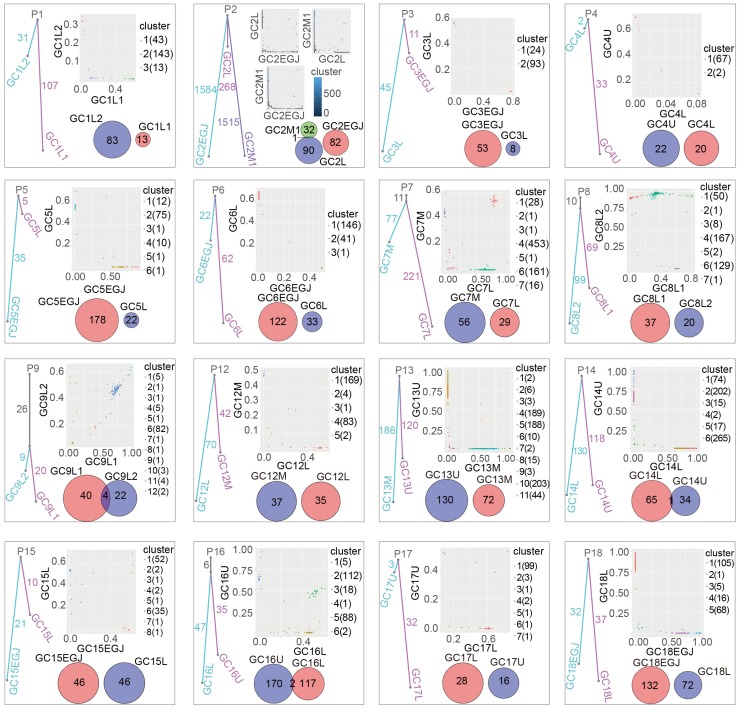
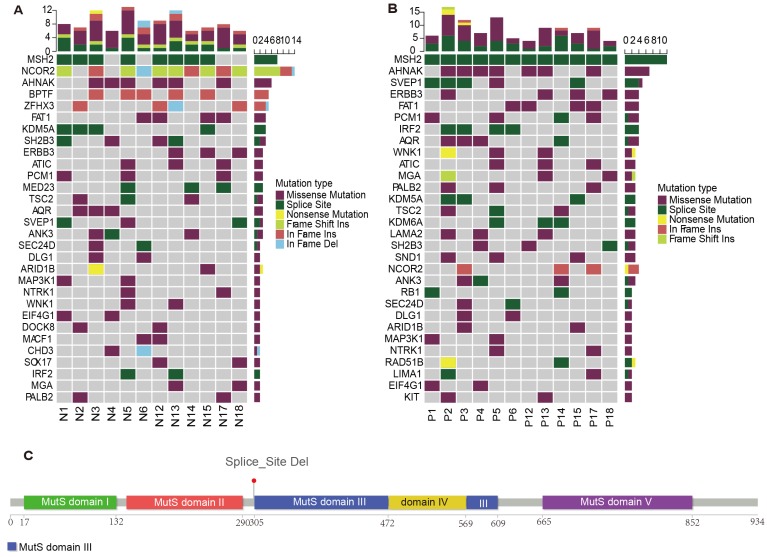
: Multiple gastric cancer (MGC) is characterized by the presence of more than two different tumors in the stomach. However, the clonal relationship and carcinogenesis of MGC remain unclear. We investigated the clonal relationship and role of germline mutations in the carcinogenesis of MGC. We gathered 16 multiple gastric cancer patients. Thirty-three tumor samples and sixteen normal gastric tissue or blood samples were obtained from January 2016 to December 2017. We also conducted analyses for 208 gastric cancer and 49 esophagogastric junction cancer (GC-EGJ) tumors from TCGA. DNA extraction from our samples was conducted for whole-exome sequencing (WES). : Tumor mutation burden (TMB) was not statistically significant within database and our data in the GC-EGJ (P=0.0591) and GC groups (P=0.3113). The mutation spectrum and signatures also showed uniform distributions in GC and GC-EGJ groups within our data and TCGA database. Among sixteen patients, four were identified as monoclonal, in which 11, 10, 26 and 6 somatic mutations were shared within different tumors of P7, P8, P9 and P16, respectively. However, no common mutation between different tumors of the same patient was found among the other 12 patients. After identifying predisposing genes, we found that germline and mutations were significantly dominant in 8/12 and 10/12 of genetic MGC patients. Additionally, all patients were identified with mutations in cancer samples of those genetic MGC patients. Taking genetic MGCs as a whole, we identified that were significantly mutated in 14 of 25 tumor samples. : WES analyses are suggestive of monoclonal and polyclonal origin of MGC, which may promote the classification of MGC into genetic and metastatic MGC. For patients with genetic MGC, germline _splice variants may contribute to carcinogenesis, thus prompting the consideration of more radical surgery and/or anti-PD-1/PD-L1 therapy.
多发胃癌(MGC)的特征是胃内存在两种以上不同的肿瘤。然而,MGC的克隆关系和致癌机制仍不清楚。我们研究了种系突变在MGC致癌过程中的克隆关系和作用。我们收集了16例多发胃癌患者。在2016年1月至2017年12月期间获取了33个肿瘤样本以及16个正常胃组织或血液样本。我们还对来自癌症基因组图谱(TCGA)的208例胃癌和49例食管胃交界癌(GC-EGJ)肿瘤进行了分析。对我们的样本进行DNA提取以进行全外显子组测序(WES)。肿瘤突变负荷(TMB)在数据库以及我们的数据中,在GC-EGJ组(P = 0.0591)和GC组(P = 0.3113)中无统计学意义。突变谱和特征在我们的数据以及TCGA数据库中的GC和GC-EGJ组中也显示出均匀分布。在16例患者中,4例被鉴定为单克隆,其中P7、P8、P9和P16的不同肿瘤分别共有11、10、26和6个体细胞突变。然而,在其他12例患者中,未发现同一患者不同肿瘤之间的共同突变。在鉴定出易感基因后,我们发现种系和突变在8/12和10/12的遗传性MGC患者中显著占主导。此外,在那些遗传性MGC患者的癌症样本中,所有患者均被鉴定出有突变。将遗传性MGC作为一个整体来看,我们发现在25个肿瘤样本中的14个中发生了显著突变。WES分析提示MGC的单克隆和多克隆起源,这可能有助于将MGC分为遗传性和转移性MGC。对于遗传性MGC患者,种系剪接变体可能促成致癌过程,从而促使考虑更激进的手术和/或抗PD-1/PD-L1治疗。