Van Houcke Jan, Audenaert Emmanuel A, Atkins Penny R, Anderson Andrew E
Department of Orthopaedic Surgery and Traumatology, Ghent University Hospital, Ghent, Belgium.
Department of Orthopaedics, University of Utah, Salt Lake City, UT, United States.
Front Bioeng Biotechnol. 2020 Apr 21;8:318. doi: 10.3389/fbioe.2020.00318. eCollection 2020.
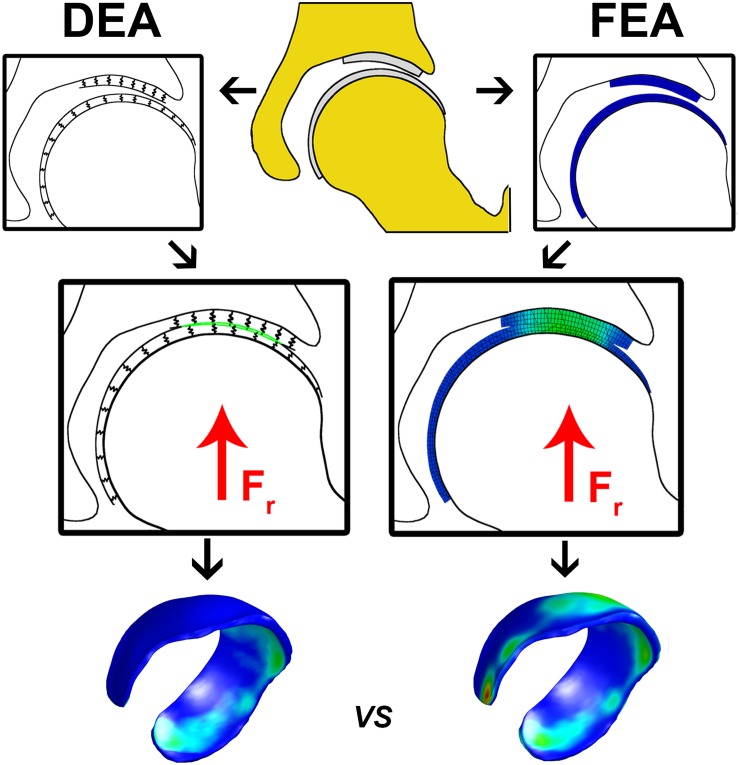
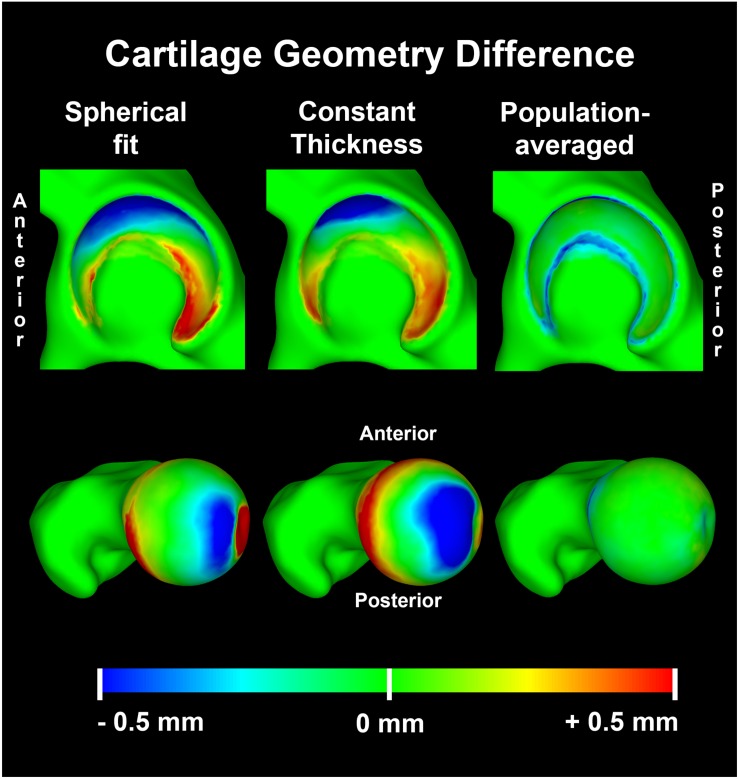
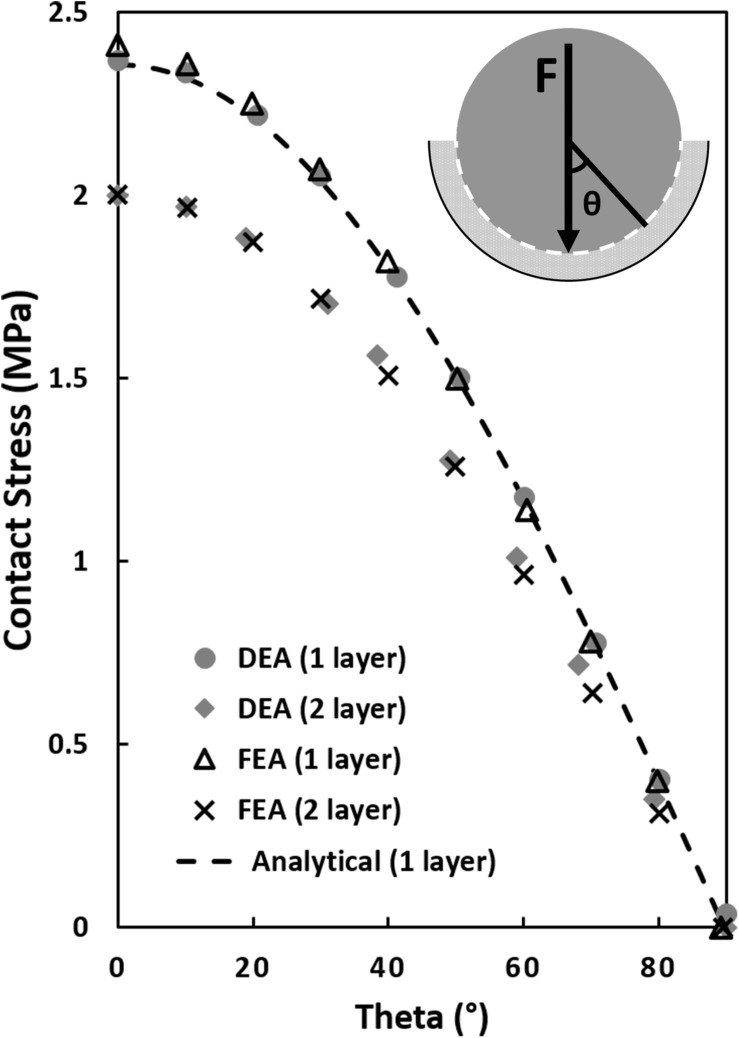
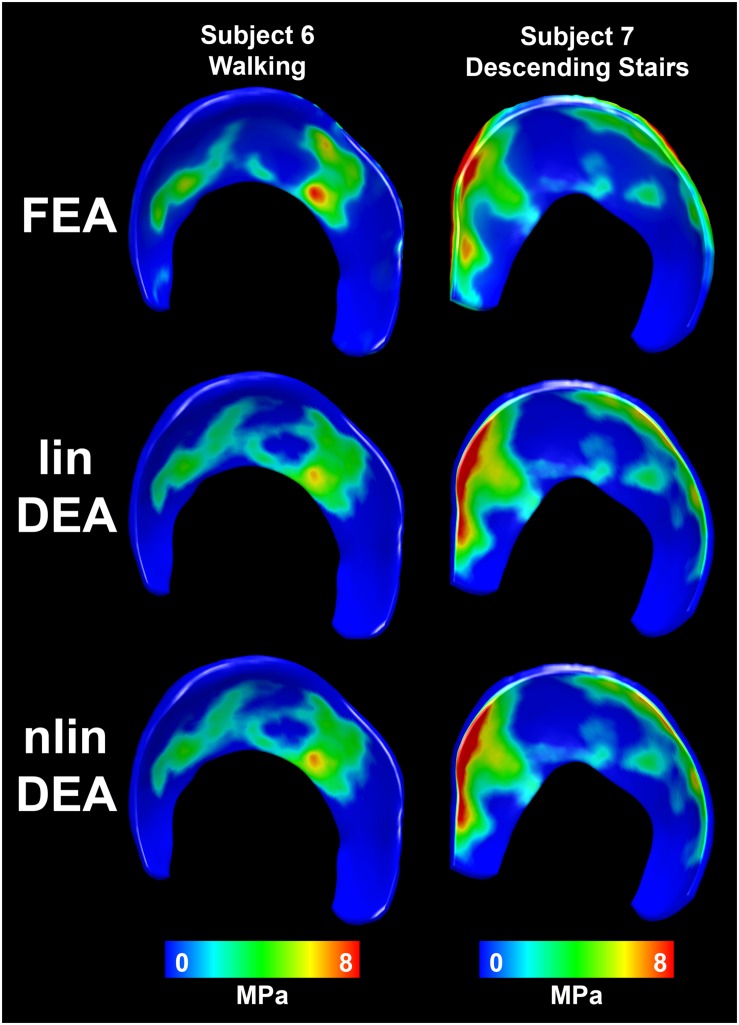
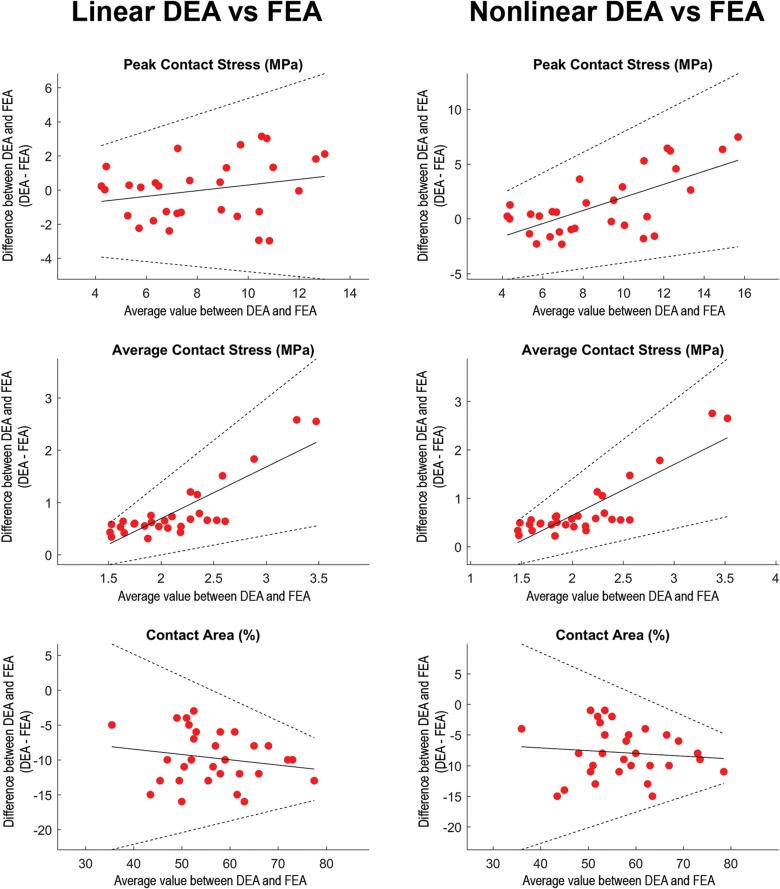
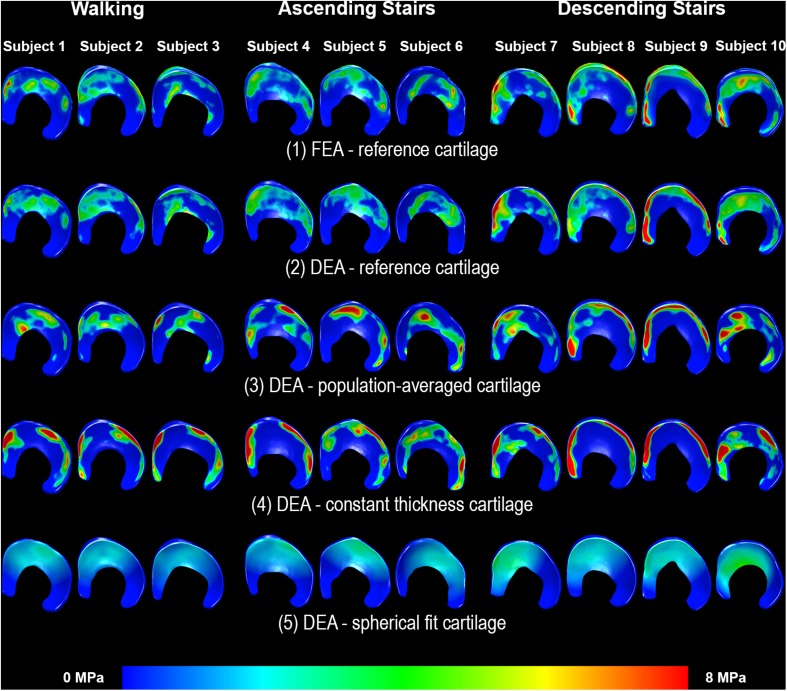
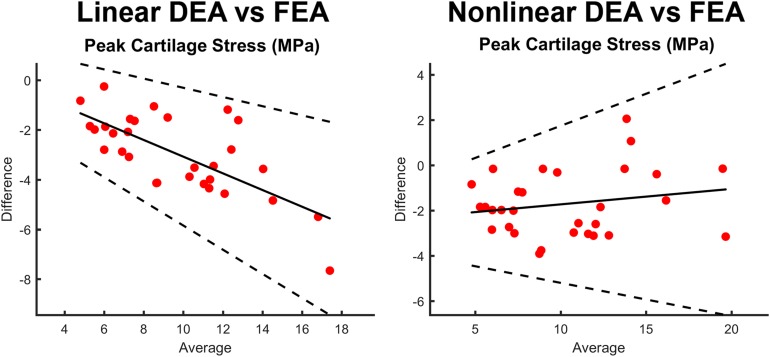
Finite element analysis (FEA) provides the current reference standard for numerical simulation of hip cartilage contact mechanics. Unfortunately, the development of subject-specific FEA models is a laborious process. Owed to its simplicity, Discrete Element Analysis (DEA) provides an attractive alternative to FEA. Advancements in computational morphometrics, specifically statistical shape modeling (SSM), provide the opportunity to predict cartilage anatomy without image segmentation, which could be integrated with DEA to provide an efficient platform to predict cartilage contact stresses in large populations. The objective of this study was, first, to validate linear and non-linear DEA against a previously validated FEA model and, second, to present and evaluate the applicability of a novel population-averaged cartilage geometry prediction method against previously used methods to estimate cartilage anatomy. The population-averaged method is based on average cartilage thickness maps and therefore allows for a more accurate and individualized cartilage geometry estimation when combined with SSM. The root mean squared error of the population-averaged cartilage geometry predicted by SSM as compared to the manually segmented cartilage geometry was 0.31 ± 0.08 mm. Identical boundary and loading conditions were applied to the DEA and FEA models. Predicted DEA stress distribution patterns and magnitude of peak stresses were in better agreement with FEA for the novel cartilage anatomy prediction method as compared to commonly used parametric methods based on the estimation of acetabular and femoral head radius. Still, contact stress was overestimated and contact area was underestimated for all cartilage anatomy prediction methods. Linear and non-linear DEA methods differed mainly in peak stress results with the non-linear definition being more sensitive to detection of high peak stresses. In conclusion, DEA in combination with the novel population-averaged cartilage anatomy prediction method provided accurate predictions while offering an efficient platform to conduct population-wide analyses of hip contact mechanics.
有限元分析(FEA)为髋关节软骨接触力学的数值模拟提供了当前的参考标准。不幸的是,特定个体有限元模型的开发是一个繁琐的过程。离散元分析(DEA)由于其简单性,为有限元分析提供了一个有吸引力的替代方案。计算形态计量学的进展,特别是统计形状建模(SSM),提供了无需图像分割就能预测软骨解剖结构的机会,这可以与离散元分析相结合,为预测大量人群的软骨接触应力提供一个高效的平台。本研究的目的,首先是针对先前验证过的有限元模型验证线性和非线性离散元分析,其次是针对先前用于估计软骨解剖结构的方法,展示并评估一种新的群体平均软骨几何预测方法的适用性。群体平均方法基于平均软骨厚度图,因此与统计形状建模相结合时,能够实现更准确、个性化的软骨几何估计。与手动分割的软骨几何结构相比,统计形状建模预测的群体平均软骨几何结构的均方根误差为0.31±0.08毫米。相同的边界和加载条件应用于离散元分析和有限元分析模型。与基于髋臼和股骨头半径估计的常用参数方法相比,对于新的软骨解剖预测方法,预测的离散元分析应力分布模式和峰值应力大小与有限元分析的一致性更好。尽管如此,所有软骨解剖预测方法都高估了接触应力,低估了接触面积。线性和非线性离散元分析方法的主要区别在于峰值应力结果,非线性定义对高峰值应力的检测更敏感。总之,离散元分析与新的群体平均软骨解剖预测方法相结合,在提供准确预测的同时,还为进行全人群髋关节接触力学分析提供了一个高效的平台。