Department of Clinical Pharmacology, School of Pharmacy, Faculty of Health Sciences, Ben-Gurion University of the Negev, Beer-Sheva 8410501, Israel.
Department of Chemistry, University of Florida, Gainesville, FL 32603, USA.
Int J Mol Sci. 2020 May 4;21(9):3248. doi: 10.3390/ijms21093248.
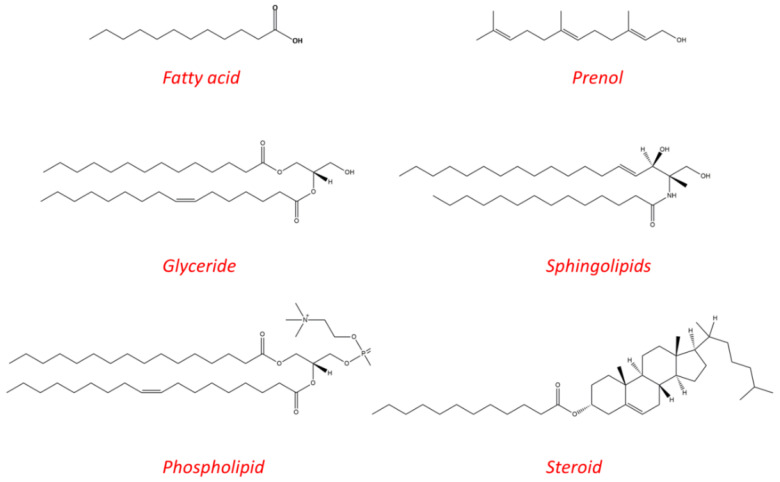
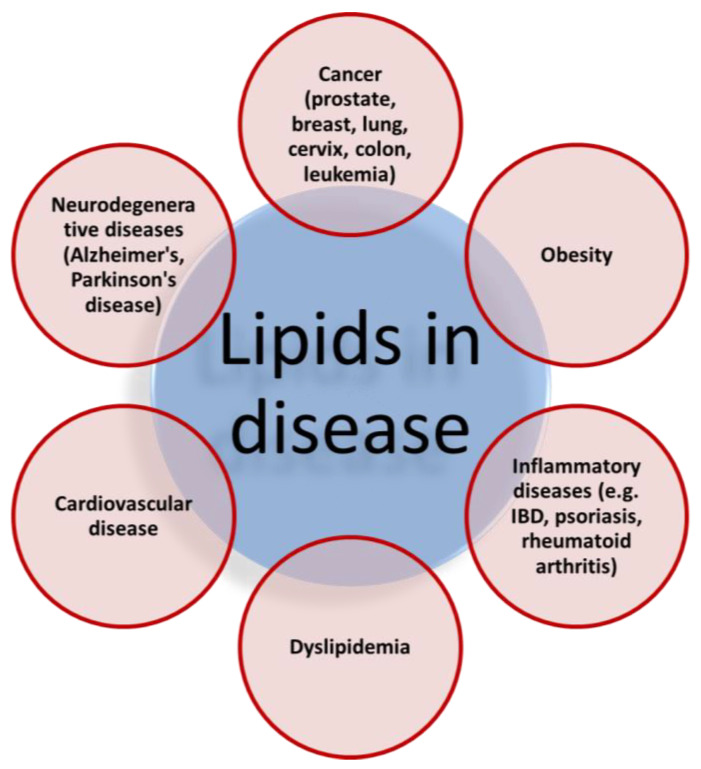
The aim of this work is to analyze relevant endogenous lipid processing pathways, in the context of the impact that lipids have on drug absorption, their therapeutic use, and utilization in drug delivery. Lipids may serve as biomarkers of some diseases, but they can also provide endogenous therapeutic effects for certain pathological conditions. Current uses and possible clinical benefits of various lipids (fatty acids, steroids, triglycerides, and phospholipids) in cancer, infectious, inflammatory, and neurodegenerative diseases are presented. Lipids can also be conjugated to a drug molecule, accomplishing numerous potential benefits, one being the improved treatment effect, due to joined influence of the lipid carrier and the drug moiety. In addition, such conjugates have increased lipophilicity relative to the parent drug. This leads to improved drug pharmacokinetics and bioavailability, the ability to join endogenous lipid pathways and achieve drug targeting to the lymphatics, inflamed tissues in certain autoimmune diseases, or enable overcoming different barriers in the body. Altogether, novel mechanisms of the lipid role in diseases are constantly discovered, and new ways to exploit these mechanisms for the optimal drug design that would advance different drug delivery/therapy aspects are continuously emerging.
本工作旨在分析相关的内源性脂质处理途径,以了解脂质对药物吸收、治疗用途以及药物递送中的应用的影响。脂质可以作为某些疾病的生物标志物,但也可以为某些病理状况提供内源性治疗效果。本文介绍了各种脂质(脂肪酸、类固醇、甘油三酯和磷脂)在癌症、传染病、炎症和神经退行性疾病中的当前用途和可能的临床益处。脂质也可以与药物分子结合,实现许多潜在的益处,其中之一是由于脂质载体和药物部分的联合影响,改善了治疗效果。此外,与母体药物相比,此类缀合物的亲脂性增加。这导致药物药代动力学和生物利用度得到改善,能够加入内源性脂质途径,实现药物靶向至淋巴管、某些自身免疫性疾病中的炎症组织,或能够克服体内的不同障碍。总之,不断发现脂质在疾病中的新作用机制,并且不断涌现出利用这些机制进行最佳药物设计的新方法,以推进不同的药物递送/治疗方面。