Department of Plant Sciences, University of California, Davis, CA, United States of America.
College of Food, Agricultural, and Environmental Sciences, The Ohio State University, Columbus, OH, United States of America.
PLoS One. 2020 May 7;15(5):e0231840. doi: 10.1371/journal.pone.0231840. eCollection 2020.
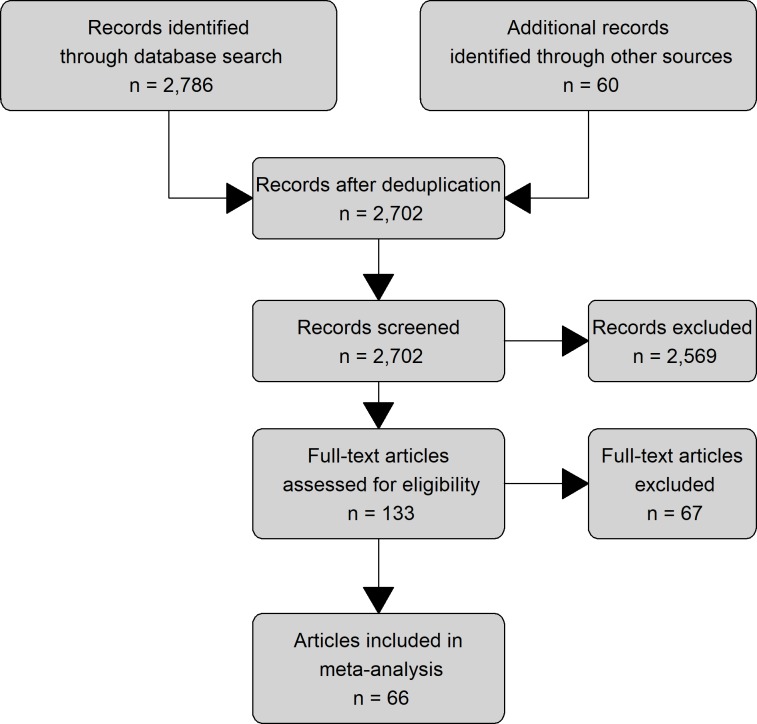
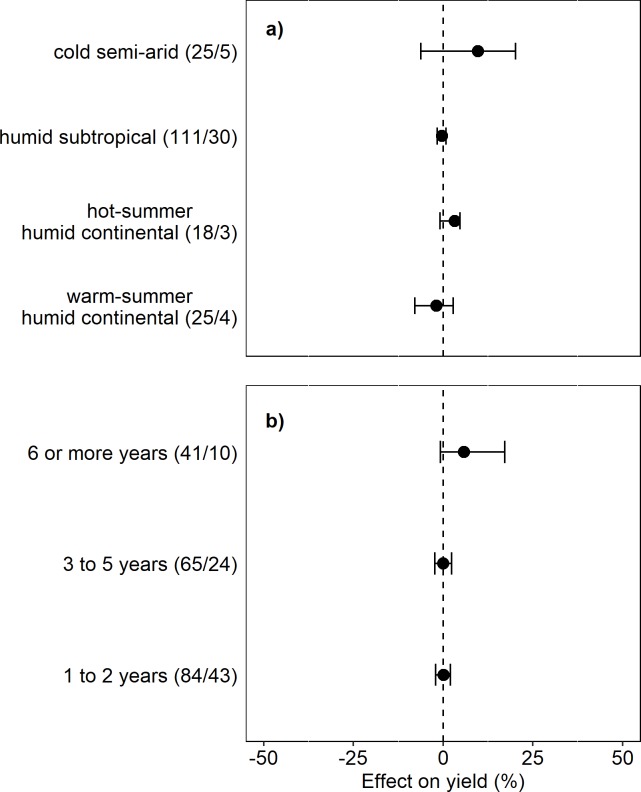
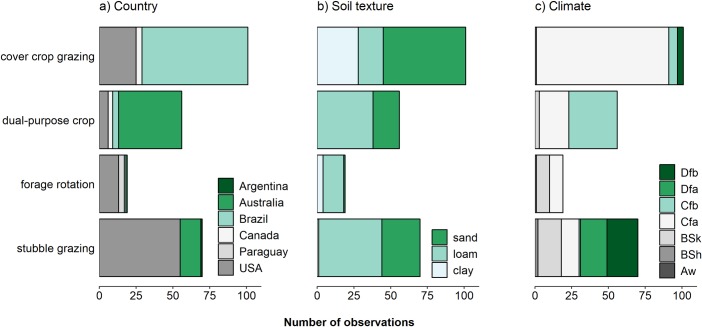
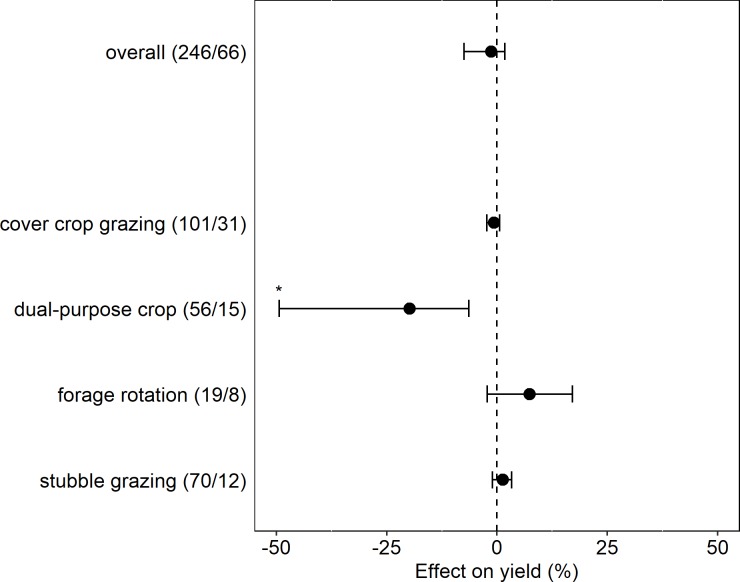
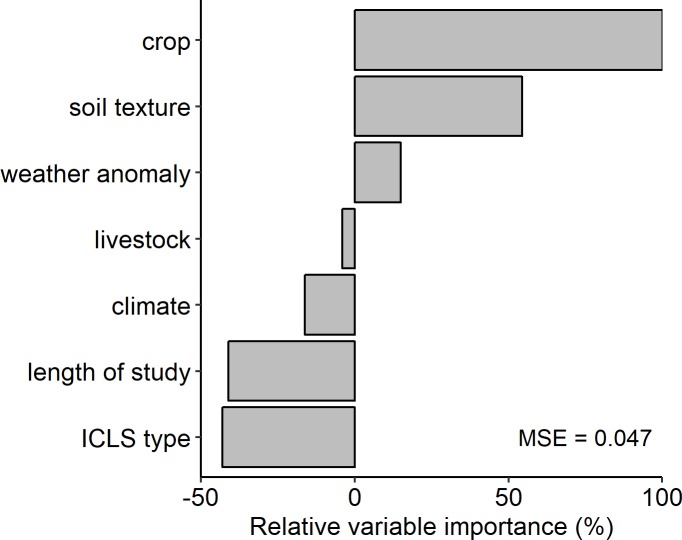
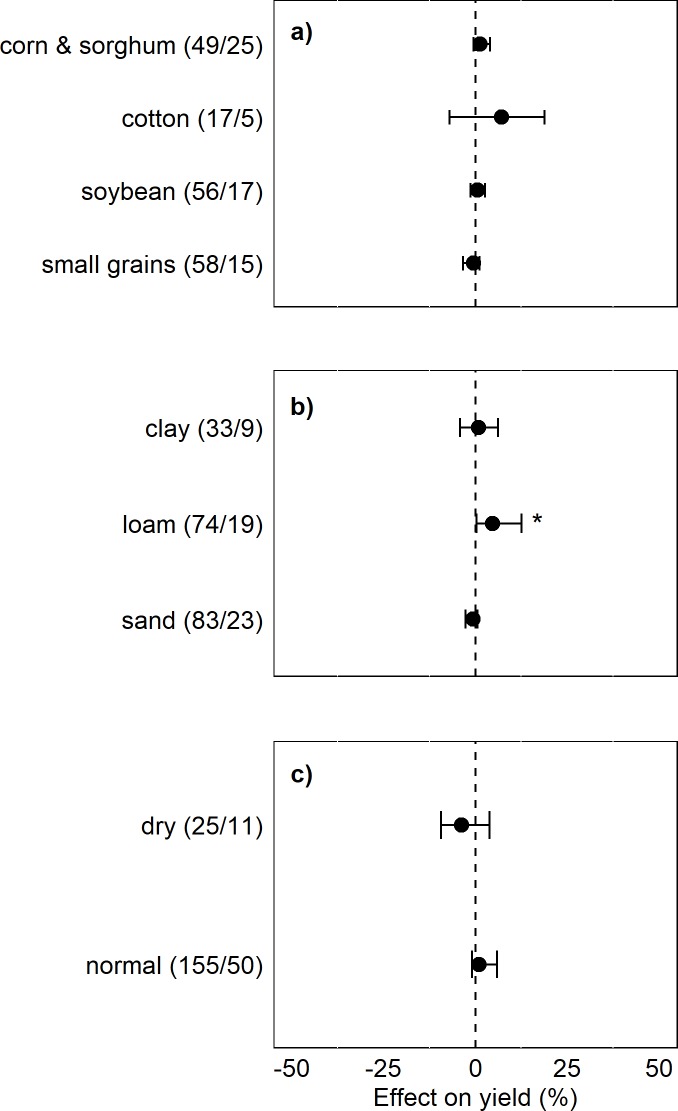
Production systems that feature temporal and spatial integration of crop and livestock enterprises, also known as integrated crop-livestock systems (ICLS), have the potential to intensify production on cultivated lands and foster resilience to the effects of climate change without proportional increases in environmental impacts. Yet, crop production outcomes following livestock grazing across environments and management scenarios remain uncertain and a potential barrier to adoption, as producers worry about the effects of livestock activity on the agronomic quality of their land. To determine likely production outcomes across ICLS and to identify the most important moderating variables governing those outcomes, we performed a meta-analysis of 66 studies comparing crop yields in ICLS to yields in unintegrated controls across 3 continents, 12 crops, and 4 livestock species. We found that annual cash crops in ICLS averaged similar yields (-7% to +2%) to crops in comparable unintegrated systems. The exception was dual-purpose crops (crops managed simultaneously for grazing and grain production), which yielded 20% less on average than single-purpose crops in the studies examined. When dual-purpose cropping systems were excluded from the analysis, crops in ICLS yielded more than in unintegrated systems in loamy soils and achieved equal yields in most other settings, suggesting that areas of intermediate soil texture may represent a "sweet-spot" for ICLS implementation. This meta-analysis represents the first quantitative synthesis of the crop production outcomes of ICLS and demonstrates the need for further investigation into the conditions and management scenarios under which ICLS can be successfully implemented.
具有作物和牲畜企业时空一体化特征的生产系统,也称为综合作物-牲畜系统(ICLS),有可能在不使环境影响成比例增加的情况下,加强耕地生产,并增强对气候变化影响的抵御能力。然而,在不同环境和管理情景下,牲畜放牧对作物生产的影响仍不确定,这也是推广 ICLS 的一个潜在障碍,因为生产者担心牲畜活动对其土地农业质量的影响。为了确定 ICLS 中的可能生产结果,并确定影响这些结果的最重要调节变量,我们对 66 项研究进行了荟萃分析,这些研究比较了 3 大洲、12 种作物和 4 种牲畜物种中 ICLS 中的作物产量与未综合对照系统中的作物产量。我们发现,ICLS 中的一年生经济作物的平均产量(-7%至+2%)与可比未综合系统中的作物相似。例外的是两用作物(同时用于放牧和粮食生产的作物),在研究中,它们的平均产量比单一用途作物低 20%。当从分析中排除两用作物系统时,在壤土中,ICLS 中的作物产量高于未综合系统,在大多数其他情况下实现了相等的产量,这表明中等土壤质地的区域可能是 ICLS 实施的“理想之地”。这项荟萃分析代表了对 ICLS 作物生产结果的首次定量综合,表明需要进一步研究 ICLS 可以成功实施的条件和管理情景。