Wang Yan, Lin Shan, Li Chenxi, Shi Yingqing, Guan Wei
Department of Respiratory Medicine, Qinghai University Affiliated Hospital, Xining.
Department of Medical Intensive Care Unit, The First Affiliated Hospital of Sun Yat-Sen University.
Medicine (Baltimore). 2020 May;99(19):e20055. doi: 10.1097/MD.0000000000020055.
Sleep apnea-hypopnea syndrome (SAHS) is a multifactorial disease characterized by recurrent hypopnea or respiratory interruption during sleep, which causes intermittent hypoxemia, hypercapnia, and sleep structure disturbances. An association between ankylosing spondylitis (AS) and the type of SAHS has rarely been reported in the literature. Here, we present a case of SAHS in a patient with AS and discuss the possible mechanism underlying the type of SAHS.
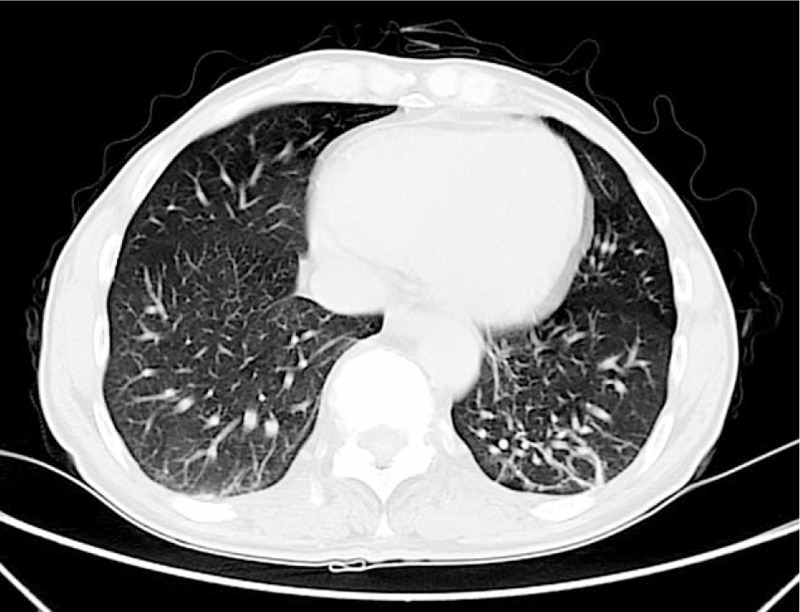
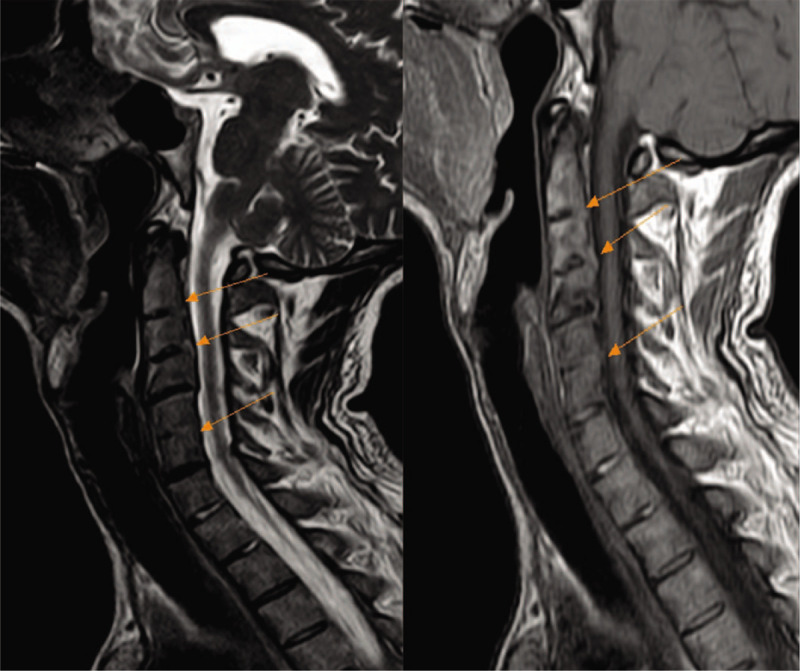
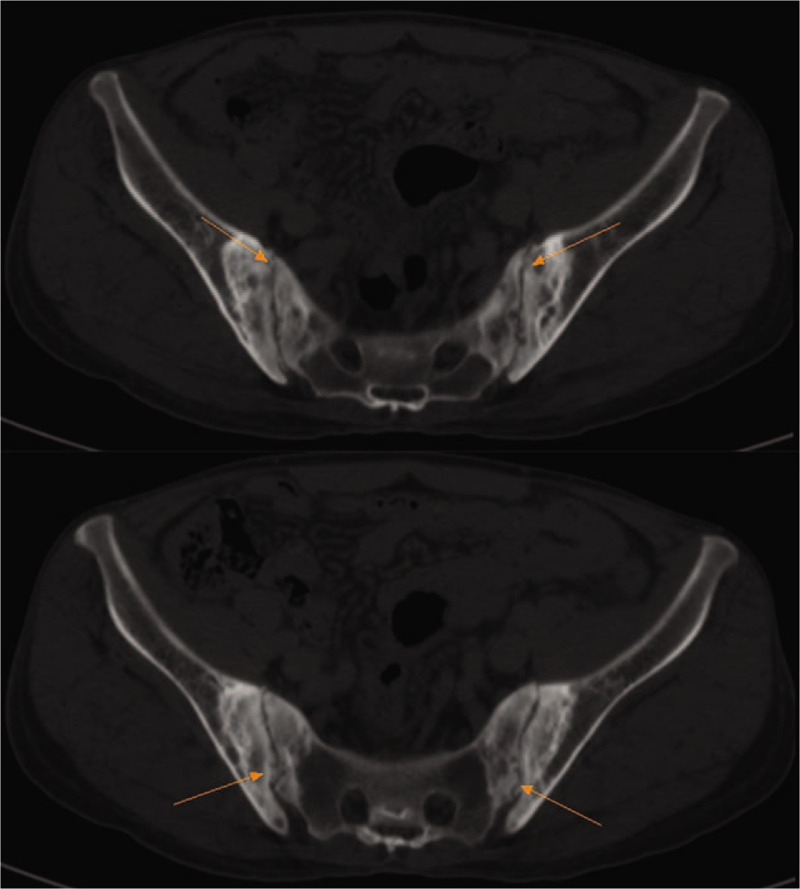
A 46-year-old man presented with a 15-year history of AS. He had been receiving sulfasalazine for symptomatic relief and had never been on immunosuppressive therapy.
The patient was diagnosed with SAHS in addition to AS.
We instituted treatment with methylprednisolone (5 mg, oral, daily), leflumomide (20 mg, oral, daily), bicyclol tablets (25 mg, oral, 3 times a day), and ursodeoxycholic acid tablets (10 mg/kg, oral, daily). The patient received etanercept (50 mg, sc, once a week) as his condition deteriorated. In addition, for management of SAHS symptoms, the patient received nasal continuous positive airway pressure (CPAP) during sleep.
Six months after commencement of the treatment, the clinical manifestations of SAHS and AS had significantly improved.
We hypothesize that patients with AS are prone to sleep apnea due to airway compression, central depression of respiration, abnormal inflammatory responses. Hence, careful assessment toward potential SAHS symptoms should be considered especially in patients with AS.
睡眠呼吸暂停低通气综合征(SAHS)是一种多因素疾病,其特征为睡眠期间反复出现呼吸浅慢或呼吸中断,可导致间歇性低氧血症、高碳酸血症及睡眠结构紊乱。文献中鲜有关于强直性脊柱炎(AS)与SAHS类型之间关联的报道。在此,我们报告1例AS患者并发SAHS的病例,并探讨该类型SAHS潜在的发病机制。
一名46岁男性,有15年AS病史。他一直在接受柳氮磺胺吡啶治疗以缓解症状,从未接受过免疫抑制治疗。
该患者除患有AS外,还被诊断为SAHS。
我们给予患者甲泼尼龙(5毫克,口服,每日1次)、来氟米特(20毫克,口服,每日1次)、双环醇片(25毫克,口服,每日3次)及熊去氧胆酸片(10毫克/千克,口服,每日1次)进行治疗。随着病情恶化,患者接受了依那西普(50毫克,皮下注射,每周1次)治疗。此外,为控制SAHS症状,患者在睡眠期间接受了经鼻持续气道正压通气(CPAP)治疗。
治疗开始6个月后,SAHS和AS的临床表现均有显著改善。
我们推测,AS患者易因气道受压、呼吸中枢抑制及异常炎症反应而出现睡眠呼吸暂停。因此,尤其是对于AS患者,应仔细评估其潜在的SAHS症状。