Department of Nutrition, Exercise and Sports, Section for integrative physiology, University of Copenhagen, 2200, Copenhagen N, Denmark.
Danish Research Centre for Magnetic Resonance, Center for Functional and Diagnostic Imaging and Research, Copenhagen University Hospital Hvidovre, 2650, Hvidovre, Denmark.
Sci Rep. 2020 May 8;10(1):7812. doi: 10.1038/s41598-020-64768-w.
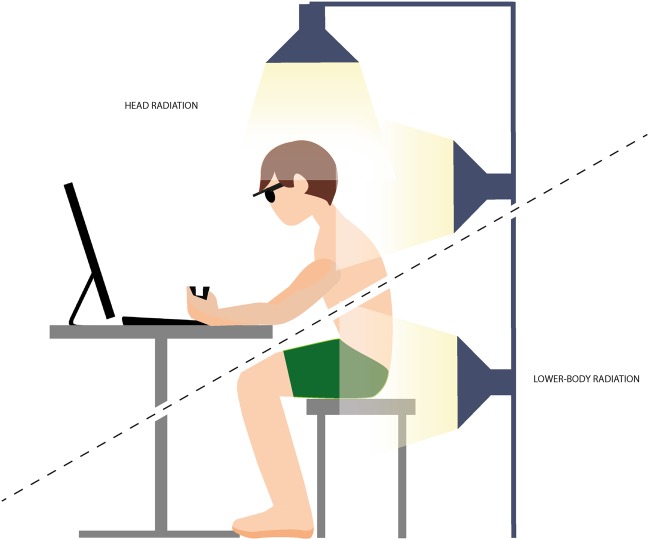
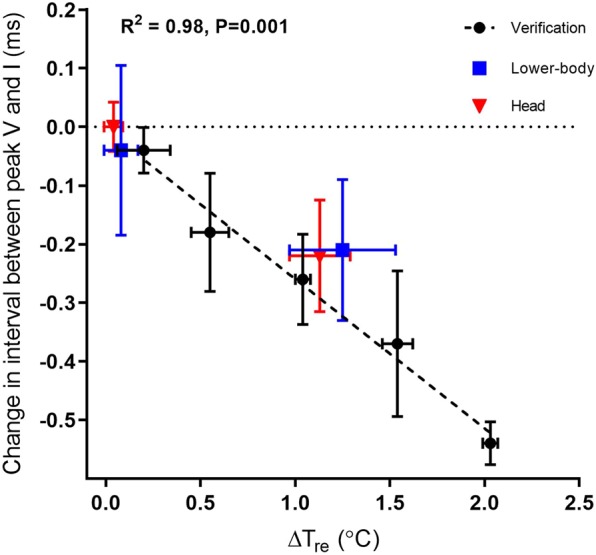
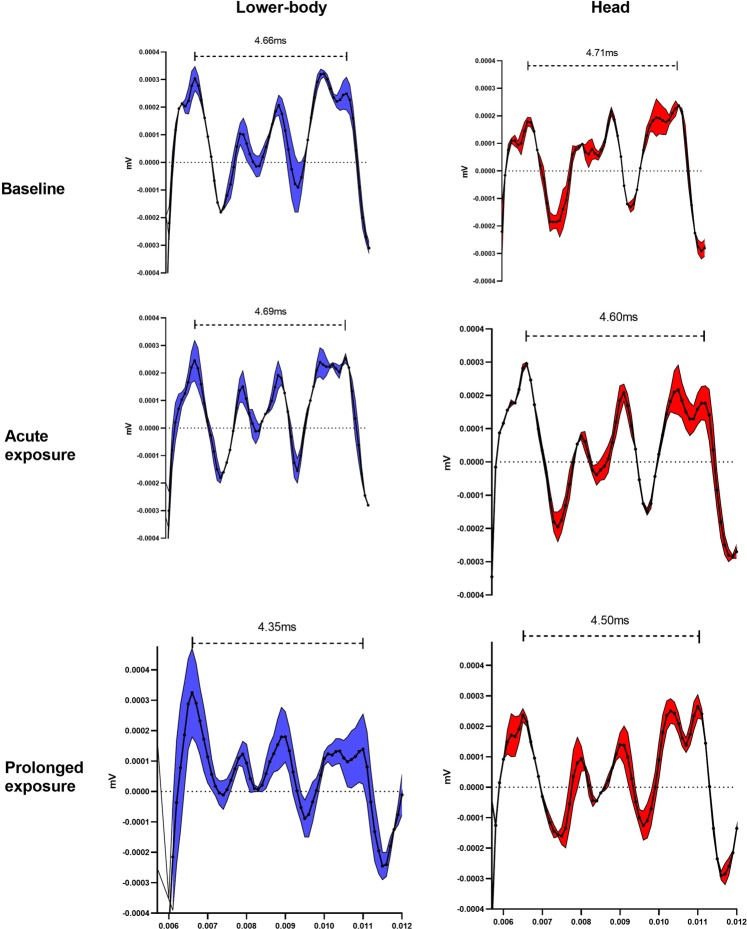
Health and performance impairments provoked by thermal stress are societal challenges geographically spreading and intensifying with global warming. Yet, science may be underestimating the true impact, since no study has evaluated effects of sunlight exposure on human brain temperature and function. Accordingly, performance in cognitively dominated and combined motor-cognitive tasks and markers of rising brainstem temperature were evaluated during exposure to simulated sunlight (equal to ~1000 watt/m). Acute exposure did not affect any performance measures, whereas prolonged exposure of the head and neck provoked an elevation of the core temperature by 1 °C and significant impairments of cognitively dominated and motor task performances. Importantly, impairments emerged at considerably lower hyperthermia levels compared to previous experiments and to the trials in the presents study without radiant heating of the head. These findings highlight the importance of including the effect of sunlight radiative heating of the head and neck in future scientific evaluations of environmental heat stress impacts and specific protection of the head to minimize detrimental effects.
由热应激引起的健康和表现受损是具有地理扩散性和随着全球变暖而加剧的社会挑战。然而,由于没有研究评估阳光照射对人类大脑温度和功能的影响,科学可能低估了其真正的影响。因此,在模拟阳光(相当于约 1000 瓦/米)照射下,评估了认知主导和结合运动认知任务的表现以及脑干温度升高的标志物。急性暴露不会影响任何表现测量,而头部和颈部的长时间暴露会使核心温度升高 1°C,并显著损害认知主导和运动任务的表现。重要的是,与之前的实验和本研究中没有头部辐射加热的试验相比,这些损伤出现在明显较低的过热水平。这些发现强调了在未来对环境热应激影响的科学评估中纳入头部和颈部阳光辐射加热的影响以及对头部进行具体保护以最小化有害影响的重要性。