Vanbillemont Brecht, Lammens Joris, Goethals Wannes, Vervaet Chris, Boone Matthieu N, De Beer Thomas
Laboratory of Pharmaceutical Process Analytical Technology (LPPAT), Department of Pharmaceutical Analysis, Ghent University, Ottergemsesteenweg 460, 9000 Ghent, Belgium.
Laboratory of Pharmaceutical Technology, Department of Pharmaceutics, Ghent University, Ottergemsesteenweg 460, 9000 Ghent, Belgium.
Pharmaceutics. 2020 May 7;12(5):430. doi: 10.3390/pharmaceutics12050430.
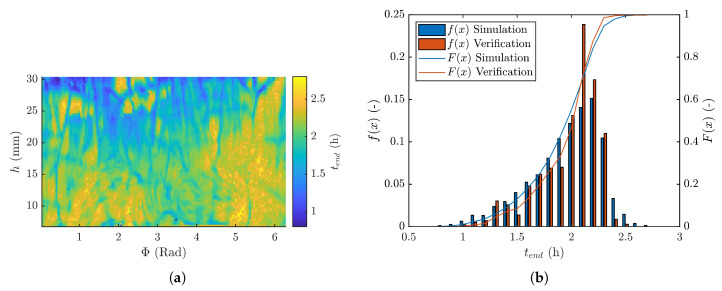
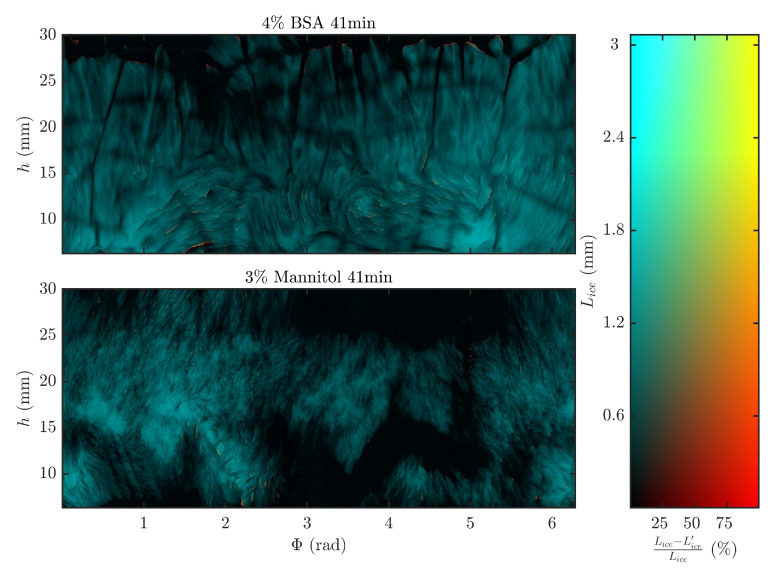
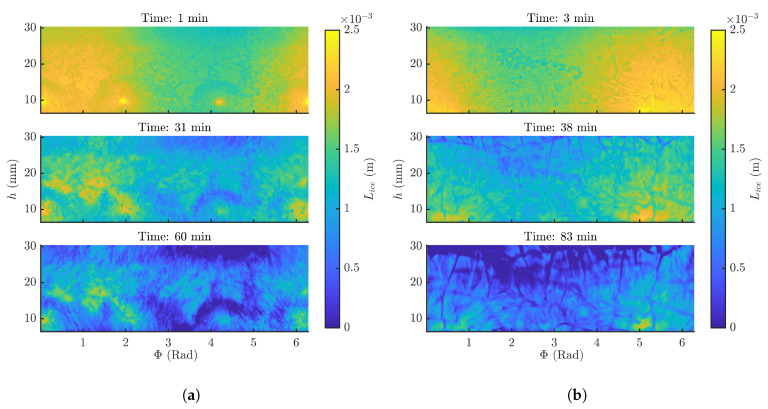
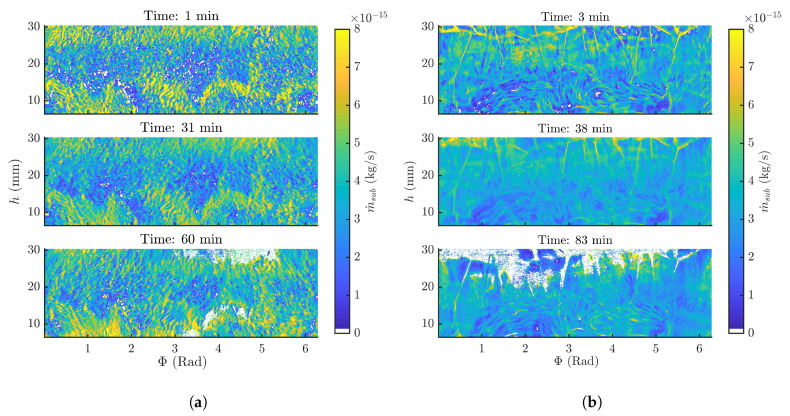
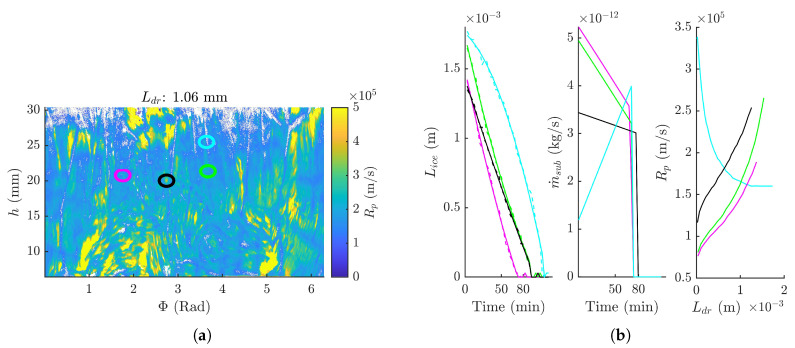
Maintaining chemical and physical stability of the product during freeze-drying is important but challenging. In addition, freeze-drying is typically associated with long process times. Therefore, mechanistic models have been developed to maximize drying efficiency without altering the chemical or physical stability of the product. Dried product mass transfer resistance ( R p ) is a critical input for these mechanistic models. Currently available techniques to determine R p only provide an estimation of the mean R p and do not allow measuring and determining essential local (i.e., intra-vial) R p differences. In this study, we present an analytical method, based on four-dimensional micro-computed tomography (4D- μ CT), which enables the possibility to determine intra-vial R p differences. Subsequently, these obtained R p values are used in a mechanistic model to predict the drying time distribution of a spin-frozen vial. Finally, this predicted primary drying time distribution is experimentally verified via thermal imaging during drying. It was further found during this study that 4D- μ CT uniquely allows measuring and determining other essential freeze-drying process parameters such as the moving direction(s) of the sublimation front and frozen product layer thickness, which allows gaining accurate process knowledge. To conclude, the study reveals that the variation in the end of primary drying time of a single vial could be predicted accurately using 4D- μ CT as similar results were found during the verification using thermal imaging.
在冷冻干燥过程中保持产品的化学和物理稳定性很重要,但具有挑战性。此外,冷冻干燥通常伴随着较长的处理时间。因此,已经开发了机理模型,以在不改变产品化学或物理稳定性的情况下最大化干燥效率。干燥产品传质阻力(Rp)是这些机理模型的关键输入参数。目前用于确定Rp的技术仅提供平均Rp的估计值,无法测量和确定关键的局部(即瓶内)Rp差异。在本研究中,我们提出了一种基于四维显微计算机断层扫描(4D-μCT)的分析方法,该方法能够确定瓶内Rp差异。随后,将这些获得的Rp值用于机理模型,以预测旋转冷冻瓶的干燥时间分布。最后,通过干燥过程中的热成像对预测的主干燥时间分布进行实验验证。在本研究中还进一步发现,4D-μCT独特地允许测量和确定其他关键的冷冻干燥过程参数,例如升华前沿的移动方向和冷冻产品层厚度,这有助于获得准确的过程知识。总之,该研究表明,使用4D-μCT可以准确预测单个瓶主干燥时间结束时的变化,因为在使用热成像进行验证时也发现了类似的结果。