Lammari Narimane, Louaer Ouahida, Meniai Abdeslam Hassen, Elaissari Abdelhamid
Univ Lyon, University Claude Bernard Lyon-1, CNRS, LAGEPP-UMR 5007, F-69622 Lyon, France.
Environmental Process Engineering Laboratory, University Constantine 3, Salah Boubnider, 25000 Constantine, Algeria.
Pharmaceutics. 2020 May 7;12(5):431. doi: 10.3390/pharmaceutics12050431.
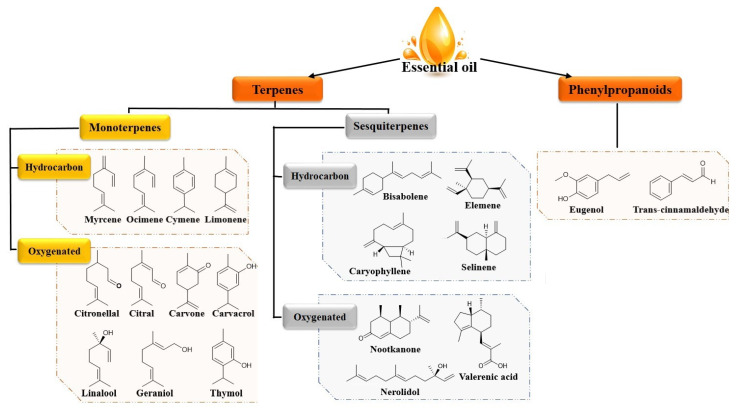
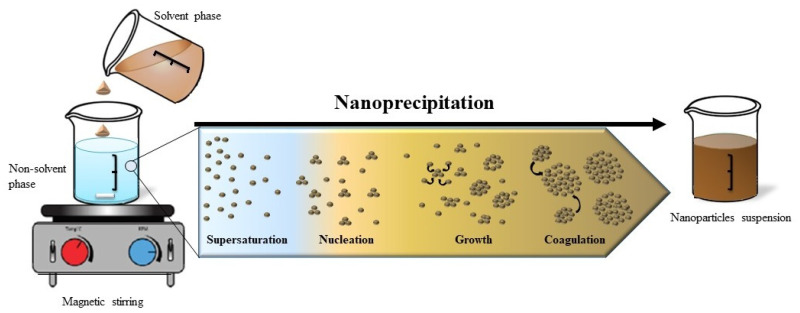
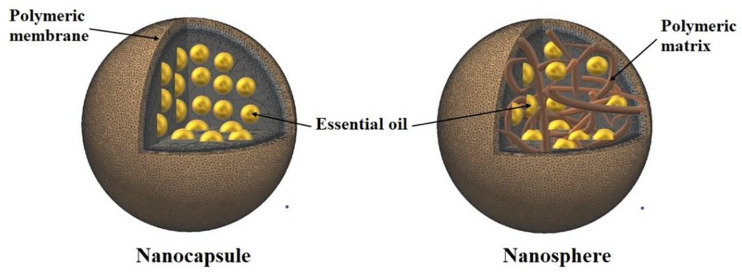
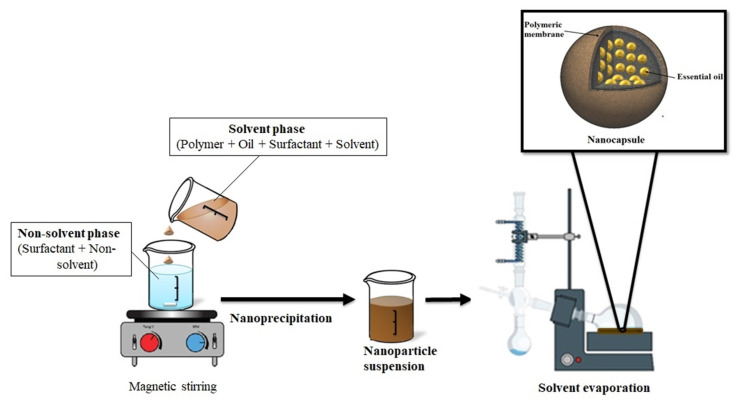
Essential oils are of paramount importance in pharmaceutical, cosmetic, agricultural, and food areas thanks to their crucial properties. However, stability and bioactivity determine the effectiveness of essential oils. Polymeric nanoencapsulation is a well-established approach for the preservation of essential oils. It offers a plethora of benefits, including improved water solubility, effective protection against degradation, prevention of volatile components evaporation and controlled and targeted release. Among the several techniques used for the design of polymeric nanoparticles, nanoprecipitation has attracted great attention. This review focuses on the most outstanding contributions of nanotechnology in essential oils encapsulation via nanoprecipitation method. We emphasize the chemical composition of essential oils, the principle of polymeric nanoparticle preparation, the physicochemical properties of essential oils loaded nanoparticles and their current applications.
由于其关键特性,精油在制药、化妆品、农业和食品领域至关重要。然而,稳定性和生物活性决定了精油的有效性。聚合物纳米包封是一种成熟的精油保存方法。它具有诸多优点,包括提高水溶性、有效防止降解、防止挥发性成分蒸发以及控制和靶向释放。在用于设计聚合物纳米颗粒的几种技术中,纳米沉淀法备受关注。本综述聚焦于纳米技术通过纳米沉淀法在精油包封方面的最杰出贡献。我们强调了精油的化学成分、聚合物纳米颗粒的制备原理、负载精油的纳米颗粒的物理化学性质及其当前应用。