Castillo Rafael R, Lozano Daniel, Vallet-Regí María
Departamento de Química en Ciencias Farmacéuticas, Facultad de Farmacia, Universidad Complutense de Madrid, Plaza Ramón y Cajal s/n, 28040 Madrid, Spain.
Centro de Investigación Biomédica en Red-CIBER, 28029 Madrid, Spain.
Pharmaceutics. 2020 May 7;12(5):432. doi: 10.3390/pharmaceutics12050432.
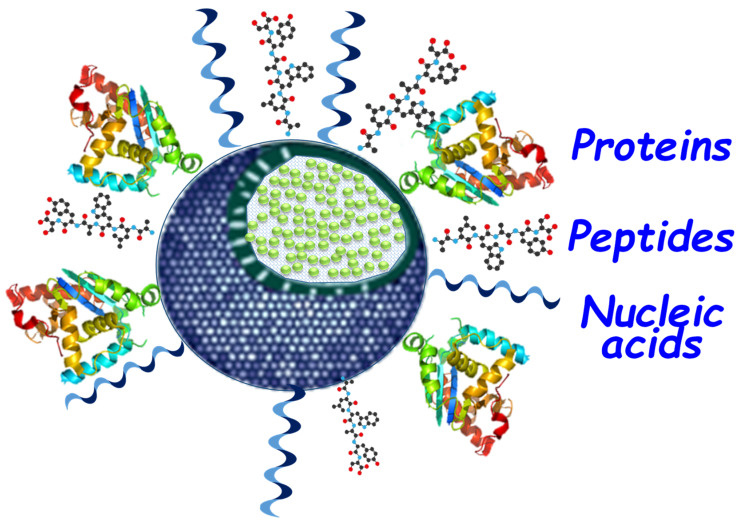
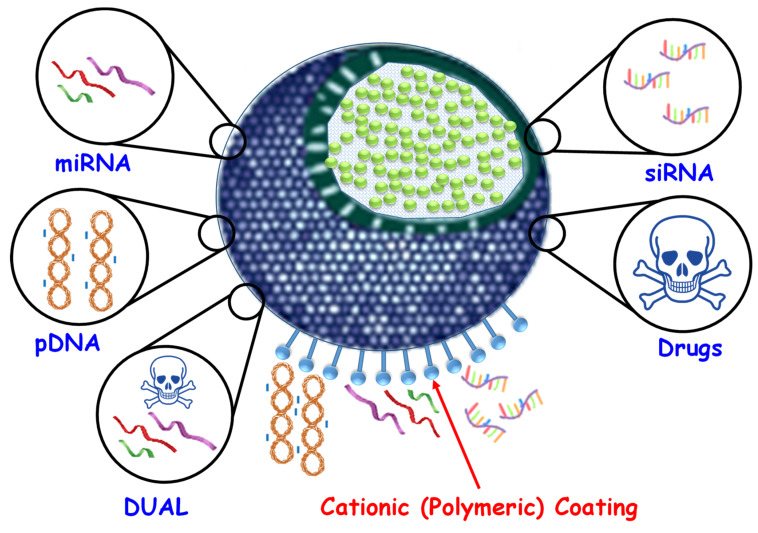
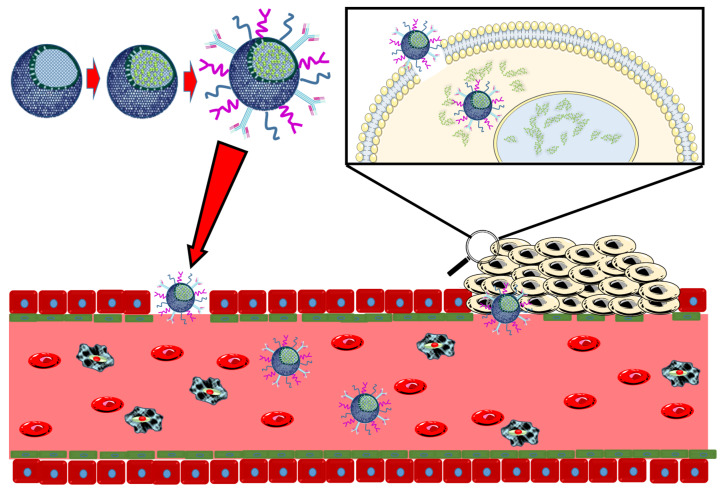
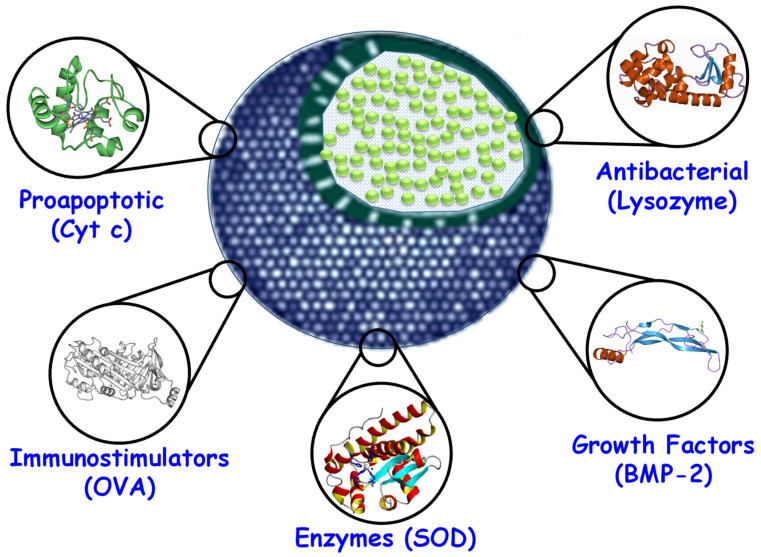
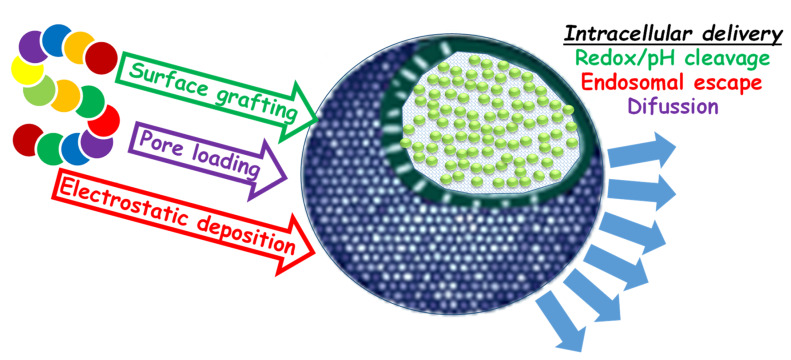
The enormous versatility of mesoporous silica nanoparticles permits the creation of a large number of nanotherapeutic systems for the treatment of cancer and many other pathologies. In addition to the controlled release of small drugs, these materials allow a broad number of molecules of a very different nature and sizes. In this review, we focus on biogenic species with therapeutic abilities (proteins, peptides, nucleic acids, and glycans), as well as how nanotechnology, in particular silica-based materials, can help in establishing new and more efficient routes for their administration. Indeed, since the applicability of those combinations of mesoporous silica with bio(macro)molecules goes beyond cancer treatment, we address a classification based on the type of therapeutic action. Likewise, as illustrative content, we highlight the most typical issues and problems found in the preparation of those hybrid nanotherapeutic materials.
介孔二氧化硅纳米粒子具有巨大的多功能性,这使得人们能够创建大量用于治疗癌症和许多其他病症的纳米治疗系统。除了能够控制小分子药物的释放外,这些材料还能容纳大量性质和大小差异很大的分子。在本综述中,我们重点关注具有治疗能力的生物源物质(蛋白质、肽、核酸和聚糖),以及纳米技术,特别是基于二氧化硅的材料,如何有助于建立新的、更有效的给药途径。事实上,由于介孔二氧化硅与生物(大)分子的这些组合的适用性超出了癌症治疗的范畴,我们根据治疗作用的类型进行了分类。同样,作为说明性内容,我们强调了在制备这些混合纳米治疗材料时发现的最典型的问题。