Department of Medicine, School of Medicine, Jeju National University 102 Jejudaehakno, Jeju 63243, Korea.
Jeju Research Center for Natural Medicine, Jeju National University, 102 Jejudaehakno, Jeju 63243, Korea.
Nutrients. 2020 May 8;12(5):1351. doi: 10.3390/nu12051351.
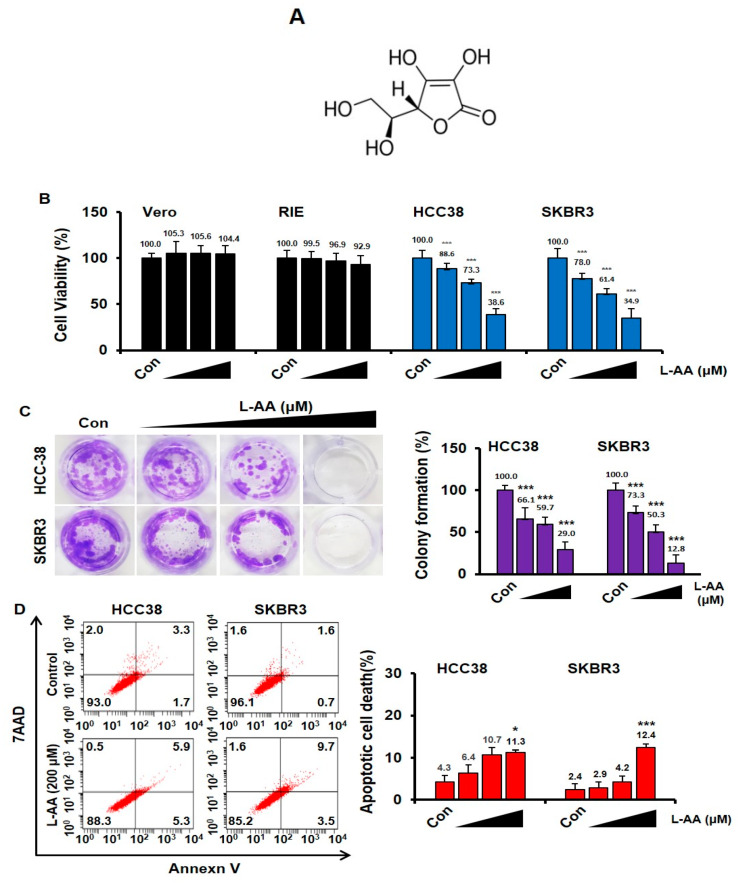
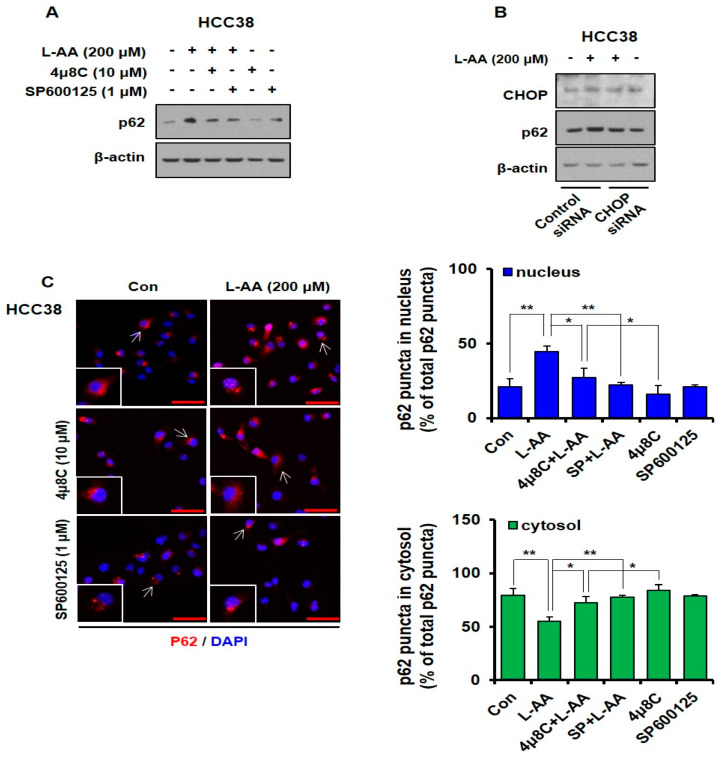
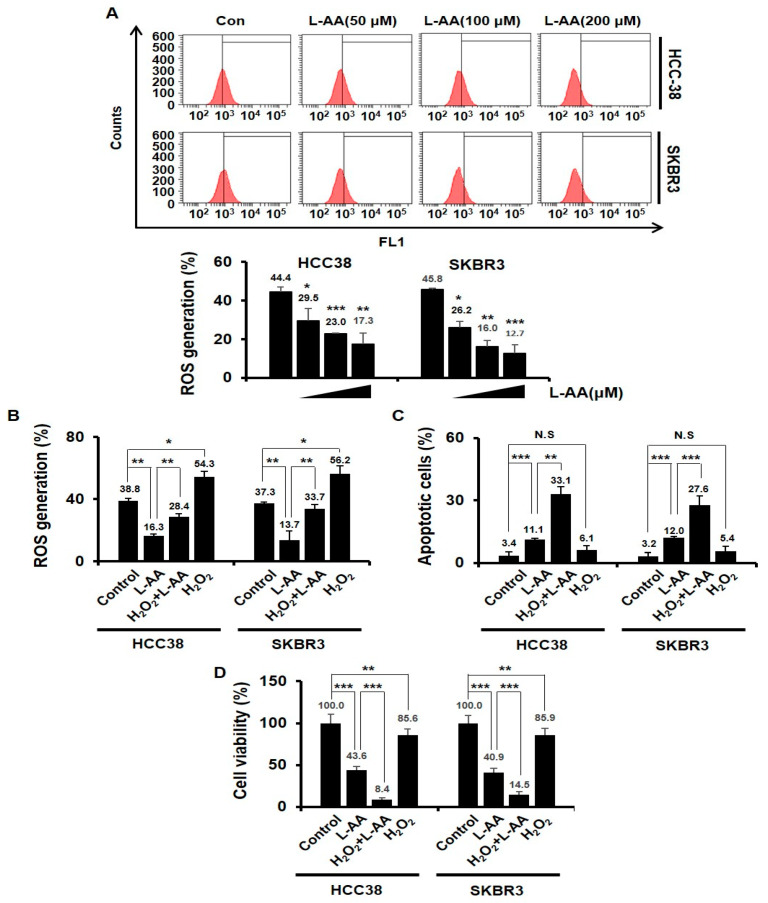
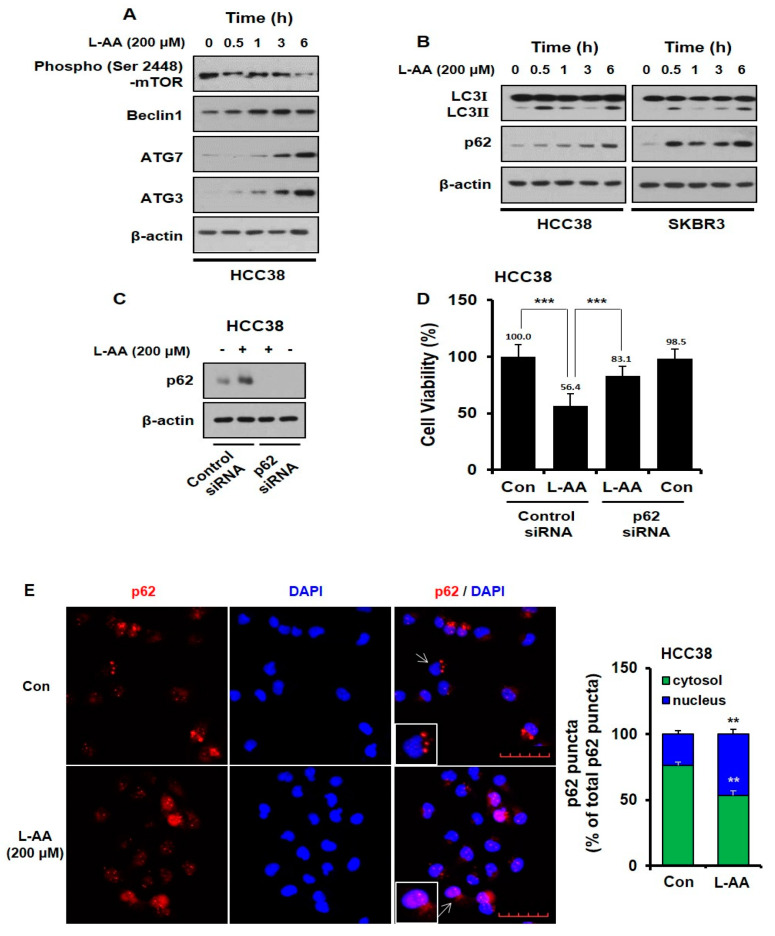
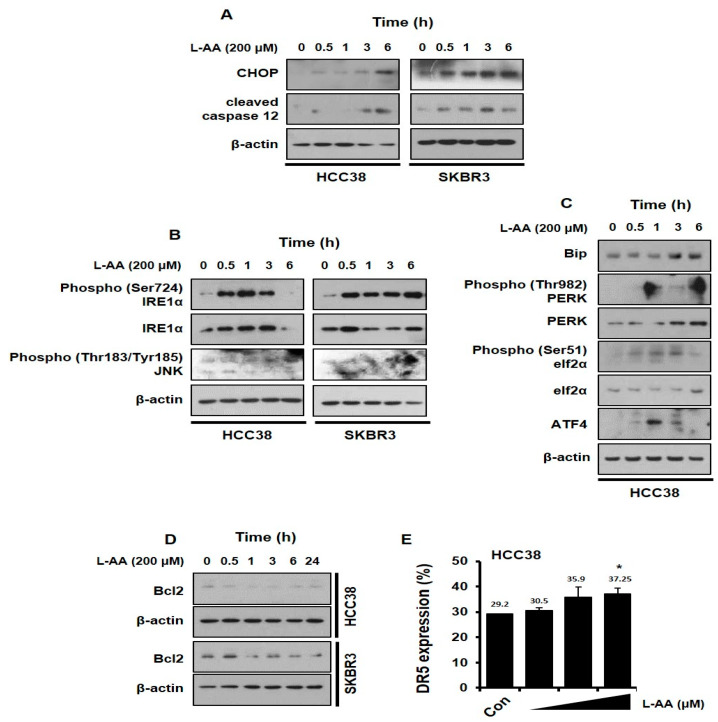
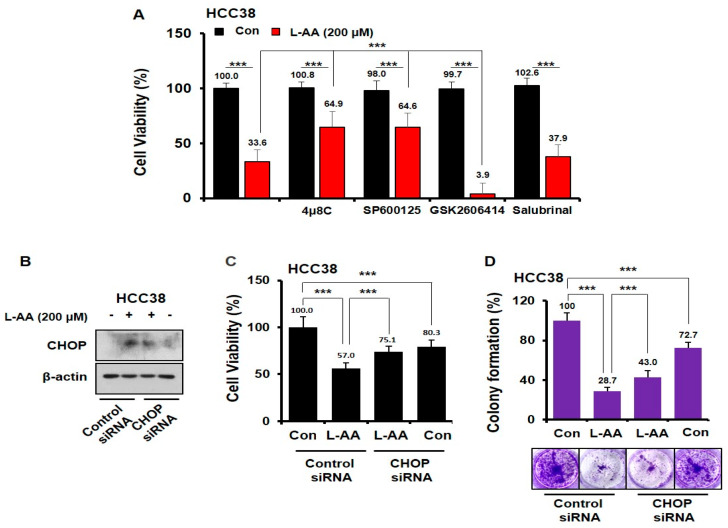
Anticancer effects of L-ascorbic acid (Vitamin C, L-AA) have been reported in various types of cancers. L-AA intake reduces breast cancer recurrence and mortality; however, the role of L-AA in the treatment of breast cancer remains poorly understood. In this study, we investigated the effect and mechanism action of L-AA on breast cancer growth. L-AA inhibited the growth of breast cancer cells by inducing apoptotic cell death at the evaluated treatment concentrations without affecting normal cells. Moreover, L-AA induces autophagosome formation via regulation of mammalian target of rapamycin (), Beclin1, and autophagy-related genes () and increased autophagic flux. Notably, we observed that L-AA increased p62/SQSTM1 (sequestosome 1) protein levels. Accumulation of p62 protein in cancer cells in response to stress has been reported, but its role in cancer regulation remains controversial. Here, we demonstrated that L-AA-induced p62 accumulation is related to L-AA-induced breast cancer growth inhibition. Furthermore, L-AA induced endoplasmic reticulum (ER) stress via the -- (inositol-requiring endonuclease-c-Jun N-terminal kinase-C/EBP homologous protein) signaling pathways, which increased the nuclear levels of p62/SQSTM1. These findings provide evidence that L-AA-induced ER stress could be crucial for p62 accumulation-dependent cell death, and L-AA can be useful in breast cancer treatment.
抗坏血酸(维生素 C,L-AA)在各种类型的癌症中具有抗癌作用。L-AA 的摄入可降低乳腺癌的复发和死亡率;然而,L-AA 在乳腺癌治疗中的作用仍知之甚少。在这项研究中,我们研究了 L-AA 对乳腺癌生长的影响及其作用机制。在评估的治疗浓度下,L-AA 通过诱导细胞凋亡而不是影响正常细胞来抑制乳腺癌细胞的生长。此外,L-AA 通过调节哺乳动物雷帕霉素靶蛋白 ()、Beclin1 和自噬相关基因 () 诱导自噬体形成,并增加自噬通量。值得注意的是,我们观察到 L-AA 增加了 p62/SQSTM1(自噬体相关蛋白 1)蛋白水平。已有报道称,癌细胞中 p62 蛋白在应激下会积累,但它在癌症调控中的作用仍存在争议。在这里,我们证明了 L-AA 诱导的 p62 积累与 L-AA 诱导的乳腺癌生长抑制有关。此外,L-AA 通过 --(肌醇需求内切酶-c-Jun N 末端激酶-C/EBP 同源蛋白)信号通路诱导内质网 (ER) 应激,增加了 p62/SQSTM1 的核水平。这些发现为 ER 应激诱导的 L-AA 可能是 p62 积累依赖性细胞死亡的关键提供了证据,并且 L-AA 可用于乳腺癌治疗。