Department of General Surgery, Affiliated Tumor Hospital of Zhengzhou University, Henan Cancer Hospital, Henan, Zhengzhou.
Drug Deliv. 2020 Dec;27(1):691-702. doi: 10.1080/10717544.2020.1754528.
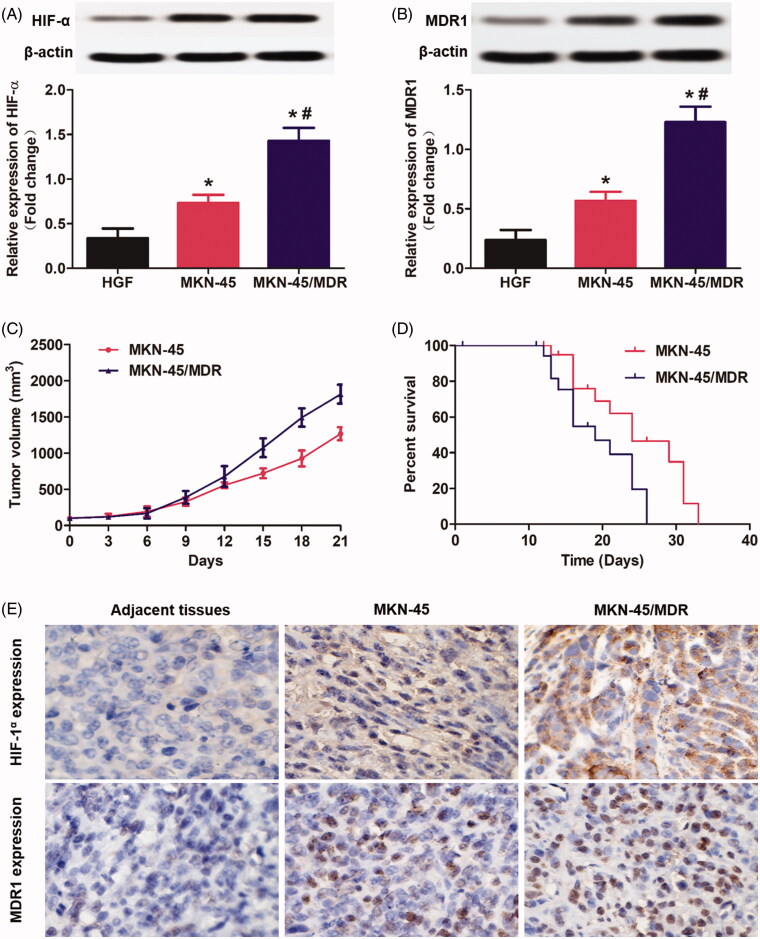
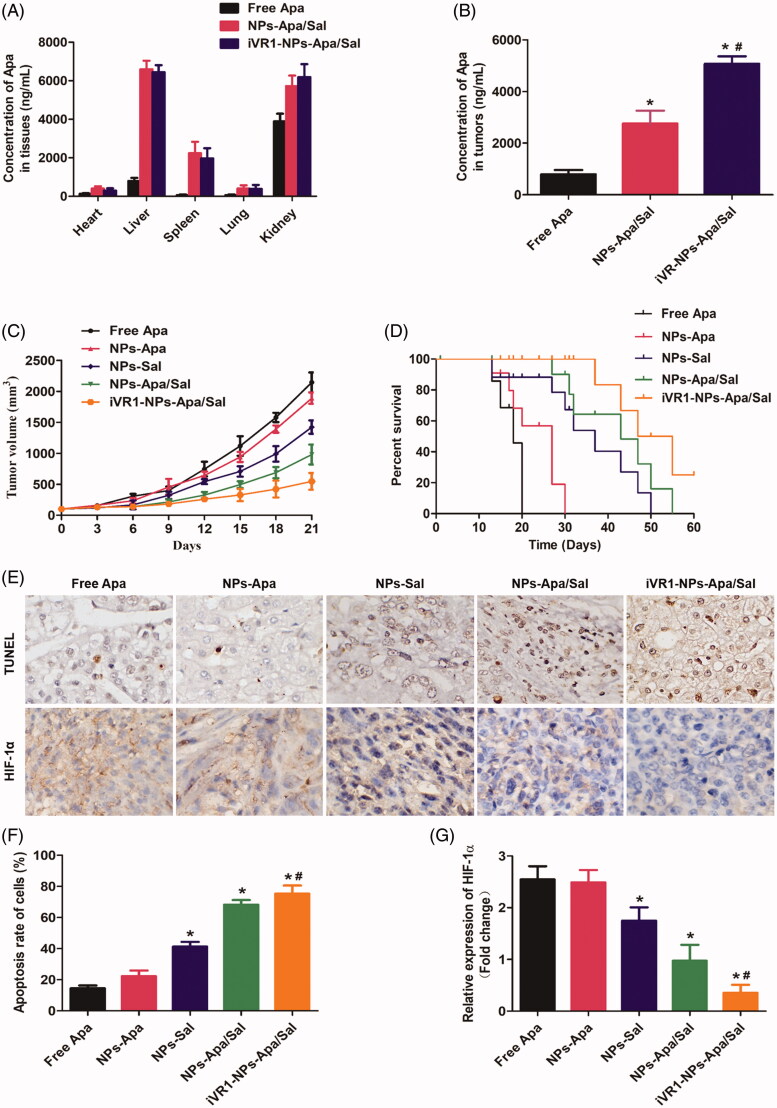
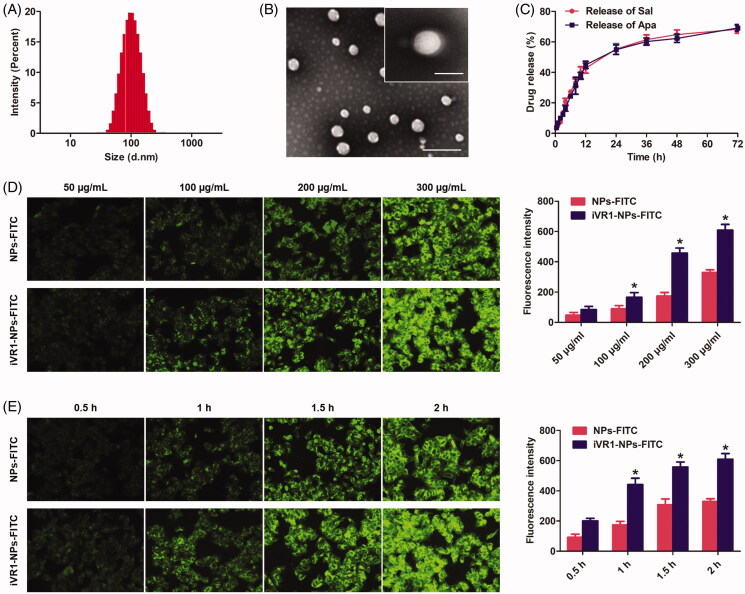
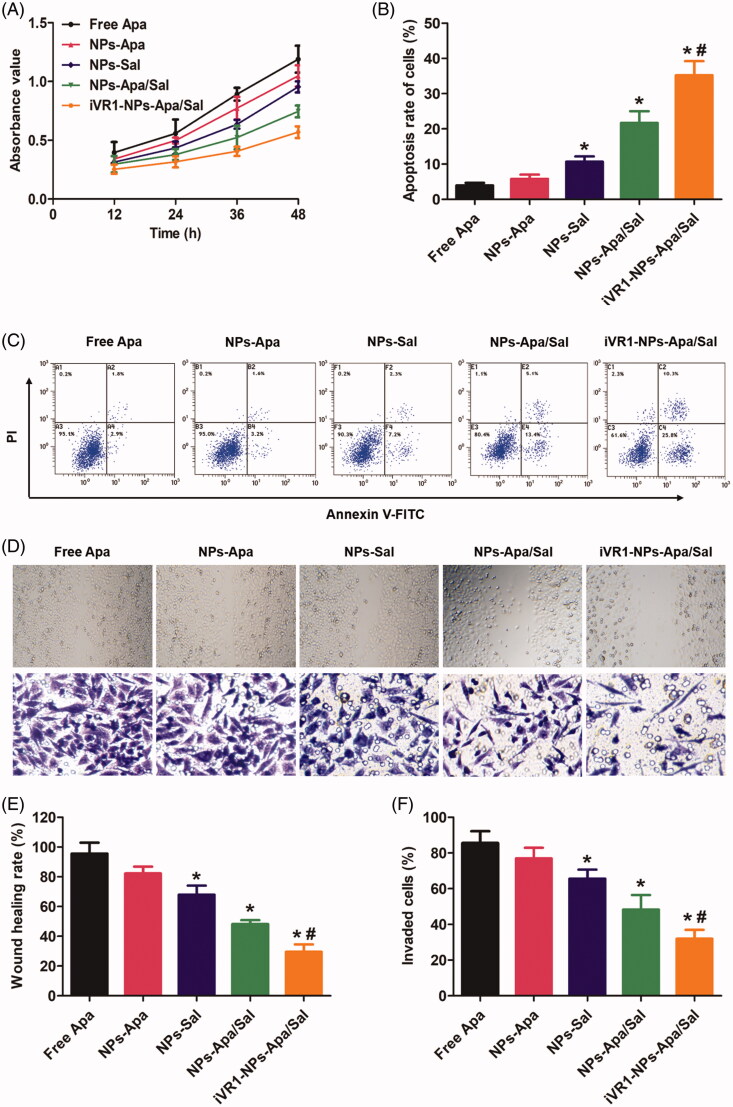
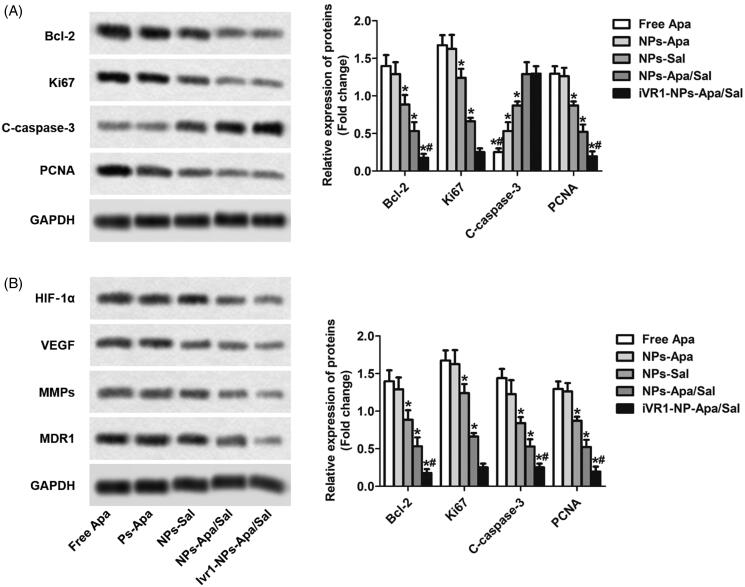
Hypoxic microenvironment commonly occurred in the solid tumors considerably decreases the chemosensitivity of cancer cells. Salidroside (Sal), the main active ingredient of , was shown to be able of regulating the tumor hypoxia micro-environment and enhancing the chemotherapeutic efficacy of drug-resistant cancer. Therefore, in this study, the Sal was co-loaded with Apatinib (Apa) by the PLGA-based nanoparticles (NPs) to improve the chemosensitivity of gastric cancer cells. Additionally, to improve the drug delivery efficacy, the tumor-homing peptide (iVR1 peptides) was further decorated on the surface of NPs. The tumor targeting ability of the peptides-functionalized nanoparticles (iVR1-NPs-Apa/Sal) was evaluated by and experiments. As the obtained results revealed that the iVR1-NPs-Apa/Sal displayed excellent tumor affinity than the unmodified ones (NPs-Apa/Sal), which in turn resulted in more efficient of anti-proliferation of gastric cancer cells and anti-tumor effect . In addition, compared with the cells or tumor-bearing mice only treaded by monotherapy of Apa, the cells or mice received combinational treatment of Apa and Sal showed obvious lower rate of growth, invasion, and migration or tumor growth and progress. Underlying mechanisms were further investigated and it was revealed that the anti-gastric cancer effect of Apa was signally improved by Sal through down-regulation the proliferation factors and increase the pro-apoptotic genes, as well as reprograming the tumor hypoxia micro-environment. In a word, the study showed that the Sal was able of improving the chemosensitivity of gastric cancer to Apa and the iVR1-NPs-Apa/Sal was capable of realizing highly efficient of tumor-targeting drug delivery.
缺氧的微环境在实体肿瘤中很常见,大大降低了癌细胞的化疗敏感性。红景天苷(Sal)是红景天的主要活性成分,能够调节肿瘤缺氧微环境,增强耐药性癌症的化疗疗效。因此,在这项研究中,通过 PLGA 纳米粒(NPs)共载 Sal 和阿帕替尼(Apa)以提高胃癌细胞的化疗敏感性。此外,为了提高药物递送效率,进一步在 NPs 表面修饰肿瘤归巢肽(iVR1 肽)。通过 和 实验评估了肽功能化纳米粒(iVR1-NPs-Apa/Sal)的肿瘤靶向能力。结果表明,iVR1-NPs-Apa/Sal 比未修饰的 NPs-Apa/Sal 具有更好的肿瘤亲和力,从而导致对胃癌细胞的增殖抑制和抗肿瘤作用更有效。此外,与仅接受 Apa 单药治疗的细胞或荷瘤小鼠相比,接受 Apa 和 Sal 联合治疗的细胞或小鼠的生长、侵袭和迁移或肿瘤生长和进展速度明显降低。进一步研究其机制表明,Sal 通过下调增殖因子和增加促凋亡基因,以及重新编程肿瘤缺氧微环境,显著增强了 Apa 的抗胃癌作用。总之,该研究表明 Sal 能够提高胃癌对 Apa 的化疗敏感性,而 iVR1-NPs-Apa/Sal 能够实现高效的肿瘤靶向药物递送。