Department of Medical Statistics and Epidemiology, School of Public Health, Sun Yat-sen University, Guangzhou, 510080, Guangdong Province, China.
Department of Epidemiology, School of Public Health, Fudan University, Shanghai, 200032, China.
BMC Infect Dis. 2020 May 12;20(1):338. doi: 10.1186/s12879-020-05003-9.
Peer education has become a strategy for health promotion among high-risk groups for HIV infection worldwide. However, the extent to which peer education could have an impact on HIV prevention or the long-term effect of this impact is still unknown. This study thus quantifies the impact of peer education over time among high-risk HIV groups globally.
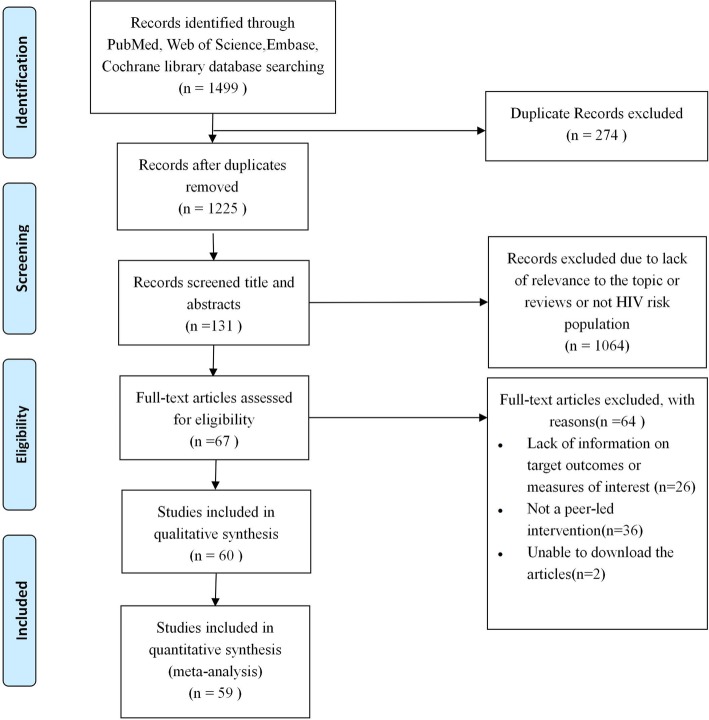
Following the PRISMA guidelines, a systematic review and meta-analysis was used to assess the effects and duration of peer education. A thorough literature search of PubMed, Web of Science, Embase and Cochrane Library was performed, and studies about peer education on high-risk HIV groups were reviewed. Pooled effects were calculated and the sources of heterogeneity were explored using meta-regression and subgroup analysis.
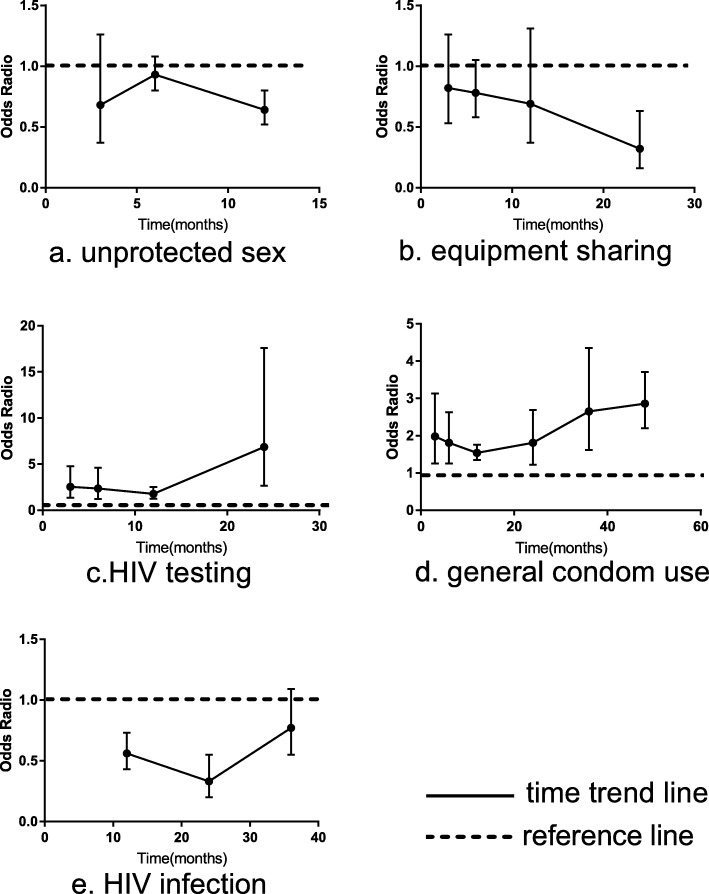
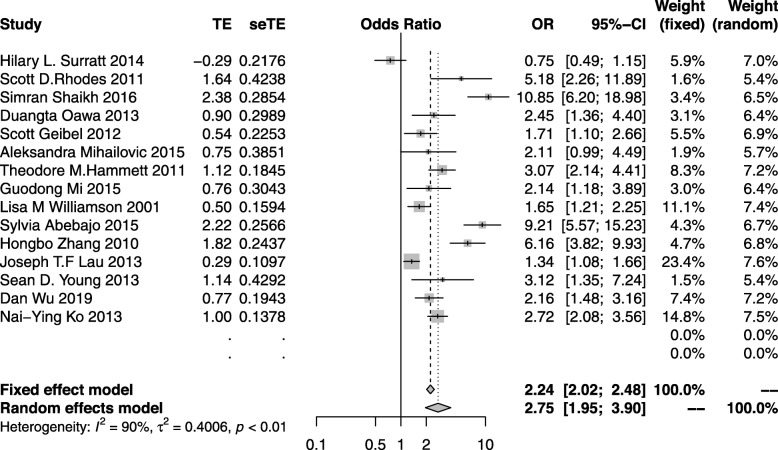
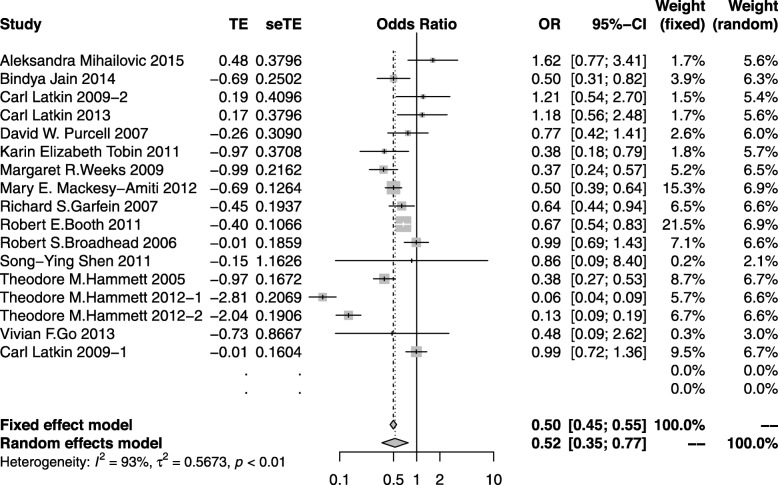
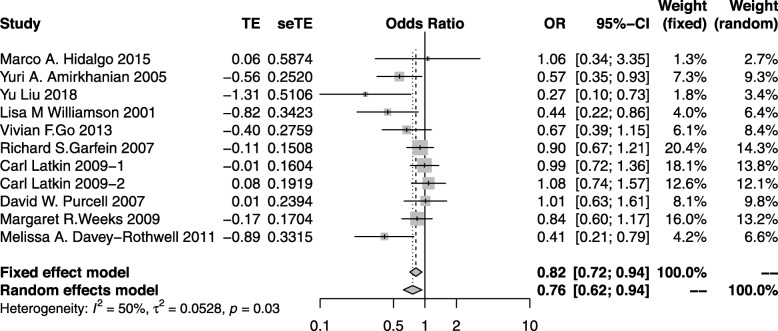
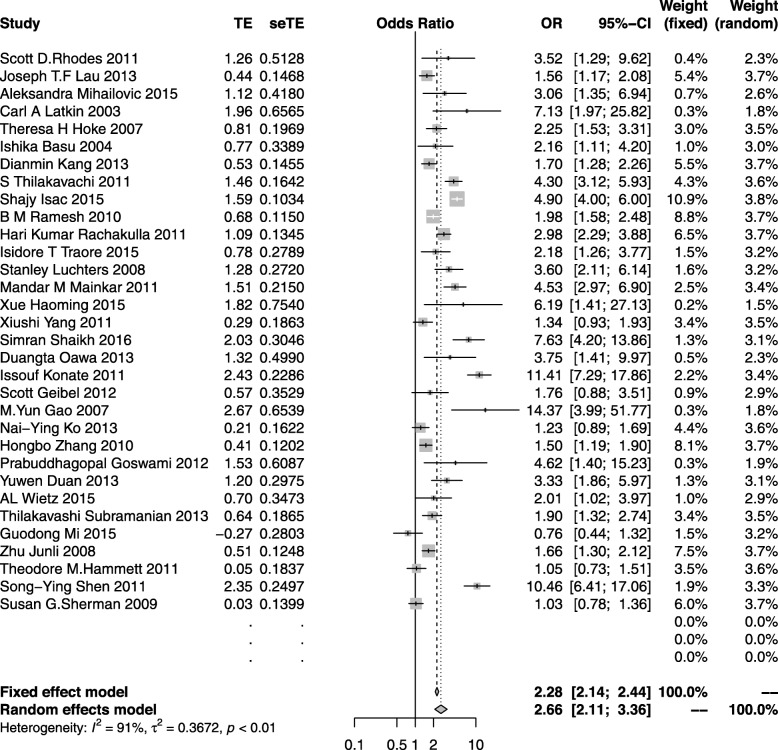
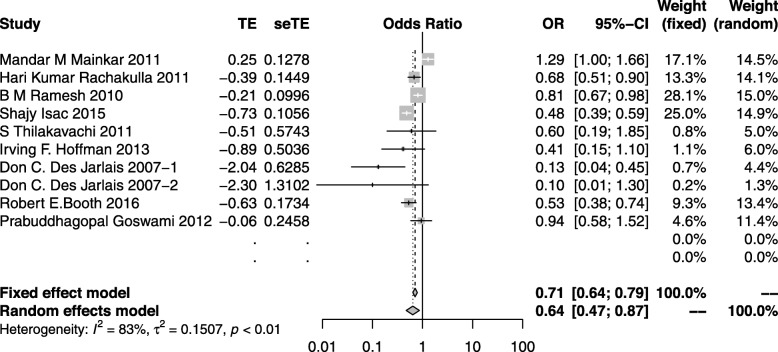
A total of 60 articles with 96,484 subjects were identified, and peer education was associated with 36% decreased rates of HIV infection among overall high risk groups (OR: 0.64; 95%CI: 0.47-0.87). Peer education can promote HIV testing (OR = 3.19; 95%CI:2.13,4.79) and condom use (OR = 2.66, 95% CI: 2.11-3.36) while reduce equipment sharing (OR = 0.50; 95%CI:0.33,0.75) and unprotected sex (OR = 0.82; 95%CI: 0.72-0.94). Time trend analysis revealed that peer education had a consistent effect on behavior change for over 24 months and the different follow-up times were a source of heterogeneity.
Our study shows that peer education is an effective tool with long-term impact for behavior change among high-risk HIV groups worldwide. Low and middle-income countries are encouraged to conduct large-scale peer education.
同伴教育已成为全球艾滋病毒感染高危人群促进健康的一项策略。然而,同伴教育对艾滋病毒预防的影响程度或这种影响的长期效果仍不得而知。因此,本研究量化了全球高危艾滋病毒群体中同伴教育随时间推移的影响。
根据 PRISMA 指南,采用系统评价和荟萃分析来评估同伴教育的效果和持续时间。对 PubMed、Web of Science、Embase 和 Cochrane Library 进行了全面的文献检索,并对有关高危艾滋病毒群体同伴教育的研究进行了综述。使用荟萃回归和亚组分析探索了汇总效应的来源和异质性来源。
共确定了 60 篇文章,涉及 96484 名受试者,同伴教育与总体高危人群中艾滋病毒感染率降低 36%相关(OR:0.64;95%CI:0.47-0.87)。同伴教育可以促进艾滋病毒检测(OR=3.19;95%CI:2.13,4.79)和安全套使用(OR=2.66,95%CI:2.11-3.36),同时减少共用器具(OR=0.50;95%CI:0.33,0.75)和无保护性行为(OR=0.82;95%CI:0.72-0.94)。时间趋势分析表明,同伴教育对 24 个月以上的行为改变具有持续影响,不同的随访时间是异质性的来源。
我们的研究表明,同伴教育是一种有效的工具,对全球高危艾滋病毒群体的行为改变具有长期影响。鼓励中低收入国家开展大规模的同伴教育。