Department of Rehabilitation, Amsterdam Movement Sciences, Amsterdam UMC, University of Amsterdam, Meibergdreef 9, Amsterdam, The Netherlands.
Department of Neurology, Amsterdam Neuroscience, Amsterdam UMC, University of Amsterdam, Meibergdreef 9, Amsterdam, The Netherlands.
BMC Neurol. 2020 May 13;20(1):184. doi: 10.1186/s12883-020-01725-0.
In individuals with neuromuscular diseases (NMD), symptoms of muscle weakness, fatigue and pain may limit physical activity. Inactivity leads to reduced physical fitness, which further complicates daily life functioning. Due to inconclusive evidence regarding exercise in NMD, the optimal training approach and strategies to preserve an active lifestyle remain to be determined. The physical activity programme I'M FINE, consisting of individualized aerobic exercise to improve physical fitness and coaching to preserve an active lifestyle, was therefore developed. The primary objective of this study will be to evaluate the efficacy of the I'M FINE programme in terms of improved physical fitness in individuals with slowly progressive NMD, compared to usual care.
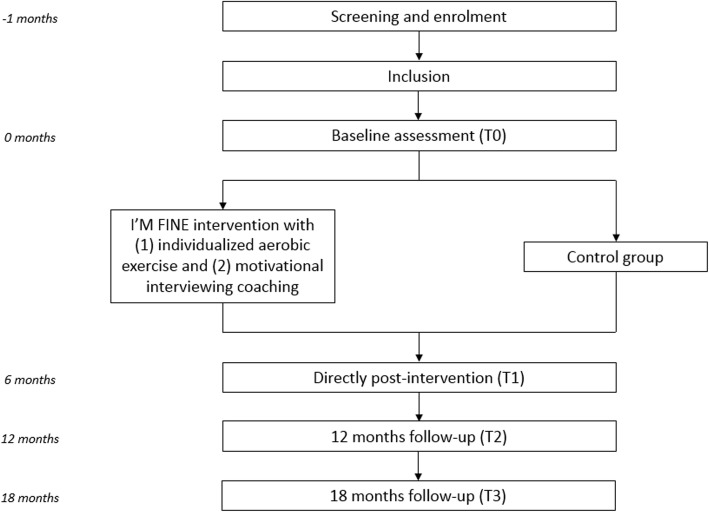
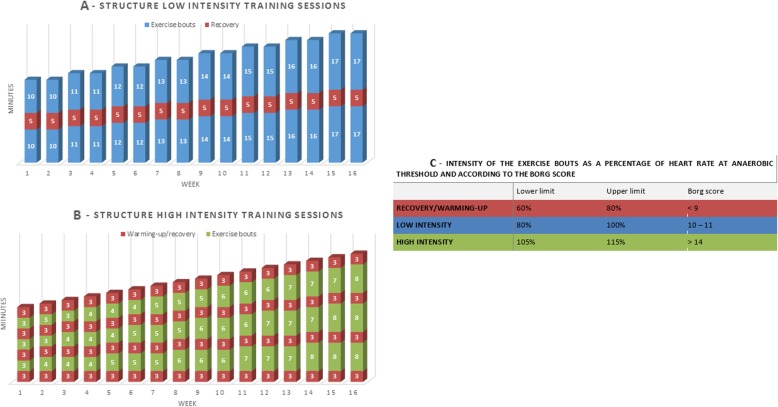
A multicentre, assessor-blinded, two armed, randomized controlled trial will be conducted in a sample of 90 individuals with slowly progressive NMD. Participants motivated to improve their reduced physical fitness will be randomized (ratio 1:1) to the I'M FINE intervention or usual care. The I'M FINE intervention consists of a six-month physical activity programme, including individualized home-based aerobic exercise to improve physical fitness (i.e. peak oxygen uptake), and motivational interviewing coaching (e.g. goal setting, self-management) to adopt and preserve an active lifestyle. Measurements will be performed at baseline, post-intervention, and at 12- and 18-months follow-up. The primary outcome is peak oxygen uptake (VO peak) directly post intervention. Main secondary outcomes are physical capacity, muscle strength, self-efficacy, daily activity, quality of life and markers of metabolic syndrome. The primary analysis compares change in VO peak post-intervention between the intervention and usual care group, with analysis of covariance.
The I'M FINE study will provide evidence regarding the efficacy of a physical activity intervention on the physical fitness and active lifestyle over the short- and long-term in individuals with slowly progressive NMD. These outcomes could potentially improve the (inter)national guidelines for efficacy of aerobic exercise programmes and provide insight in achieving a more active lifestyle in NMD.
(5/11/2018): Netherlands Trial Register NTR7609 (retrospectively registered), https://www.trialregister.nl/trial/7344. However, the Ethics Review Committee of the Amsterdam Medical Center (AMC) approved the study protocol on 7/11/2017. No adjustments were made to the approved study protocol before the first participant enrolment and registration. Registration was done after the second participant enrolment and the information in the register corresponds one on one with the approved study protocol.
在患有神经肌肉疾病(NMD)的个体中,肌肉无力、疲劳和疼痛的症状可能会限制身体活动。不活动会导致身体适应性降低,从而进一步影响日常生活功能。由于运动对 NMD 的疗效证据不明确,因此保持积极生活方式的最佳训练方法和策略仍有待确定。I'M FINE 身体活动计划由个体化有氧运动改善身体适应性和教练指导保持积极生活方式组成,因此而开发。本研究的主要目的是评估 I'M FINE 计划在改善缓慢进展性 NMD 个体身体适应性方面的疗效,与常规护理相比。
将在 90 名患有缓慢进展性 NMD 的个体中进行多中心、评估者盲法、两臂、随机对照试验。有改善身体适应性意愿的参与者将被随机(比例 1:1)分为 I'M FINE 干预组或常规护理组。I'M FINE 干预包括为期 6 个月的身体活动计划,包括个体化家庭有氧运动以改善身体适应性(即峰值摄氧量),以及动机访谈教练(例如目标设定、自我管理)以养成并保持积极的生活方式。测量将在基线、干预后以及 12 个月和 18 个月随访时进行。主要结局是干预后直接的峰值摄氧量(VO peak)。主要次要结局是身体能力、肌肉力量、自我效能、日常活动、生活质量和代谢综合征标志物。主要分析是比较干预组和常规护理组在干预后 VO peak 的变化,采用协方差分析。
I'M FINE 研究将提供有关在缓慢进展性 NMD 个体中,短期和长期身体活动干预对身体适应性和积极生活方式的疗效证据。这些结果可能会改善(国际)有氧运动方案疗效的指南,并为 NMD 中实现更积极的生活方式提供见解。
(2018 年 5 月 11 日):荷兰试验注册库 NTR7609(回溯注册),https://www.trialregister.nl/trial/7344。然而,阿姆斯特丹医学中心(AMC)的伦理审查委员会于 2017 年 11 月 7 日批准了该研究方案。在第一个参与者入组和注册之前,没有对批准的研究方案进行任何调整。在第二个参与者入组后进行了注册,注册信息与批准的研究方案一一对应。