Solaimanzadeh Isaac
Internal Medicine, Interfaith Medical Center, Brooklyn, USA.
Cureus. 2020 May 12;12(5):e8069. doi: 10.7759/cureus.8069.
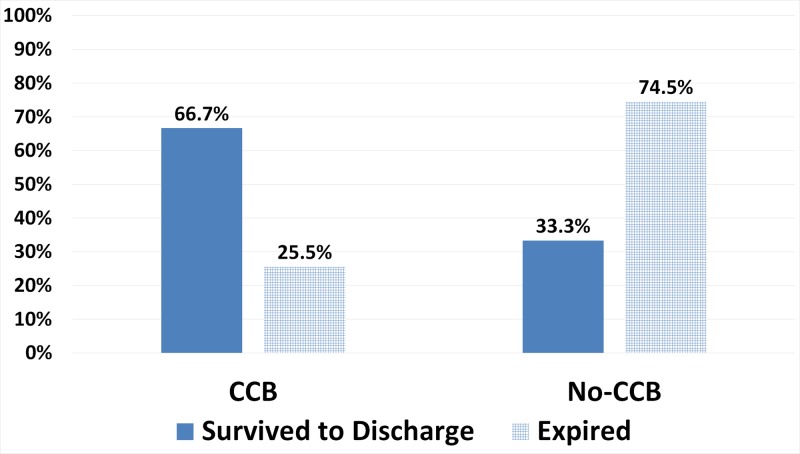
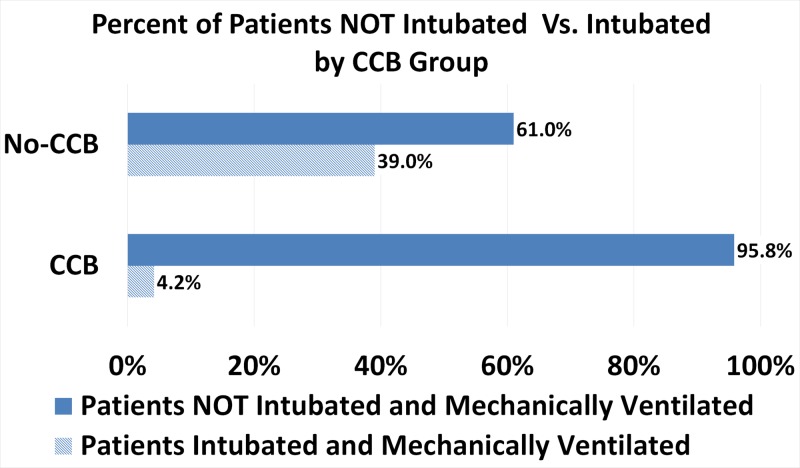
Dihydropyridine calcium channel blockers (CCB) are typically used agents in the clinical management of hypertension. Yet, they have also been utilized in the treatment of various pulmonary disorders with vasoconstriction. Severe acute respiratory syndrome coronavirus 2 (SARS-CoV-2) has been implicated in the development of vasoconstrictive, proinflammatory, and pro-oxidative effects. A retrospective review was conducted on CCB use in hospitalized patients in search of any difference in outcomes related to specific endpoints: survival to discharge and progression of disease leading to intubation and mechanical ventilation. The electronic medical records for all patients that tested positive for SARS-CoV-2 that were at or above the age of 65 and that expired or survived to discharge from a community hospital in Brooklyn, NY, between the start of the public health crisis due to the viral disease up until April 13, 2020, were included. Of the 77 patients that were identified, 18 survived until discharge and 59 expired. Seven patients from the expired group were excluded since they died within one day of presentation to the hospital. Five patients were excluded from the expired group since their age was above that of the eldest patient in the survival group (89 years old). With 65 patients left, 24 were found to have been administered either amlodipine or nifedipine (CCB group) and 41 were not (No-CCB group). Patients treated with a CCB were significantly more likely to survive than those not treated with a CCB: 12 (50%) survived and 12 expired in the CCB group vs. six (14.6%) that survived and 35 (85.4%) that expired in the No-CCB treatment group (P<.01; p=0.0036). CCB patients were also significantly less likely to undergo intubation and mechanical ventilation. Only one patient (4.2%) was intubated in the CCB group whereas 16 (39.0%) were intubated in the No-CCB treatment group (P<.01; p=0.0026). Nifedipine and amlodipine were found to be associated with significantly improved mortality and a decreased risk for intubation and mechanical ventilation in elderly patients hospitalized with COVID-19. Further clinical studies are warranted. Including either nifedipine or amlodipine in medication regimens for elderly patients with hypertension hospitalized for COVID-19 may be considered.
二氢吡啶类钙通道阻滞剂(CCB)是高血压临床治疗中的常用药物。然而,它们也被用于治疗各种伴有血管收缩的肺部疾病。严重急性呼吸综合征冠状病毒2(SARS-CoV-2)与血管收缩、促炎和促氧化作用的发生有关。对住院患者使用CCB的情况进行了回顾性研究,以寻找与特定终点相关的结果差异:出院生存率以及导致插管和机械通气的疾病进展情况。纳入了纽约布鲁克林一家社区医院中所有65岁及以上、在因该病毒性疾病引发的公共卫生危机开始至2020年4月13日期间SARS-CoV-2检测呈阳性且已死亡或存活至出院的患者的电子病历。在确定的77例患者中,18例存活至出院,59例死亡。死亡组中有7例患者因在入院一天内死亡而被排除。死亡组中有5例患者因年龄高于存活组中最年长者(89岁)而被排除。剩下65例患者,其中24例接受了氨氯地平或硝苯地平治疗(CCB组),41例未接受治疗(非CCB组)。接受CCB治疗的患者比未接受CCB治疗的患者存活可能性显著更高:CCB组中12例(50%)存活,12例死亡;而非CCB治疗组中6例(14.6%)存活,35例(85.4%)死亡(P<0.01;p = 0.0036)。CCB组患者接受插管和机械通气的可能性也显著更低。CCB组中只有1例患者(4.2%)接受了插管,而非CCB治疗组中有