Tonello Sarah, Bianchetti Andrea, Braga Simona, Almici Camillo, Marini Mirella, Piovani Giovanna, Guindani Michele, Dey Kamol, Sartore Luciana, Re Federica, Russo Domenico, Cantù Edoardo, Lopomo Nicola Francesco, Serpelloni Mauro, Sardini Emilio
Department of Information Engineering, University of Padova, 35131 Padua, Italy.
Laboratory for Stem Cells Manipulation and Cryopreservation, Department of Transfusion Medicine, ASST Spedali Civili, 25123 Brescia, Italy.
Materials (Basel). 2020 May 13;13(10):2231. doi: 10.3390/ma13102231.
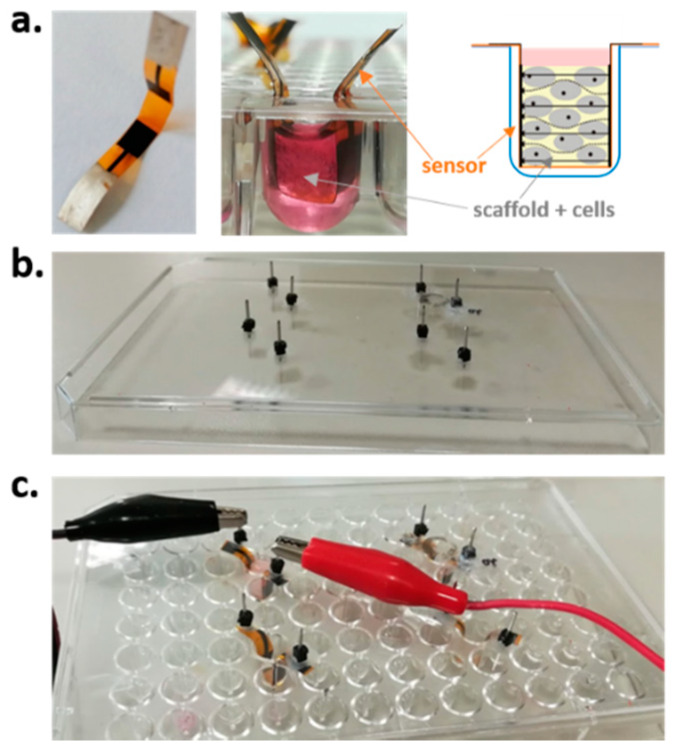
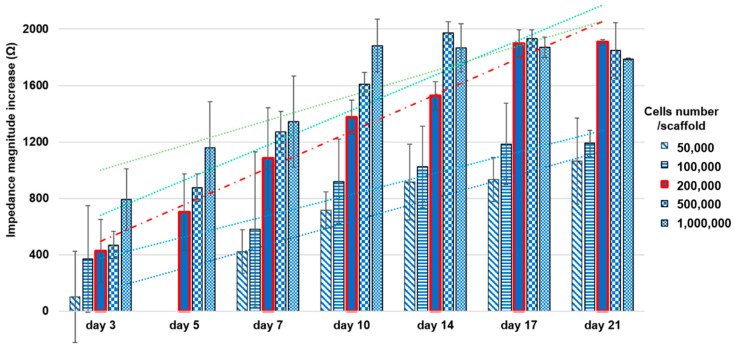
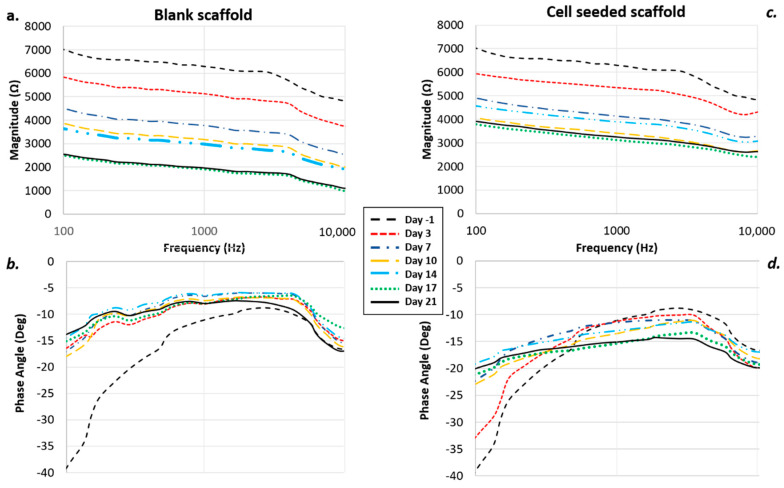
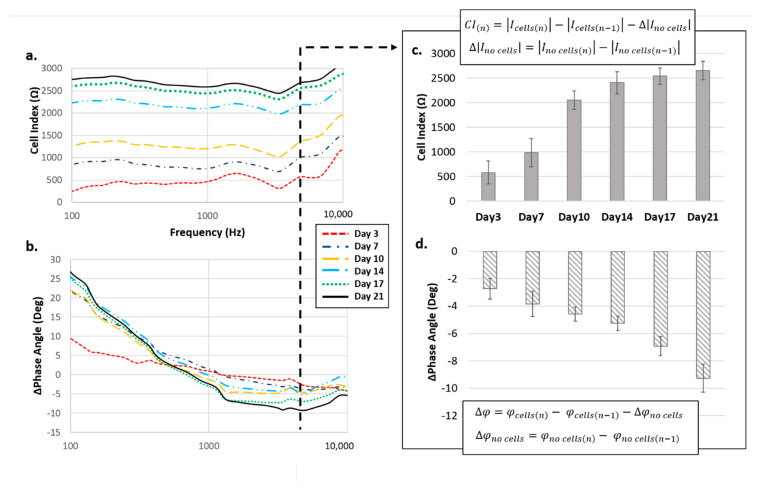
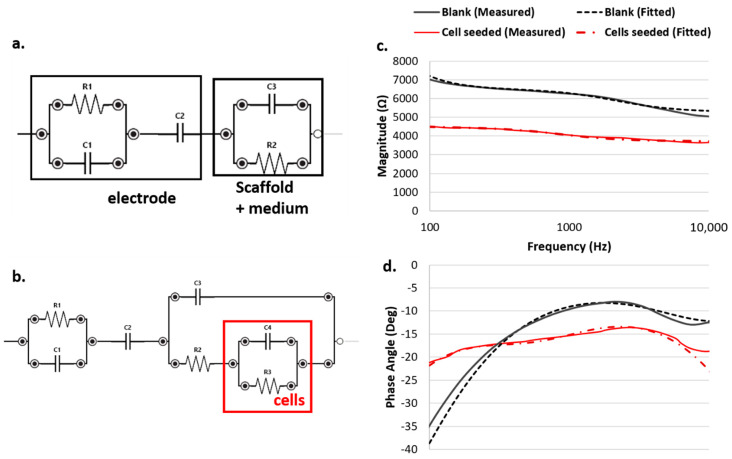
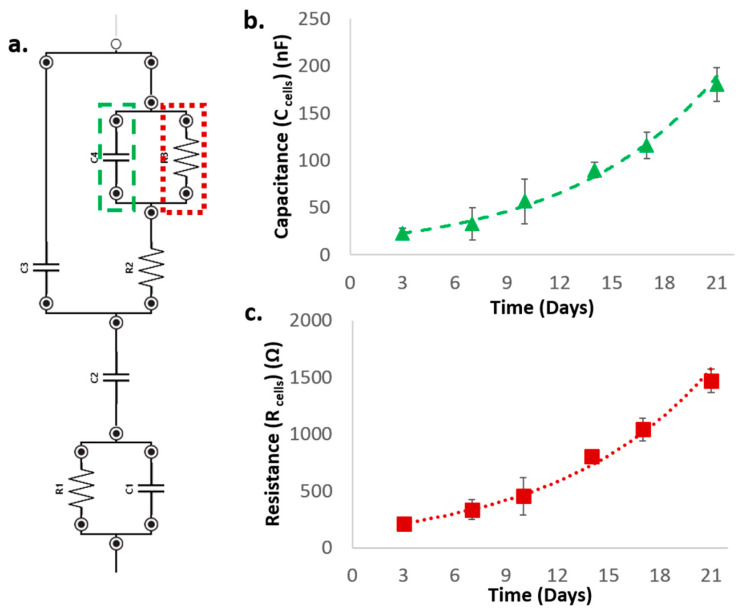
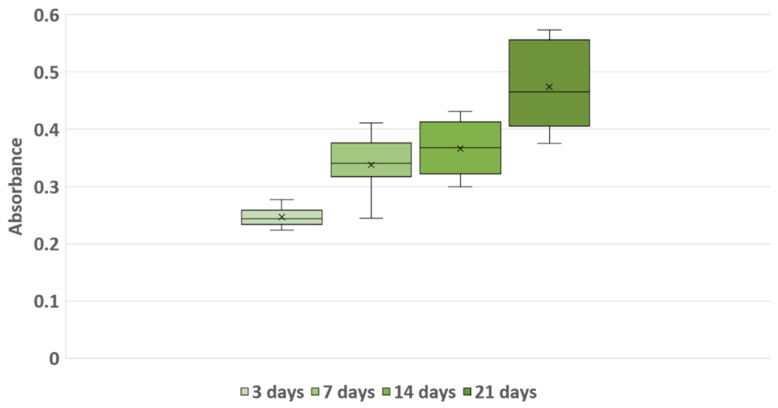
One of the main hurdles to improving scaffolds for regenerative medicine is the development of non-invasive methods to monitor cell proliferation within three-dimensional environments. Recently, an electrical impedance-based approach has been identified as promising for three-dimensional proliferation assays. A low-cost impedance-based solution, easily integrable with multi-well plates, is here presented. Sensors were developed using biocompatible carbon-based ink on foldable polyimide substrates by means of a novel aerosol jet printing technique. The setup was tested to monitor the proliferation of human mesenchymal stromal cells into previously validated gelatin-chitosan hybrid hydrogel scaffolds. Reliability of the methodology was assessed comparing variations of the electrical impedance parameters with the outcomes of enzymatic proliferation assay. Results obtained showed a magnitude increase and a phase angle decrease at 4 kHz (maximum of 2.5 kΩ and -9 degrees) and an exponential increase of the modeled resistance and capacitance components due to the cell proliferation (maximum of 1.5 kΩ and 200 nF). A statistically significant relationship with enzymatic assay outcomes could be detected for both phase angle and electric model parameters. Overall, these findings support the potentiality of this non-invasive approach for continuous monitoring of scaffold-based cultures, being also promising in the perspective of optimizing the scaffold-culture system.
改善再生医学支架的主要障碍之一是开发非侵入性方法来监测三维环境中的细胞增殖。最近,基于电阻抗的方法已被认为在三维增殖测定中很有前景。本文介绍了一种低成本的基于阻抗的解决方案,它可以轻松地与多孔板集成。通过一种新型的气溶胶喷射印刷技术,在可折叠的聚酰亚胺基板上使用生物相容性碳基墨水开发了传感器。该装置经过测试,用于监测人间充质基质细胞在先前验证过的明胶-壳聚糖混合水凝胶支架中的增殖。通过将电阻抗参数的变化与酶促增殖测定的结果进行比较,评估了该方法的可靠性。所得结果显示,在4 kHz时,幅度增加,相角减小(最大值分别为2.5 kΩ和-9度),并且由于细胞增殖,建模的电阻和电容分量呈指数增加(最大值分别为1.5 kΩ和200 nF)。对于相角和电模型参数,均能检测到与酶促测定结果具有统计学意义的关系。总体而言,这些发现支持了这种非侵入性方法在持续监测基于支架的培养物方面的潜力,从优化支架-培养系统的角度来看也很有前景。