Department of Information Engineering, University of Brescia, Via Branze 38, 25123 Brescia, Italy.
Department of Information Engineering, University of Padova, Via Gradenigo 6, 35131 Padova, Italy.
Biosensors (Basel). 2020 Nov 4;10(11):166. doi: 10.3390/bios10110166.
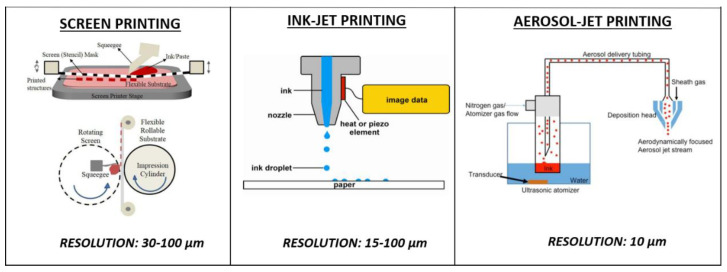
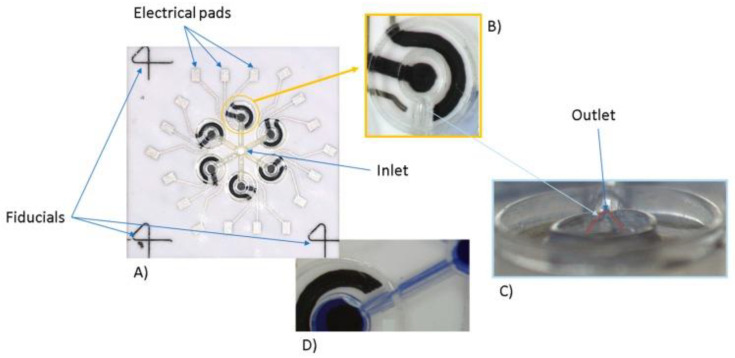
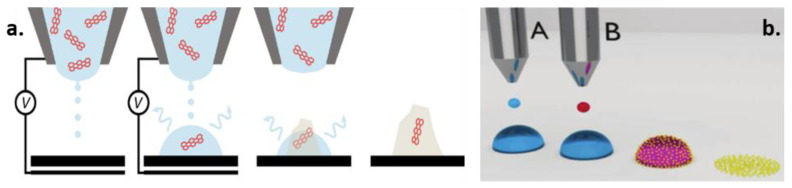
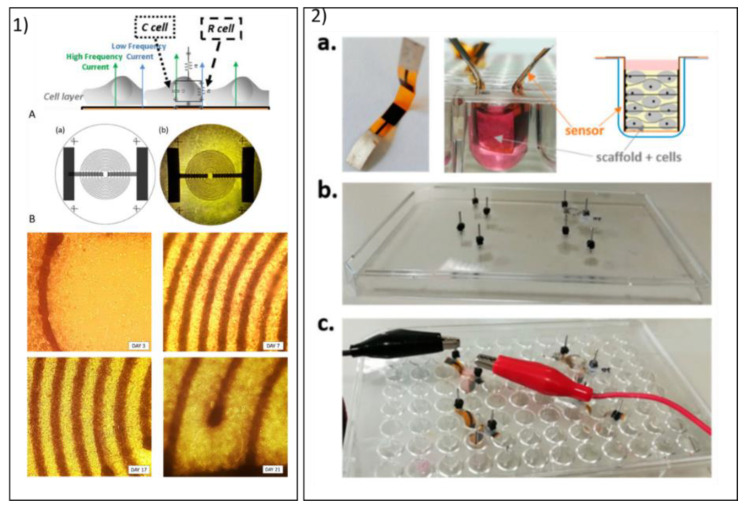
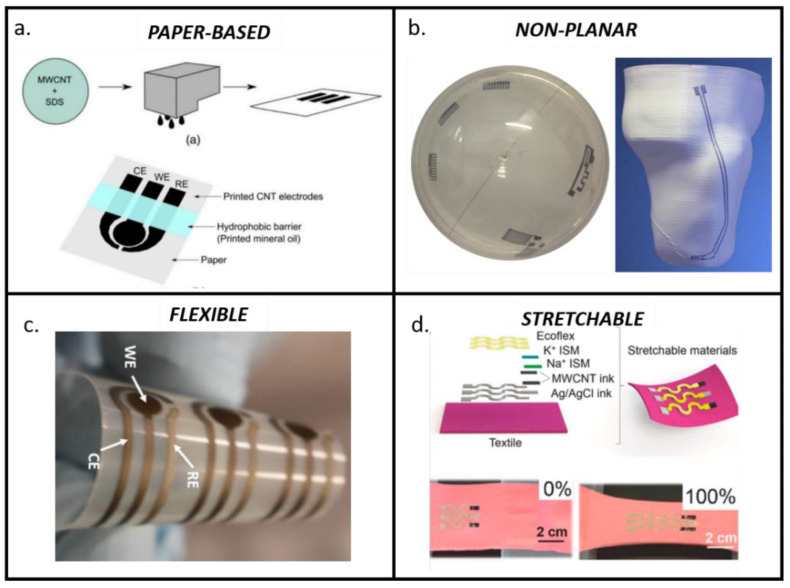
Printed electrochemical biosensors have recently gained increasing relevance in fields ranging from basic research to home-based point-of-care. Thus, they represent a unique opportunity to enable low-cost, fast, non-invasive and/or continuous monitoring of cells and biomolecules, exploiting their electrical properties. Printing technologies represent powerful tools to combine simpler and more customizable fabrication of biosensors with high resolution, miniaturization and integration with more complex microfluidic and electronics systems. The metrological aspects of those biosensors, such as sensitivity, repeatability and stability, represent very challenging aspects that are required for the assessment of the sensor itself. This review provides an overview of the opportunities of printed electrochemical biosensors in terms of transducing principles, metrological characteristics and the enlargement of the application field. A critical discussion on metrological challenges is then provided, deepening our understanding of the most promising trends in order to overcome them: printed nanostructures to improve the limit of detection, sensitivity and repeatability; printing strategies to improve organic biosensor integration in biological environments; emerging printing methods for non-conventional substrates; microfluidic dispensing to improve repeatability. Finally, an up-to-date analysis of the most recent examples of printed electrochemical biosensors for the main classes of target analytes (live cells, nucleic acids, proteins, metabolites and electrolytes) is reported.
印刷电化学生物传感器最近在从基础研究到家庭即时护理的各个领域的相关性日益增加。因此,它们为利用细胞和生物分子的电学性质实现低成本、快速、非侵入性和/或连续监测提供了独特的机会。印刷技术是将生物传感器的简单且可定制的制造与更高的分辨率、微型化以及与更复杂的微流控和电子系统的集成相结合的强大工具。这些生物传感器的计量方面,如灵敏度、重复性和稳定性,是评估传感器本身所必需的极具挑战性的方面。本文综述了印刷电化学生物传感器在换能原理、计量特性和应用领域扩展方面的机遇。然后对计量方面的挑战进行了批判性讨论,加深了我们对最有前途的趋势的理解,以便克服这些挑战:印刷纳米结构可提高检测限、灵敏度和重复性;印刷策略可提高生物环境中有机生物传感器的集成度;新兴的非传统衬底印刷方法;微流控分配可提高重复性。最后,对主要目标分析物(活细胞、核酸、蛋白质、代谢物和电解质)的印刷电化学生物传感器的最新实例进行了最新分析。