The Laboratory for Therapeutic 3D Bioprinting, Department of Orthopaedic Surgery, Massachusetts General Hospital, Harvard Medical School, Boston, MA 02114, USA.
Int J Mol Sci. 2020 May 14;21(10):3482. doi: 10.3390/ijms21103482.
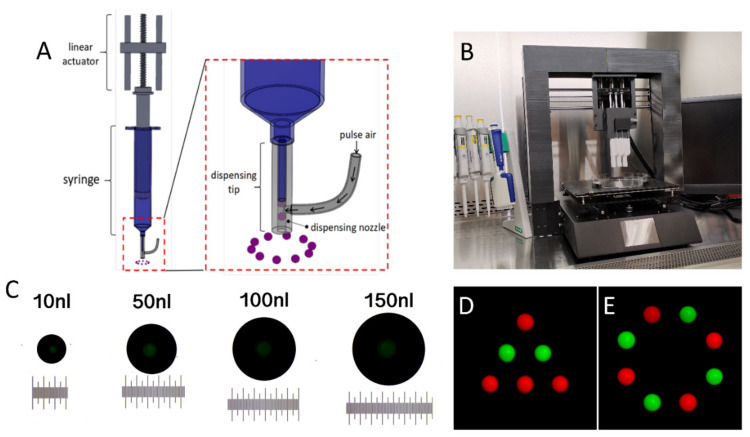
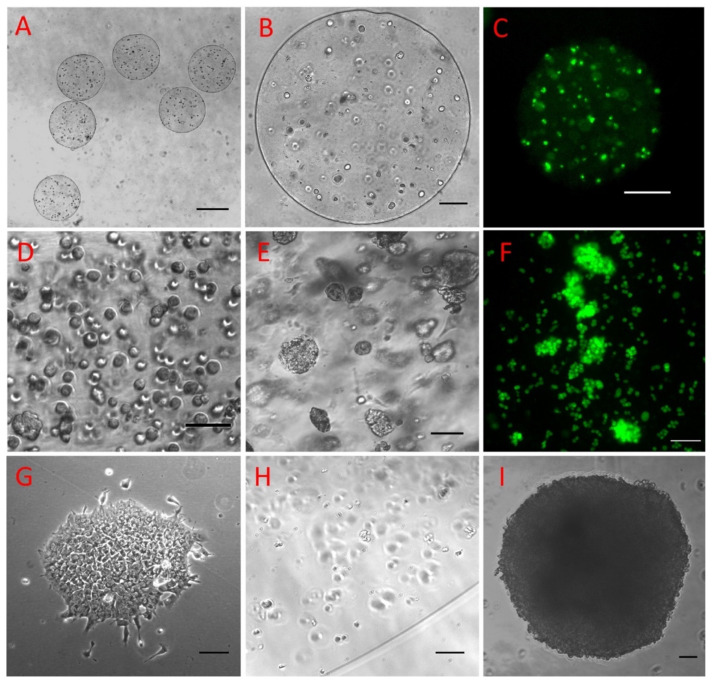
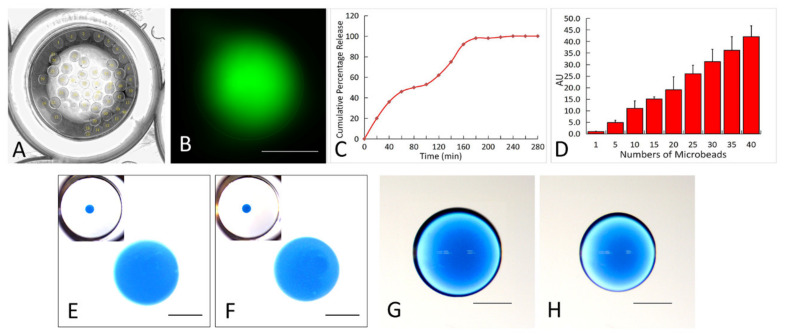
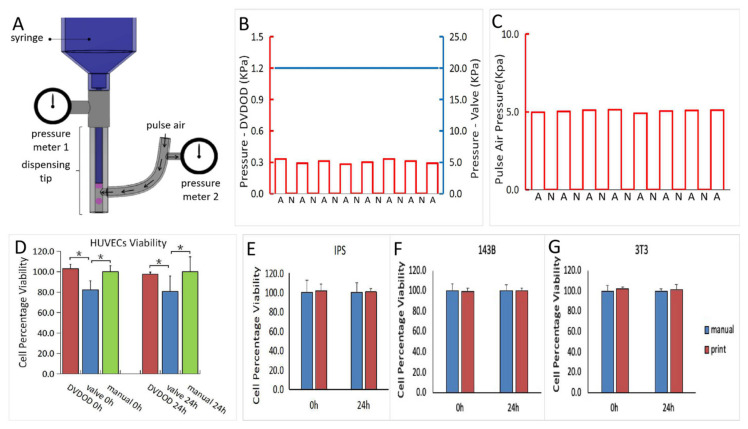
Drop-on-demand (DOD) 3D bioprinting technologies currently hold the greatest promise for generating functional tissues for clinical use and for drug development. However, existing DOD 3D bioprinting technologies have three main limitations: (1) droplet volume inconsistency; (2) the ability to print only bioinks with low cell concentrations and low viscosity; and (3) problems with cell viability when dispensed under high pressure. We report our success developing a novel direct-volumetric DOD (DVDOD) 3D bioprinting technology that overcomes each of these limitations. DVDOD can produce droplets of bioink from < 10 nL in volume using a direct-volumetric mechanism with < ± 5% volumetric percent accuracy in an accurate spatially controlled manner. DVDOD has the capability of dispensing bioinks with high concentrations of cells and/or high viscosity biomaterials in either low- or high-throughput modes. The cells are subjected to a low pressure during the bioprinting process for a very short period of time that does not negatively impact cell viability. We demonstrated the functions of the bioprinter in two distinct manners: (1) by using a high-throughput drug-delivery model; and (2) by bioprinting micro-tissues using a variety of different cell types, including functional micro-tissues of bone, cancer, and induced pluripotent stem cells. Our DVDOD technology demonstrates a promising platform for generating many types of tissues and drug-delivery models.
按需滴注(DOD)3D 生物打印技术目前最有希望用于生成可用于临床和药物开发的功能性组织。然而,现有的 DOD 3D 生物打印技术有三个主要的局限性:(1)液滴体积不一致;(2)仅能打印低细胞浓度和低粘度的生物墨水;(3)在高压下分配时细胞活力存在问题。我们报告了成功开发一种新型的直接体积 DOD(DVDOD)3D 生物打印技术,该技术克服了这些局限性。DVDOD 可以使用直接体积机制从<10 nL 的体积产生生物墨水液滴,体积准确度<±5%,具有精确的空间控制能力。DVDOD 能够以低或高通量模式分配高浓度细胞和/或高粘度生物材料的生物墨水。细胞在生物打印过程中仅会受到短时间的低压,这不会对细胞活力产生负面影响。我们以两种不同的方式展示了生物打印机的功能:(1)通过使用高通量药物输送模型;(2)通过使用各种不同的细胞类型,包括功能性骨、癌症和诱导多能干细胞的微组织来生物打印微组织。我们的 DVDOD 技术展示了一个有前途的平台,可用于生成多种类型的组织和药物输送模型。