Yan An, Wang Yamin, Tan Swee Ngin, Mohd Yusof Mohamed Lokman, Ghosh Subhadip, Chen Zhong
Natural Sciences and Science Education, National Institute of Education, Nanyang Technological University, Singapore, Singapore.
Centre for Urban Greenery and Ecology, National Parks Board, Singapore, Singapore.
Front Plant Sci. 2020 Apr 30;11:359. doi: 10.3389/fpls.2020.00359. eCollection 2020.
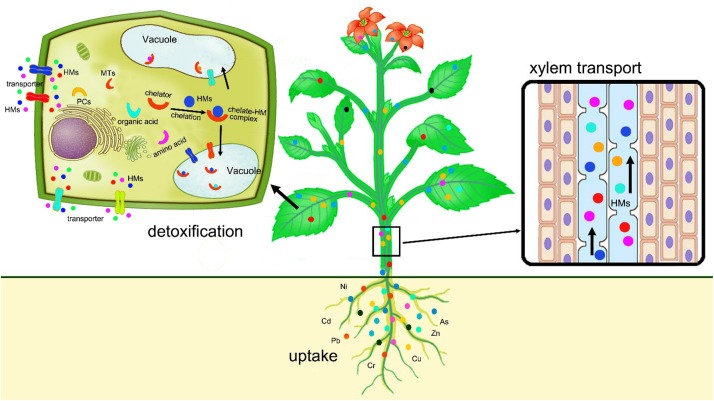
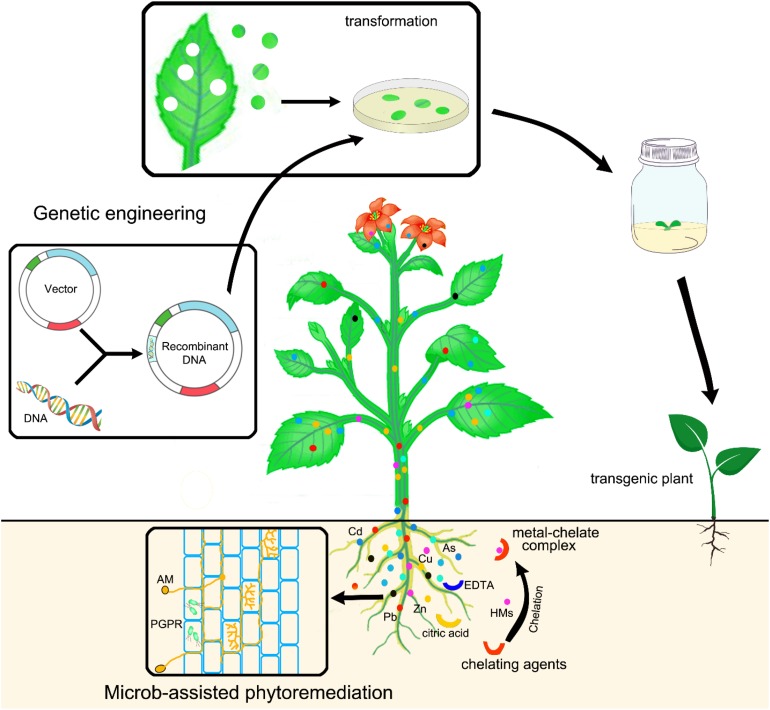
Heavy metal accumulation in soil has been rapidly increased due to various natural processes and anthropogenic (industrial) activities. As heavy metals are non-biodegradable, they persist in the environment, have potential to enter the food chain through crop plants, and eventually may accumulate in the human body through biomagnification. Owing to their toxic nature, heavy metal contamination has posed a serious threat to human health and the ecosystem. Therefore, remediation of land contamination is of paramount importance. Phytoremediation is an eco-friendly approach that could be a successful mitigation measure to revegetate heavy metal-polluted soil in a cost-effective way. To improve the efficiency of phytoremediation, a better understanding of the mechanisms underlying heavy metal accumulation and tolerance in plant is indispensable. In this review, we describe the mechanisms of how heavy metals are taken up, translocated, and detoxified in plants. We focus on the strategies applied to improve the efficiency of phytostabilization and phytoextraction, including the application of genetic engineering, microbe-assisted and chelate-assisted approaches.
由于各种自然过程和人为(工业)活动,土壤中重金属的积累迅速增加。由于重金属不可生物降解,它们在环境中持续存在,有可能通过农作物进入食物链,并最终可能通过生物放大作用在人体中积累。由于其毒性,重金属污染对人类健康和生态系统构成了严重威胁。因此,修复土地污染至关重要。植物修复是一种生态友好型方法,可能是一种以具有成本效益的方式对重金属污染土壤进行植被恢复的成功缓解措施。为了提高植物修复的效率,深入了解植物中重金属积累和耐受性的潜在机制是必不可少的。在这篇综述中,我们描述了重金属在植物中吸收、转运和解毒的机制。我们重点关注用于提高植物稳定化和植物提取效率的策略,包括基因工程、微生物辅助和螯合剂辅助方法的应用。