Department of Medical Sciences, University of Aberdeen, Aberdeen, UK.
Reproductive Medicine Unit, "Leto" Maternity Hospital, Mouson str. 7-13, 11524, Athens, Greece.
J Assist Reprod Genet. 2020 Jul;37(7):1623-1635. doi: 10.1007/s10815-020-01802-w. Epub 2020 May 20.
Combination of transcriptomic and retrospective clinical data, to assess anti-Mullerian hormone (AMH) functionality at a cumulus cell level and evaluate AMH potential as a suitable marker for IVF outcomes (oocytes retrieved, number of day 3 embryos, gestation outcomes).
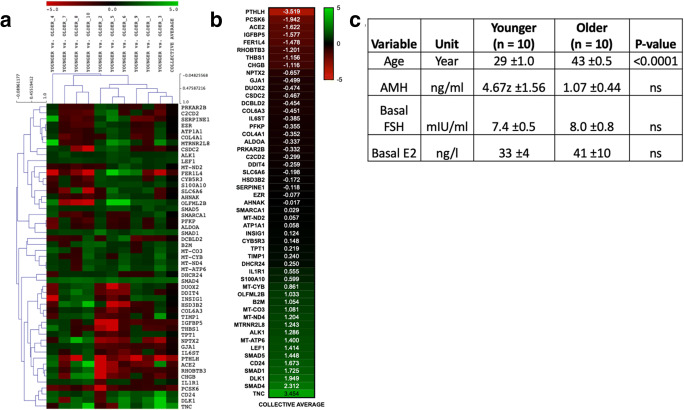
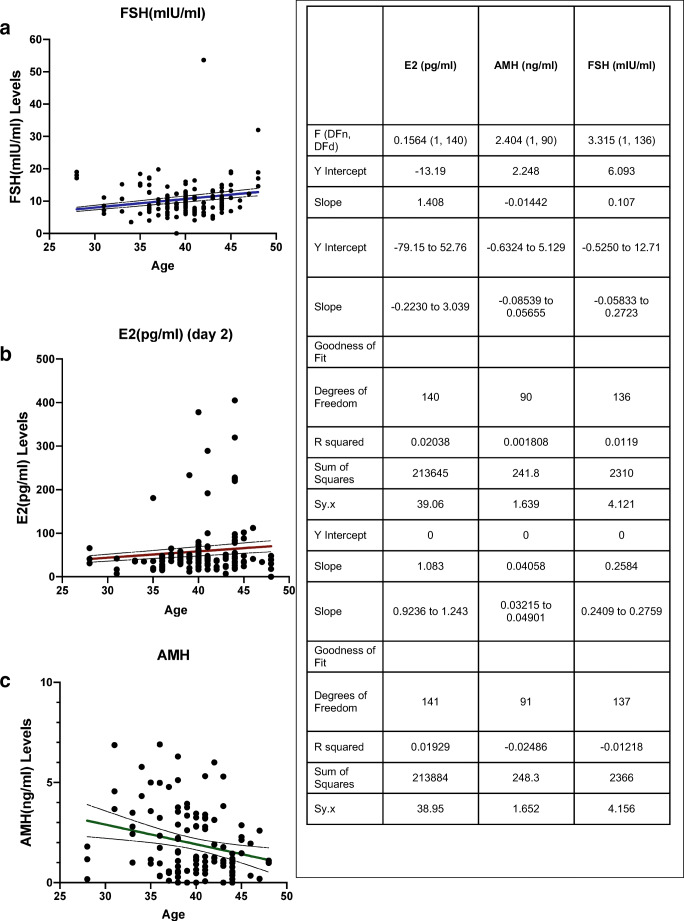
Raw RNA-sequencing data of cumulus cells sourced from younger (n = 10) patient group (group A) (age 29 (1 year of age), baseline FSH 7.4 (0.5 mIU/ml), AMH 4.67 (1.56 ng/ml)) and older (n = 10) patient group (group B) (age 43 (± 0.55 years of age), baseline FSH 8 (0.8 mIU/ml), AMH 1.07 (0.44 ng/ml)) were employed to derive transcriptomic differences among high vs. low AMH groups. We collected retrospectively patient data from 80 infertile patients selected according to pre-specified inclusion criteria.
Publicly available raw RNA-sequencing data were retrieved from the SRA database of NCBI resource GEO Accession (GSM21575/35-44; GEO Accession: GSM21575/45-55). Retrospective data were collected from referrals to the Institute of Reproductive Medicine, Lito Hospital of Athens and the Institute of Life, Iaso Hospital of Athens, between the periods of March 2015 and April 2018.
INTERVENTION(S): A fixed human menopausal gonadotropin (hMG) antagonist protocol was used for all patients. All patients had serum AMH levels measured within a 3-month period prior to stimulation and serum levels of FSH and estradiol (day 2 of menstrual cycle; E2) (Clinical Trial code NV24042014).
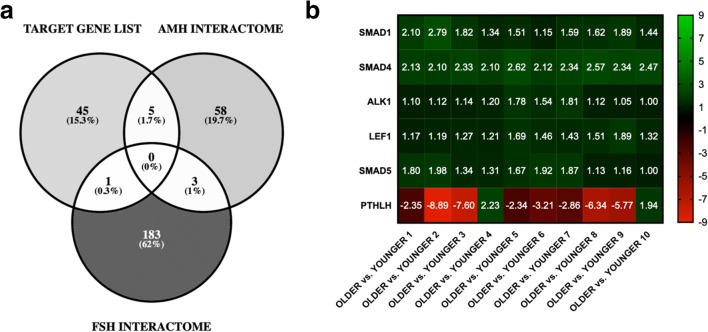
MAIN OUTCOME MEASURE(S): The primary outcomes were identification of transcriptomic variations among high (group A) vs. low (group B) AMH patients. Retrospective data primary outcomes were number of oocytes retrieved, fertilized successfully (grades A and B, day 2 embryos), and total number of day 3 embryos. Secondary outcome was live birth rate. Finally, we compared primary outcomes with AMH and FSH level as well as their genetic pathways (interacting genes) to demonstrate the predictive accuracy.
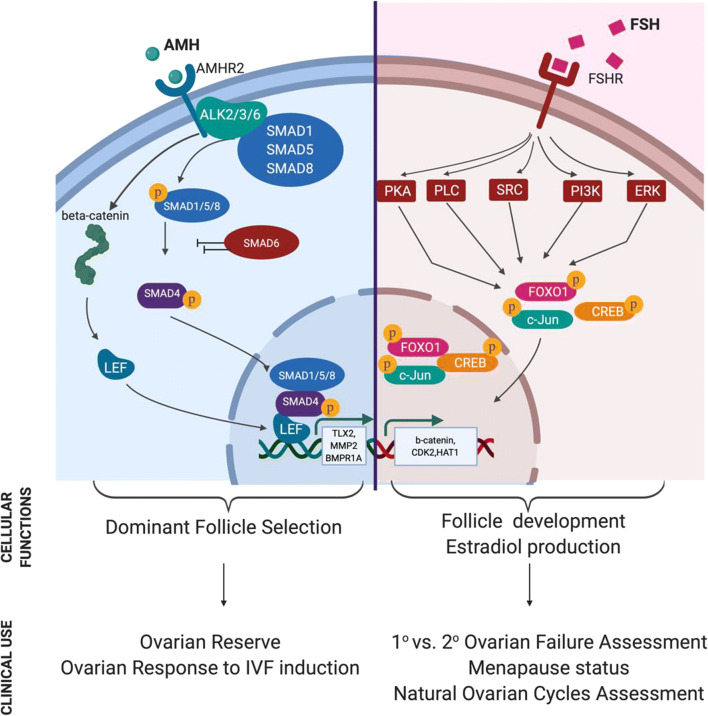
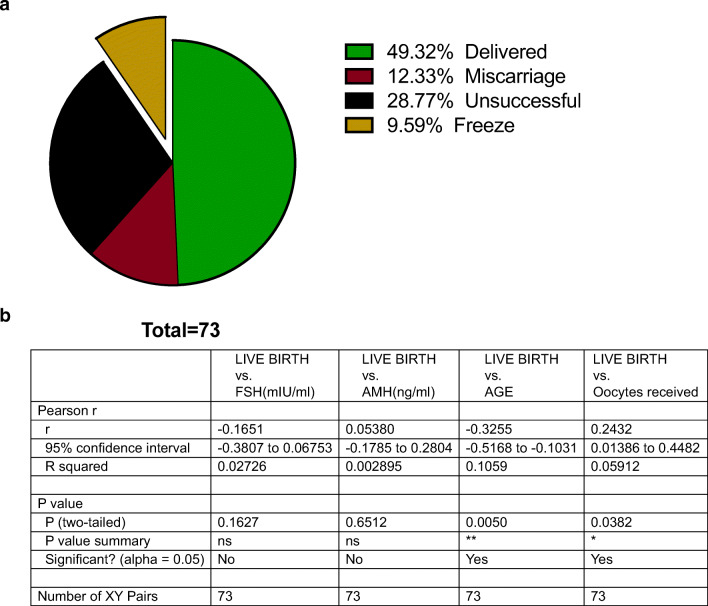
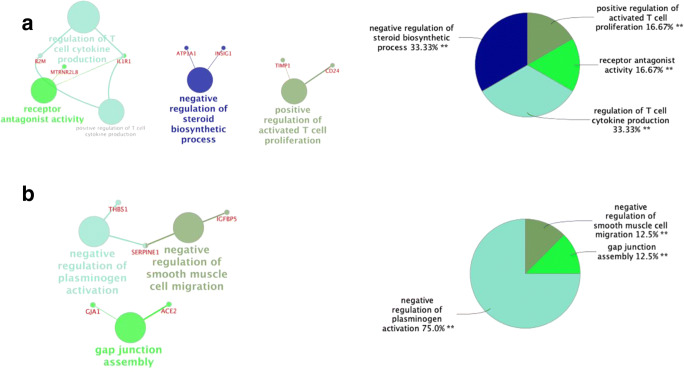
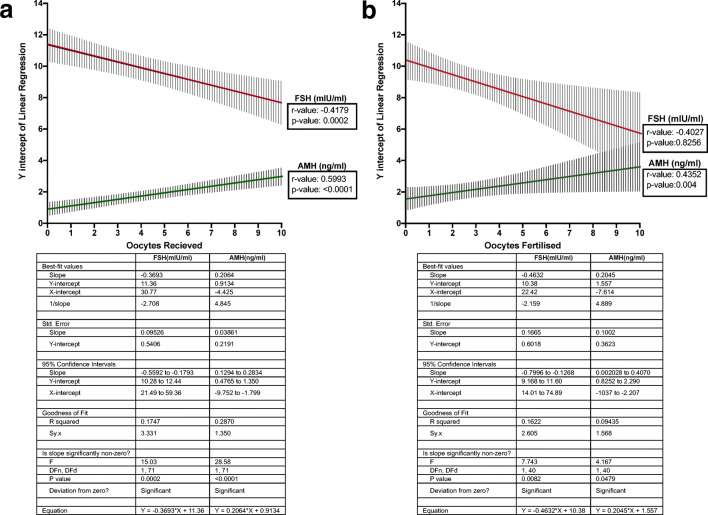
Essential players of the AMH signaling cascade, namely, SMAD1, SMAD4, SMAD5, ALK1, and LEF1, were significantly upregulated in group A (n 10) transcriptome. This biological clue was further supported by retrospective clinical data (n 80 participants), where AMH was positively correlated with both oocytes retrieved and fertilized as well as number of day 3 (grades A and B) embryos from patients undergoing IVF, in a statistically significant manner. AMH was further positive trend of association with successful pregnancy outcomes.
Overall, this study offers new insight on AMH effects upon cumulus cells and new aspects on how AMH might promote oocyte integrity and embryo viability at a biochemical level as well as add to the current body of evidence supporting AMH clinical potential as a more sensitive marker of IVF outcomes in comparison with FSH, regarding numbers of oocytes received and high-quality day 2 and day 3 embryos.
结合转录组学和回顾性临床数据,评估抗苗勒管激素(AMH)在卵丘细胞水平上的功能,并评估 AMH 作为体外受精结局(获卵数、第 3 天胚胎数、妊娠结局)合适标志物的潜力。
利用来自年轻(n=10)患者组(A 组)(年龄 29 岁(1 岁),基础 FSH 7.4(0.5 mIU/ml),AMH 4.67(1.56ng/ml))和年长(n=10)患者组(B 组)(年龄 43 岁(±0.55 岁),基础 FSH 8(0.8 mIU/ml),AMH 1.07(0.44ng/ml))的高 AMH 组和低 AMH 组的原始 RNA 测序数据,得出转录组差异。我们从符合预设纳入标准的 80 名不孕患者中回顾性收集患者数据。
从 NCBI 资源 GEO 访问(GSM21575/35-44;GEO 访问:GSM21575/45-55)的 SRA 数据库中检索到公开的原始 RNA 测序数据。回顾性数据是从雅典 Lito 医院和雅典 Iaso 医院生殖医学研究所的转诊中收集的,时间为 2015 年 3 月至 2018 年 4 月。
所有患者均采用固定的人绝经促性腺激素(hMG)拮抗剂方案。所有患者在刺激前 3 个月内均测量血清 AMH 水平,并测量血清 FSH 和雌二醇(第 2 天的月经周期;E2)(临床试验代码 NV24042014)。
主要结局是确定高 AMH(A 组)与低 AMH(B 组)患者之间的转录组差异。回顾性数据的主要结局是获卵数、成功受精(第 2 天胚胎 A 级和 B 级)和第 3 天胚胎总数。次要结局是活产率。最后,我们比较了 AMH 和 FSH 水平及其遗传途径(相互作用基因)与主要结局,以证明预测的准确性。
AMH 信号级联的重要参与者,即 SMAD1、SMAD4、SMAD5、ALK1 和 LEF1,在 A 组(n=10)转录组中显著上调。这一生物学线索在 80 名参与者(n=80)的回顾性临床数据中得到了进一步支持,AMH 与接受体外受精的患者的获卵数和受精数以及第 3 天(A 级和 B 级)胚胎数呈正相关,具有统计学意义。AMH 与成功妊娠结局也呈正相关趋势。
总的来说,这项研究提供了 AMH 对卵丘细胞影响的新见解,以及 AMH 如何在生化水平上促进卵母细胞完整性和胚胎活力的新方面,并且进一步支持了 AMH 作为比 FSH 更敏感的体外受精结局标志物的临床潜力,在接受的卵数和高质量的第 2 天和第 3 天胚胎方面。