Xin Haosheng, Hu Xiaohong, Cai Chiliu, Wang Haiyong, Zhu Changhui, Li Song, Xiu Zhongxun, Zhang Xinghua, Liu Qiying, Ma Longlong
Guangzhou Institute of Energy Conversion, Chinese Academy of Sciences, Guangzhou, China.
CAS Key Laboratory of Renewable Energy, Guangzhou, China.
Front Chem. 2020 May 5;8:333. doi: 10.3389/fchem.2020.00333. eCollection 2020.
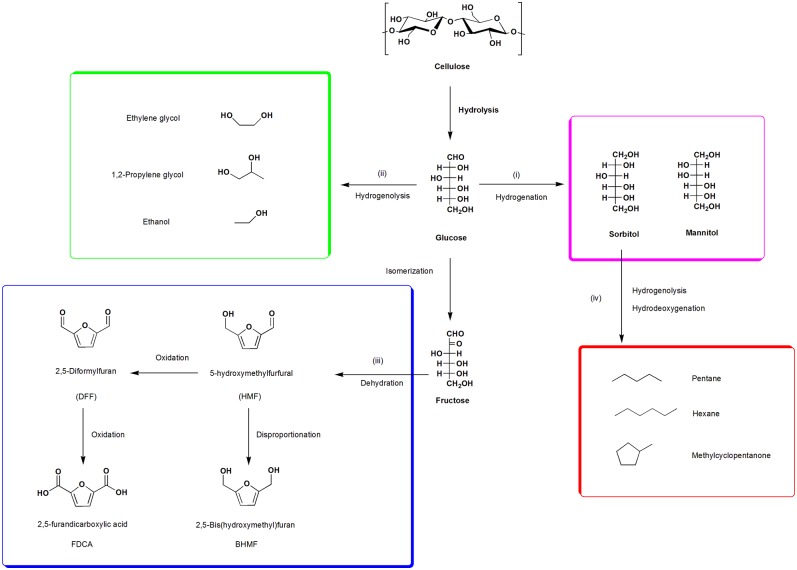
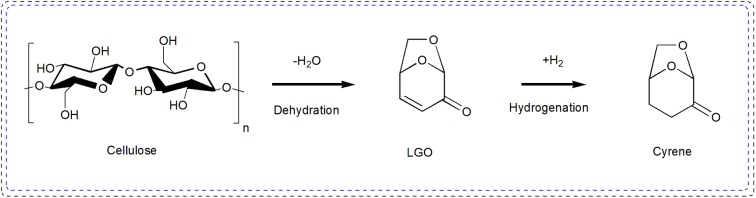
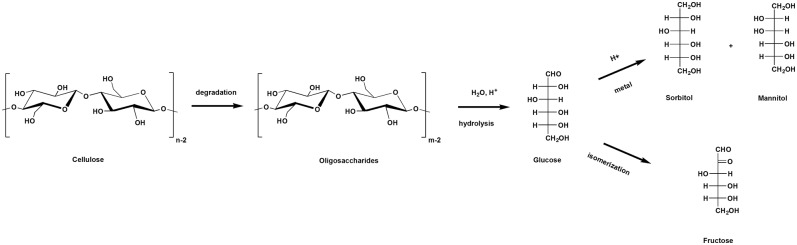
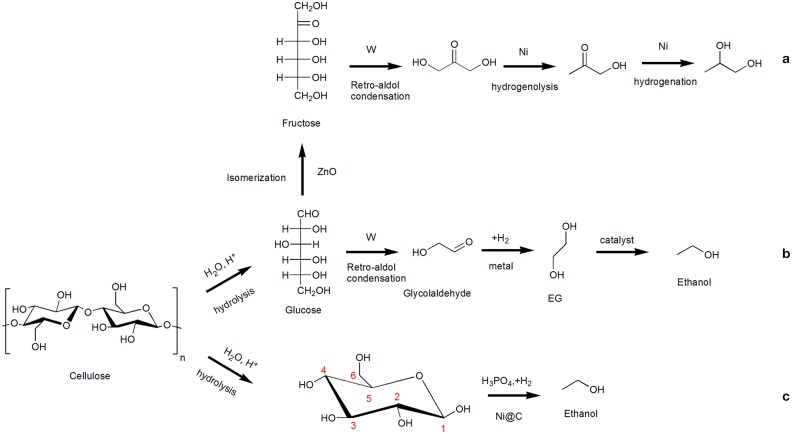
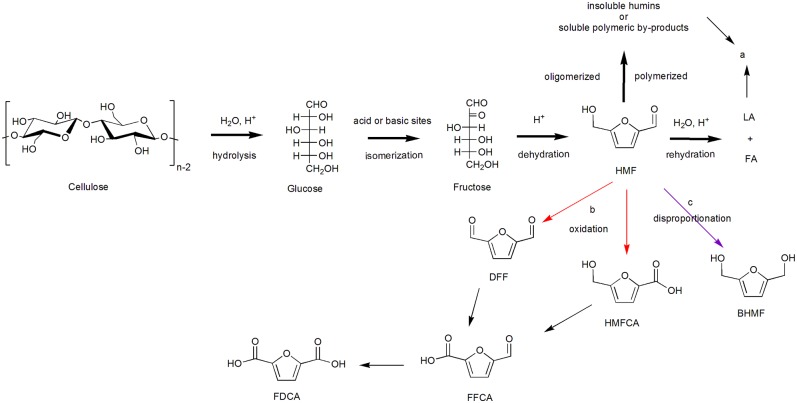
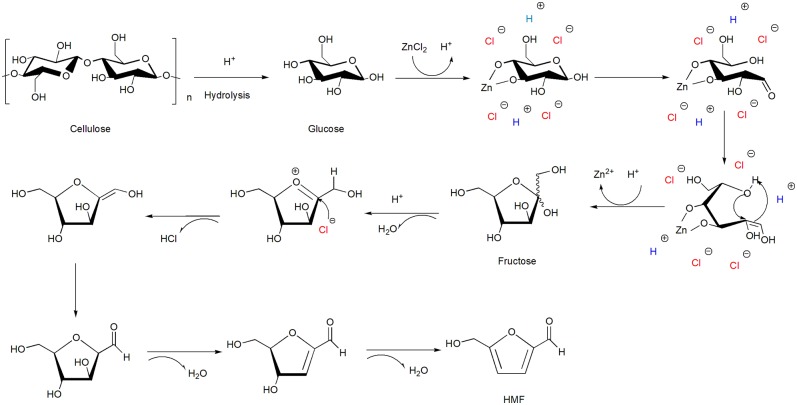
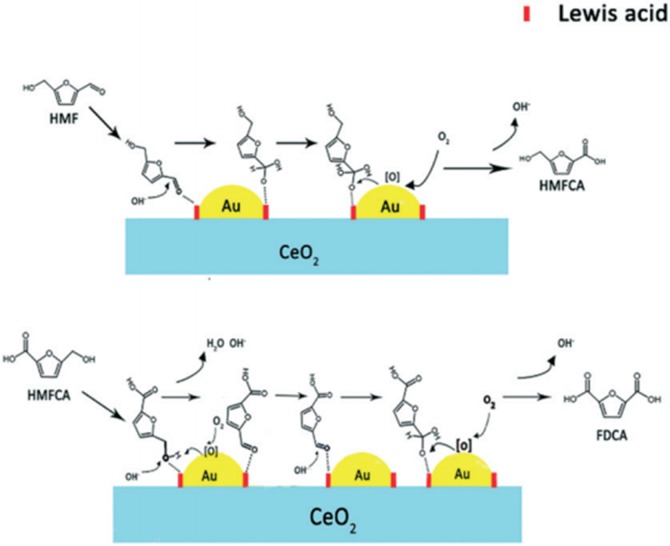
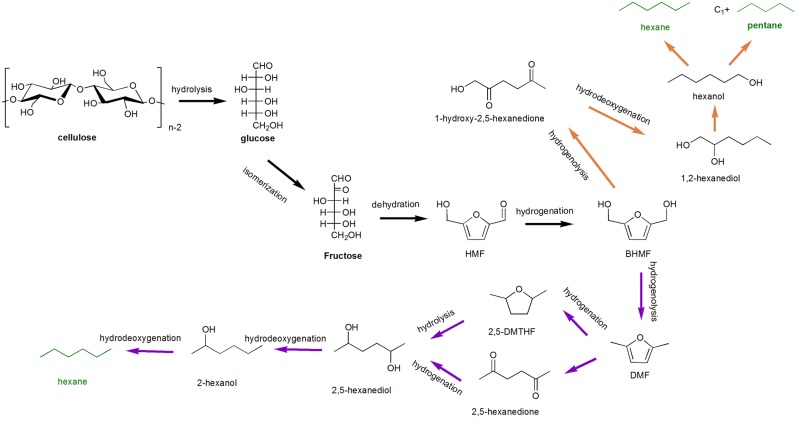
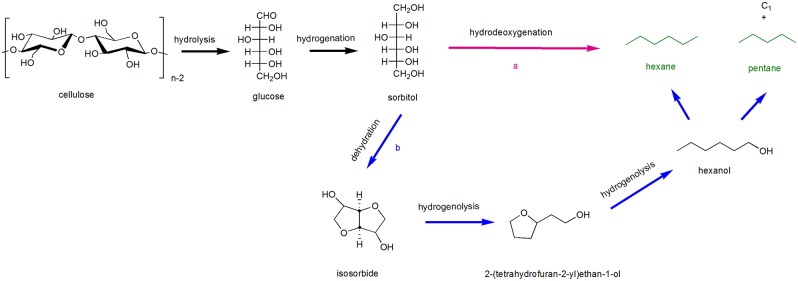
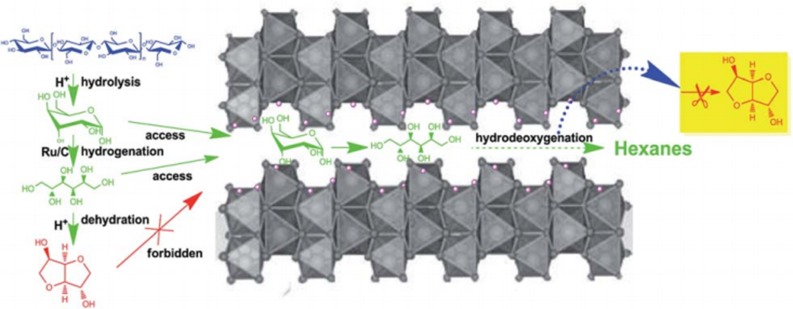
As the most abundant polysaccharide in lignocellulosic biomass, a clean and renewable carbon resource, cellulose shows huge capacity and roused much attention on the methodologies of its conversion to downstream products, mainly including platform chemicals and fuel additives. Without appropriate treatments in the processes of cellulose decompose, there are some by-products that may not be chemically valuable or even truly harmful. Therefore, higher selectivity and more economical and greener processes would be favored and serve as criteria in a correlational study. Aqueous phase, an economically accessible and immensely potential reaction system, has been widely studied in the preparation of downstream products of cellulose. Accordingly, this mini-review aims at making a related summary about several conversion pathways of cellulose to target products in aqueous phase. Mainly, there are four categories about the conversion of cellulose to downstream products in the following: (i) cellulose hydrolysis hydrogenation to saccharides and sugar alcohols, like glucose, sorbitol, mannose, etc.; (ii) selective hydrogenolysis leads to the cleavage of the corresponding glucose C-C and C-O bond, like ethylene glycol (EG), 1,2-propylene glycol (PG), etc.; (iii) dehydration of fructose and further oxidation, like 5-hydroxymethylfurfural (HMF), 2,5-furandicarboxylic acid (FDCA), etc.; and (iv) production of liquid alkanes hydrogenolysis and hydrodeoxygenation, like pentane, hexane, etc. The representative products were enumerated, and the mechanism and pathway of mentioned reaction are also summarized in a brief description. Ultimately, the remaining challenges and possible further research objects are proposed in perspective to provide researchers with a lucid research direction.
作为木质纤维素生物质中含量最丰富的多糖,纤维素是一种清洁的可再生碳资源,具有巨大的转化潜力,因此在其转化为下游产品(主要包括平台化学品和燃料添加剂)的方法方面引起了广泛关注。在纤维素分解过程中,如果没有适当的处理,会产生一些化学价值不大甚至有害的副产物。因此,更高的选择性以及更经济、更绿色的工艺将受到青睐,并作为相关研究的标准。水相作为一种经济上易于获取且具有巨大潜力的反应体系,在纤维素下游产品的制备中已得到广泛研究。因此,本综述旨在对纤维素在水相中转化为目标产物的几种途径进行相关总结。主要来说,纤维素转化为下游产品可分为以下四类:(i)纤维素水解加氢生成糖类和糖醇,如葡萄糖、山梨醇、甘露糖等;(ii)选择性氢解导致相应葡萄糖的碳 - 碳键和碳 - 氧键断裂,如乙二醇(EG)(1,2 -)丙二醇(PG)等;(iii)果糖脱水并进一步氧化,如(5 -)羟甲基糠醛(HMF)、(2,5 -)呋喃二甲酸(FDCA)等;以及(iv)通过氢解和加氢脱氧生产液态烷烃,如戊烷、己烷等。文中列举了代表性产物,并对上述反应的机理和途径进行了简要总结。最后,展望了剩余的挑战以及可能的进一步研究方向,为研究人员提供清晰的研究方向。