Du Zhebin, Chen Wei, Xia Qier, Shi Oumin, Chen Qi
1Department of Urology, Renji Hospital affiliated to Shanghai Jiaotong University School of Medicine, Shanghai, 200127 China.
2Department of Urology, Pudong New Area People's Hospital, Shanghai, China.
Biomark Res. 2020 May 13;8:16. doi: 10.1186/s40364-020-00195-3. eCollection 2020.
Identifying the temporal trends of kidney cancer (KC) incidence in both the past and the future at the global and national levels is critical for KC prevention.
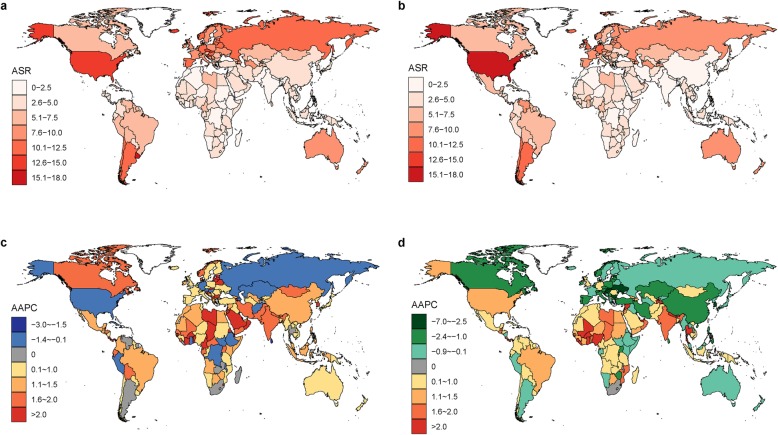
We retrieved annual KC case data between 1990 and 2017 from the Global Burden of Disease (GBD) online database. The average annual percentage change (AAPC) was used to quantify the temporal trends of KC age-standardized incidence rates (ASRs) from 1990 to 2017. Bayesian age-period-cohort models were used to predict KC incidence through 2030.
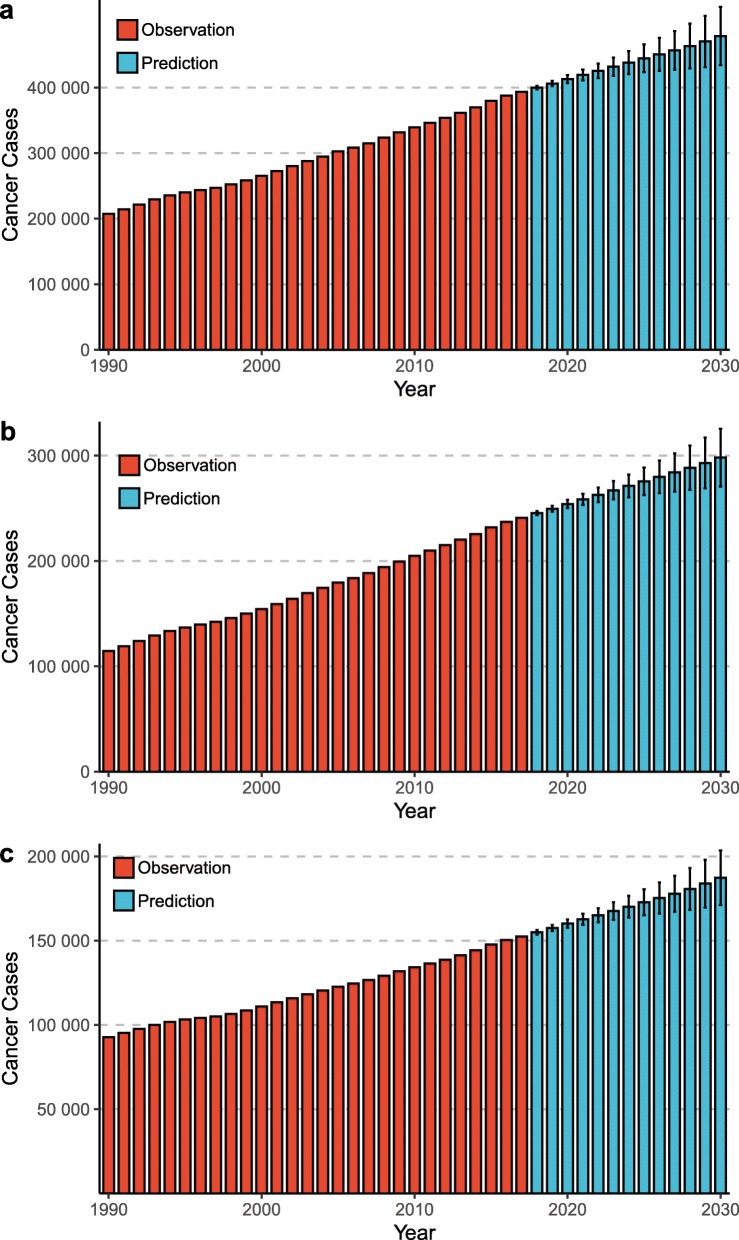
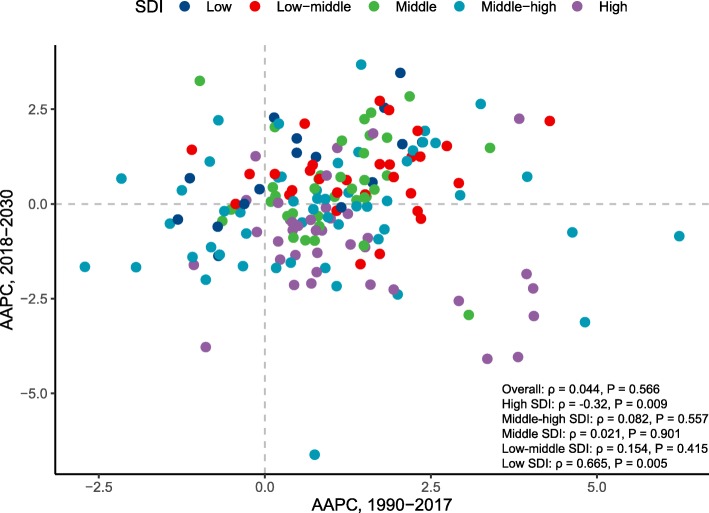
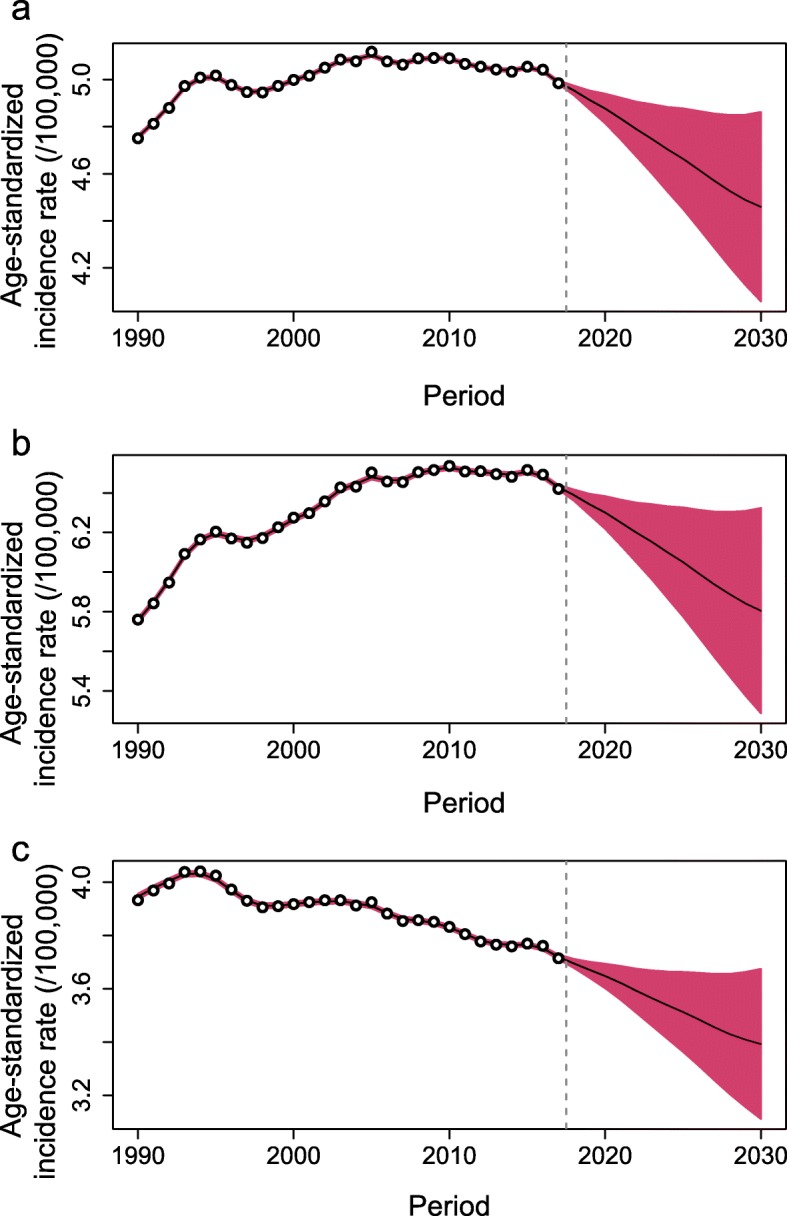
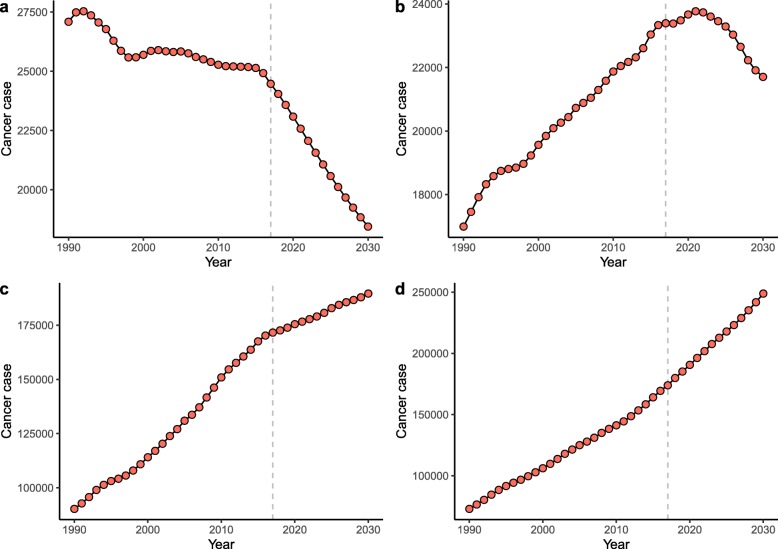
Worldwide, the number of newly diagnosed KC cases increased from 207.3 thousand in 1990 to 393.0 thousand in 2017. The KC ASR increased from 4.72 per 100,000 to 4.94 per 100,000 during the same period. Between 2018 and 2030, the number of KC cases is projected to increase further to 475.4 thousand (95% highest density interval [HDI] 423.9, 526.9). The KC ASR is predicted to decrease slightly to 4.46 per 100,000 (95% HDI 4.06, 4.86). A total of 90, 2, and 80 countries or territories are projected to experience increases, remain stable, and experience decreases in KC ASR between 2018 and 2030, respectively. In most developed countries, the KC incidence is forecasted to decrease irrespective of past trends. In most developing countries, the KC incidence is predicted to increase persistently through 2030.
KC incidence is predicted to decrease in the next decade, and this predicted decrease is mainly driven by the decreases in developed countries. More attention should be placed on developing countries.
在全球和国家层面识别过去和未来肾癌(KC)发病率的时间趋势对于肾癌预防至关重要。
我们从全球疾病负担(GBD)在线数据库中检索了1990年至2017年的年度肾癌病例数据。采用平均年度百分比变化(AAPC)来量化1990年至2017年肾癌年龄标准化发病率(ASR)的时间趋势。使用贝叶斯年龄-时期-队列模型预测到2030年的肾癌发病率。
在全球范围内,新诊断的肾癌病例数从1990年的20.73万例增加到2017年的39.3万例。同期肾癌ASR从每10万人4.72例增加到每10万人4.94例。在2018年至2030年期间,预计肾癌病例数将进一步增加至47.54万例(95%最高密度区间[HDI] 42.39,52.69)。预计肾癌ASR将略有下降至每10万人4.46例(95% HDI 4.06,4.86)。预计在2018年至2030年期间,分别有90个、2个和80个国家或地区的肾癌ASR将出现上升、保持稳定和下降。在大多数发达国家,无论过去的趋势如何,预计肾癌发病率都将下降。在大多数发展中国家,预计到2030年肾癌发病率将持续上升。
预计未来十年肾癌发病率将下降,这种预计的下降主要由发达国家的下降所驱动。应更加关注发展中国家。