Lancet Planet Health. 2020 May;4(5):e195-e208. doi: 10.1016/S2542-5196(20)30075-9.
Availability of data to assess the population health and provision and quality of health care in Saudi Arabia has been lacking. In 2010, Saudi Arabia began a major investment and transformation programme in the health-care sector. Here we assess the impact of this investment era on mortality, health loss, risk factors, and health-care services in the country.
We used results of the Global Burden of Diseases, Injuries, and Risk Factors Study (GBD) 2017 to describe the levels and temporal patterns in deaths, health loss, risk factors, and health-care access and quality in the Saudi Arabian population during 1990-2010 (before the health-care investments and reform) and 2010-17 (during health-care investments and reform). We also compared patterns in health outcomes between these periods with those in the north Africa and the Middle East GBD region and the Gulf Cooperation Council countries.
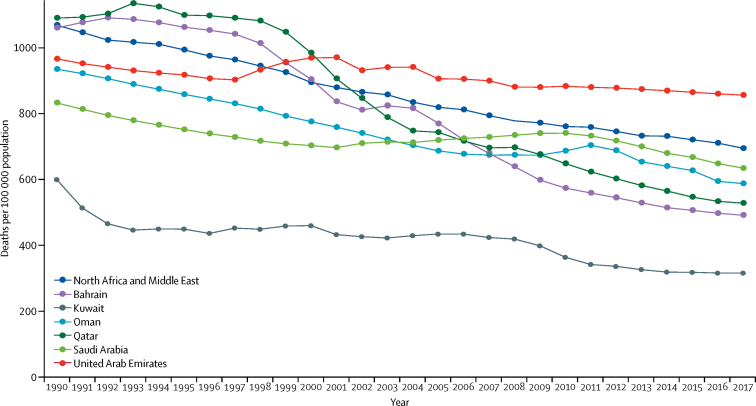
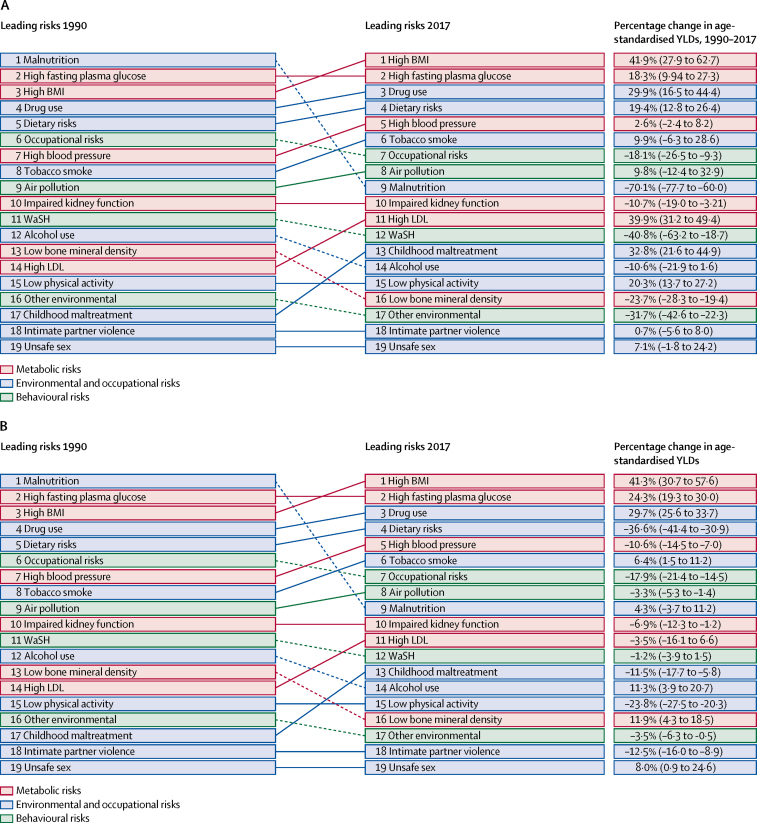
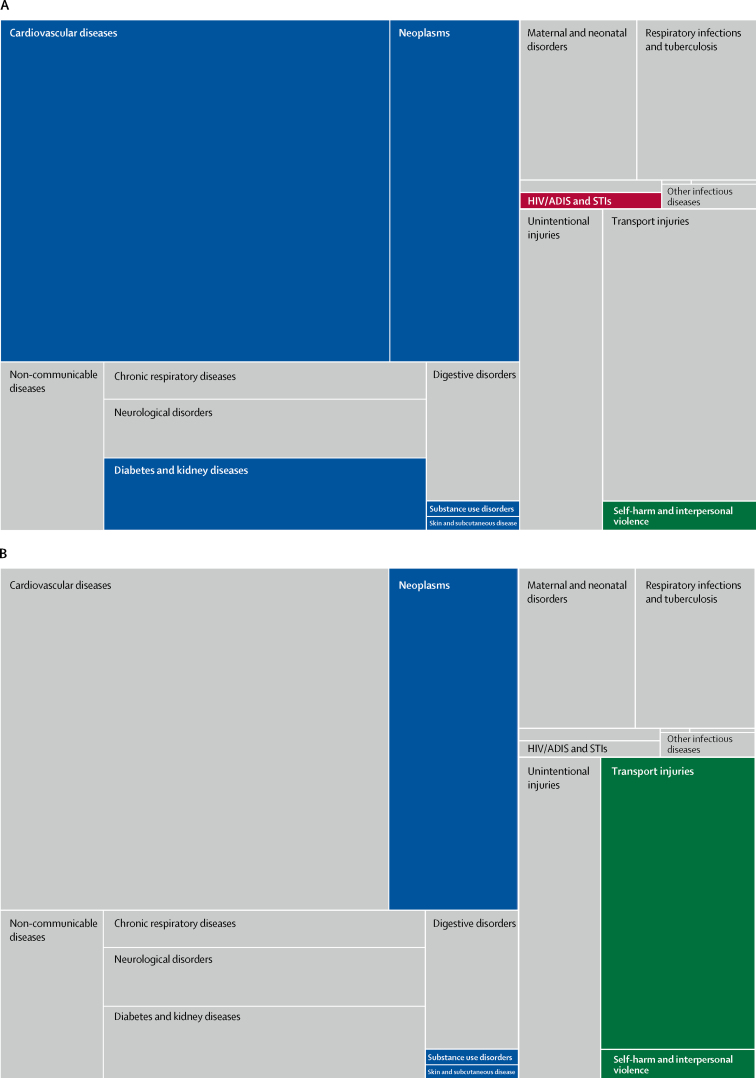
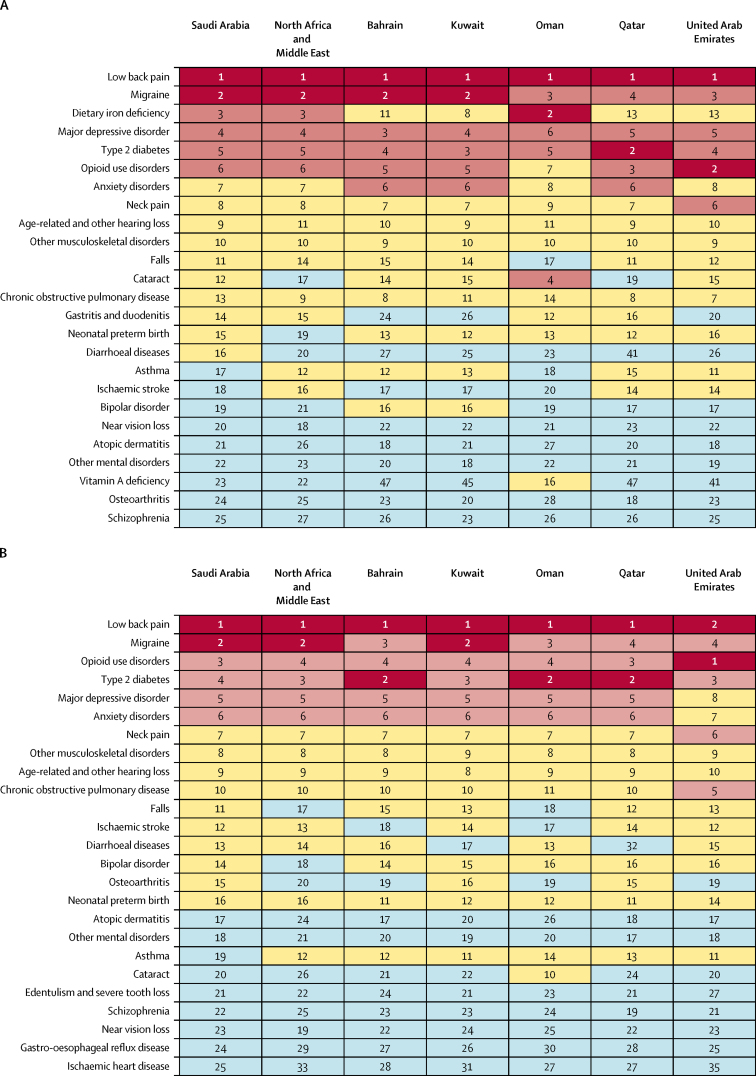
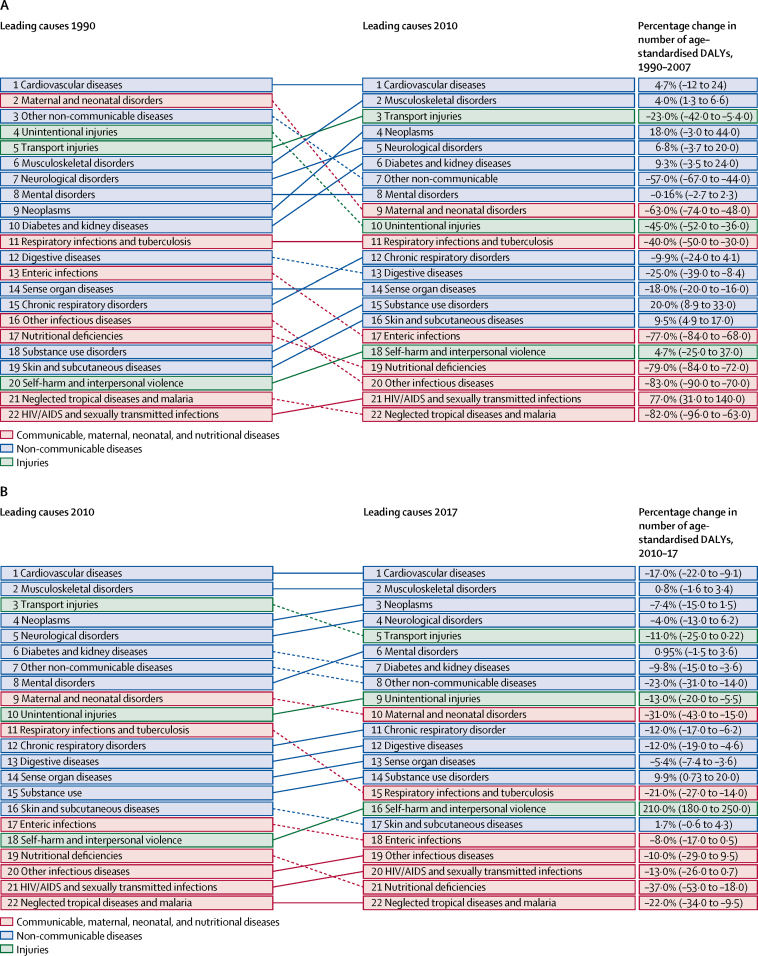
Age-standardised mortality in Saudi Arabia decreased from 1990 to 2010 (annualised rate of change of -0·58%), and this decrease was further accelerated from 2010 to 2017 (-2·20%). The north Africa and the Middle East GBD region also had decreases in mortality during these periods, but for 2010-17 the decrease was not as low as in Saudi Arabia (-1·29%). Transport injuries decreased from third ranked cause of disability-adjusted life-years in 2010 to fifth ranked cause in 2017 in Saudi Arabia, below cardiovascular diseases (ranked first) and musculoskeletal disorders (ranked second). Years lived with disability (YLDs) due to mental disorders, substance use disorders, neoplasms, and neurological disorders consistently increased over the periods 1990-2010 and 2010-17. Between 1990 and 2017, attributable YLDs due to metabolic, behavioural, and environmental or occupational risk factors remained almost unchanged in Saudi Arabia, with high body-mass index, high fasting plasma glucose concentration, and drug use increasing across all age groups. Health-care Access and Quality (HAQ) Index levels increased in Saudi Arabia during this period with similar patterns to the rest of the Gulf Cooperation Council countries and the north Africa and the Middle East GBD region.
Decreases in mortality continued at greater rates in Saudi Arabia during the period of 2010-17 than in 1990-2010. HAQ Index levels have also improved. Public health policy makers in Saudi Arabia need to increase efforts to address preventable risk factors that are major contributors to the burden of ill health and disability.
Bill & Melinda Gates Foundation.
缺乏评估沙特阿拉伯人口健康状况以及医疗保健提供和质量的数据。2010 年,沙特阿拉伯开始在医疗保健领域进行重大投资和改革计划。在此,我们评估了这一投资时代对该国死亡率、健康损失、风险因素和医疗保健服务的影响。
我们使用 2017 年全球疾病、伤害和风险因素研究(GBD)的结果,描述了 1990-2010 年(在医疗保健投资和改革之前)和 2010-17 年(在医疗保健投资和改革期间)期间沙特阿拉伯人口的死亡、健康损失、风险因素以及医疗保健获取和质量的水平和时间模式。我们还将这些时期的健康结果模式与北非和中东 GBD 地区以及海湾合作委员会国家的模式进行了比较。
沙特阿拉伯的标准化死亡率从 1990 年到 2010 年下降(年化变化率为-0.58%),而从 2010 年到 2017 年,这一下降速度进一步加快(-2.20%)。北非和中东 GBD 地区在此期间的死亡率也有所下降,但 2010-17 年的降幅不及沙特阿拉伯(-1.29%)。在沙特阿拉伯,运输伤害从 2010 年残疾调整生命年的第三位死因下降到 2017 年的第五位死因,低于心血管疾病(排名第一)和肌肉骨骼疾病(排名第二)。1990-2010 年和 2010-17 年期间,精神障碍、物质使用障碍、肿瘤和神经障碍导致的伤残生命年(YLDs)持续增加。1990 年至 2017 年期间,沙特阿拉伯归因于代谢、行为和环境或职业风险因素的 YLDs 几乎保持不变,高身体质量指数、高空腹血糖浓度和药物使用在所有年龄组中都有所增加。在此期间,沙特阿拉伯的医疗保健获取和质量(HAQ)指数水平有所提高,与海湾合作委员会其他国家以及北非和中东 GBD 地区的模式相似。
与 1990-2010 年相比,2010-17 年期间沙特阿拉伯的死亡率继续以更高的速度下降。HAQ 指数水平也有所提高。沙特阿拉伯的公共卫生政策制定者需要加大力度解决可预防的风险因素,这些因素是导致健康不良和残疾的主要因素。
比尔及梅琳达·盖茨基金会。