Wang Dandan, Zhang Letian, Hu Ajin, Wang Yuxiang, Liu Yan, Yang Jing, Du Ningning, An Xiuli, Wu Congying, Liu Congrong
Department of Pathology, School of Basic Medical Sciences, Third Hospital, Peking University Health Science Center, Beijing, 100191, China.
College of Life Science, Zhengzhou University, Zhengzhou, 450051, China.
Protein Cell. 2021 Feb;12(2):107-127. doi: 10.1007/s13238-020-00723-9. Epub 2020 May 25.
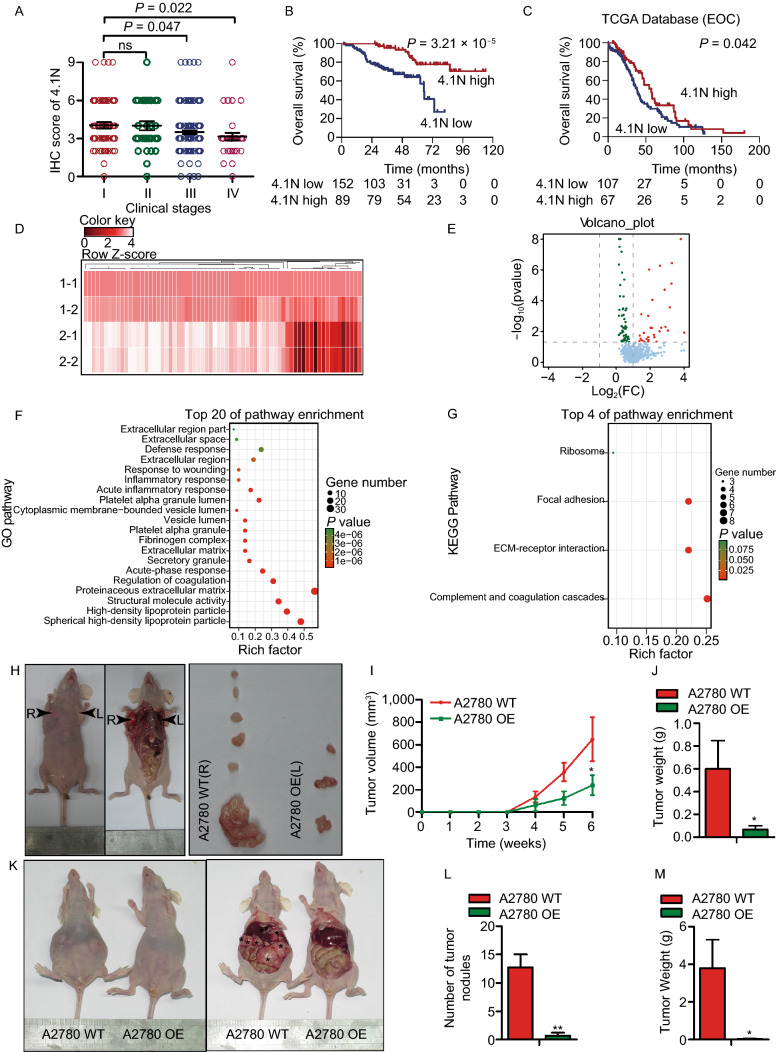
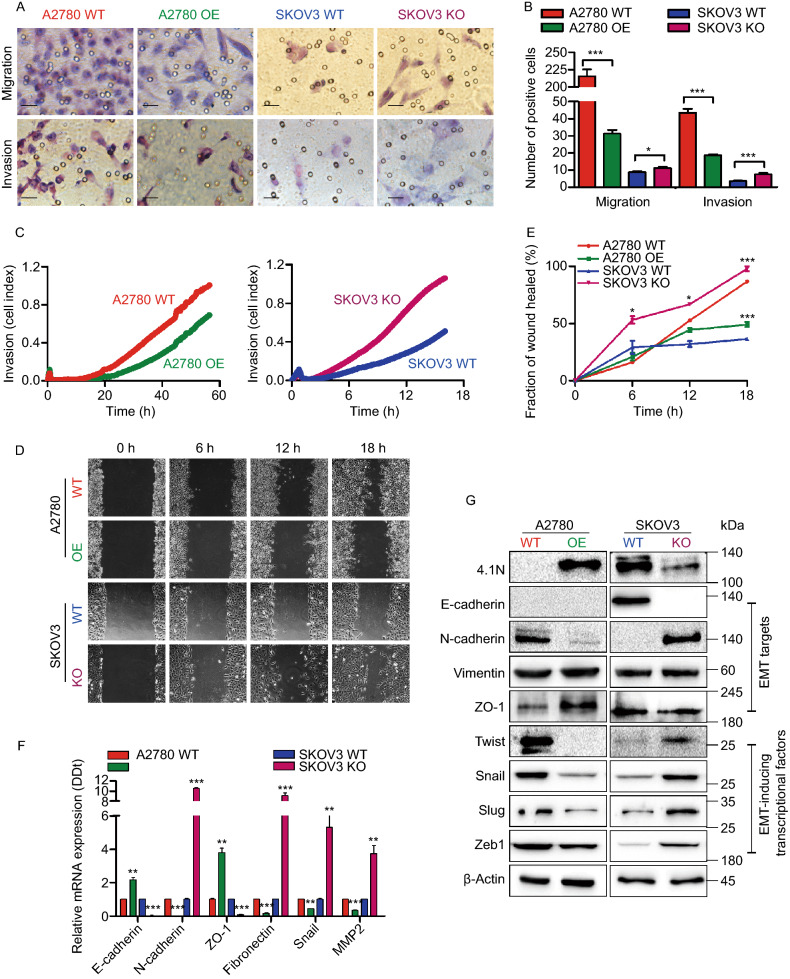
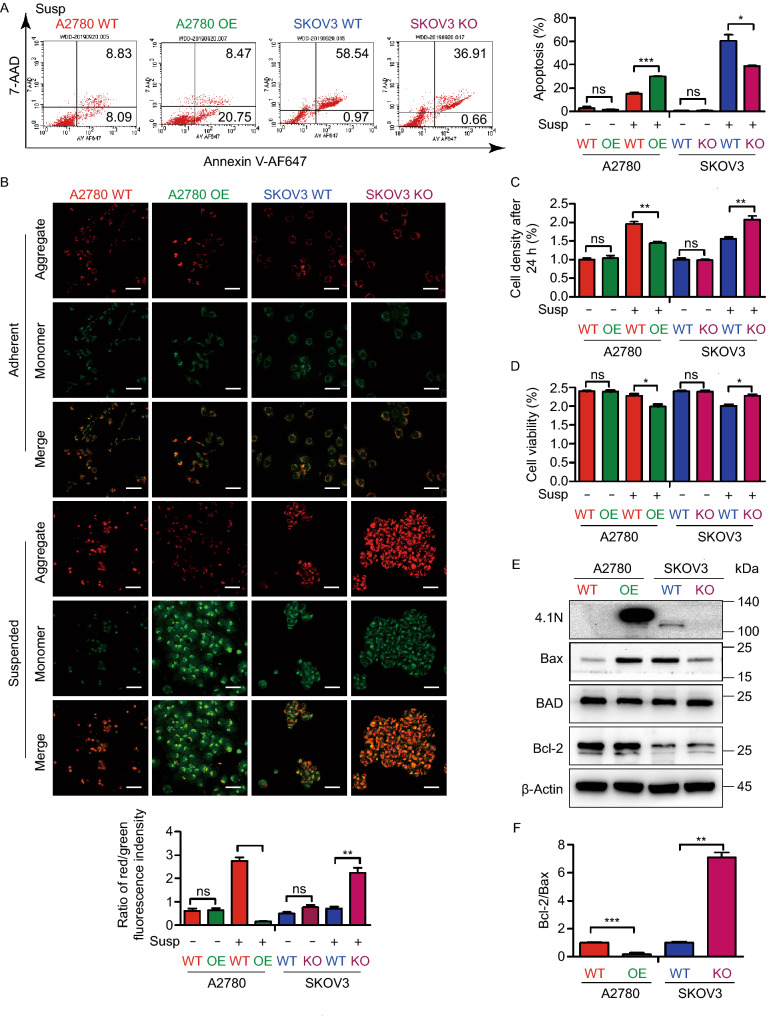
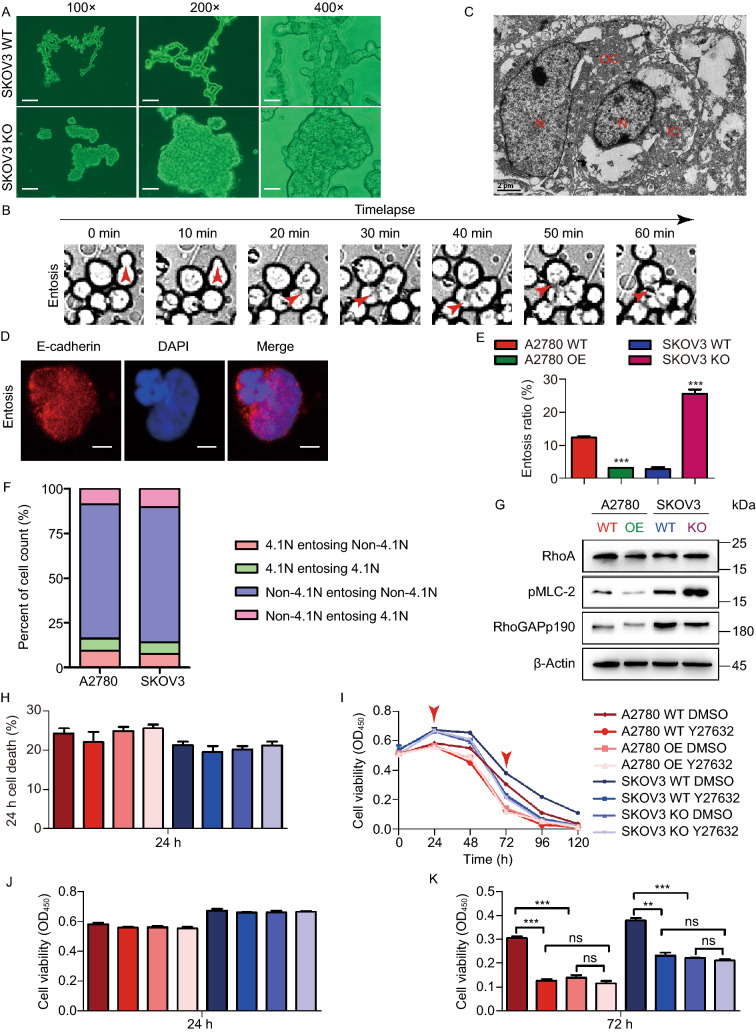
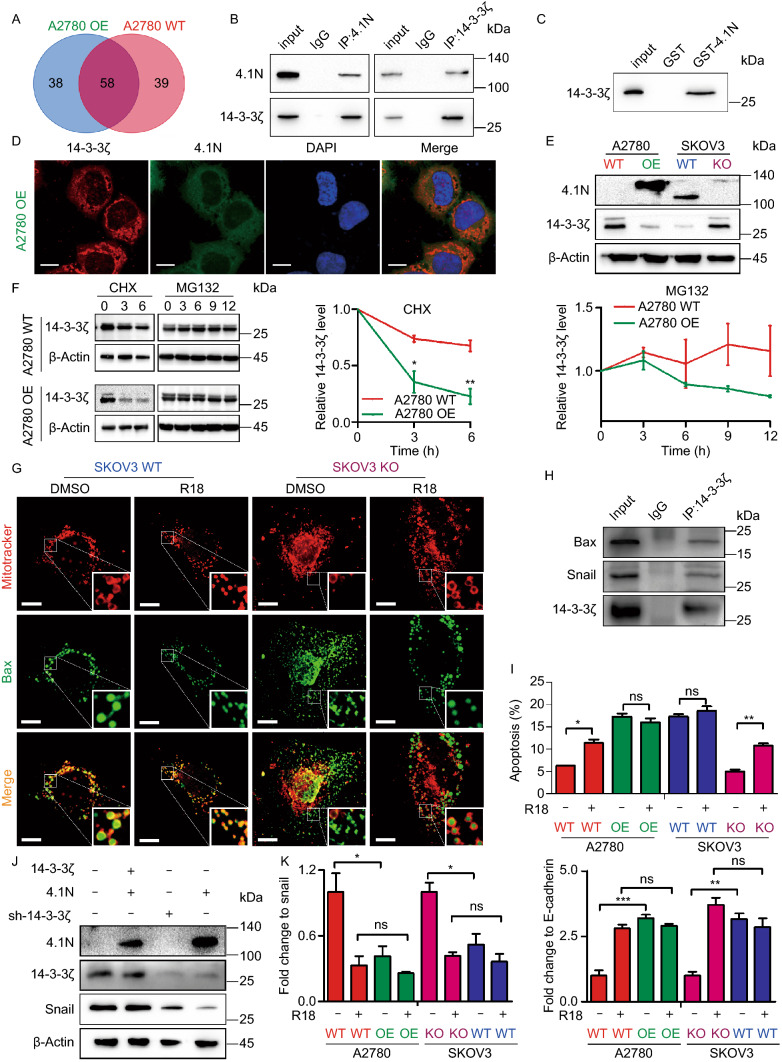
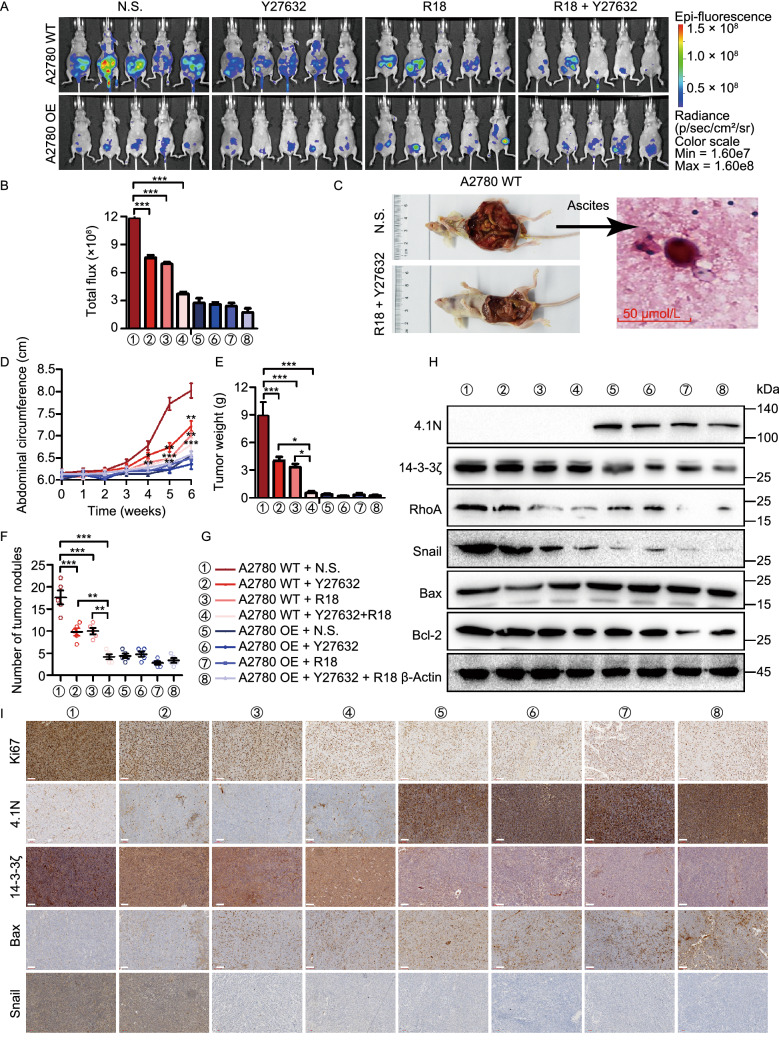
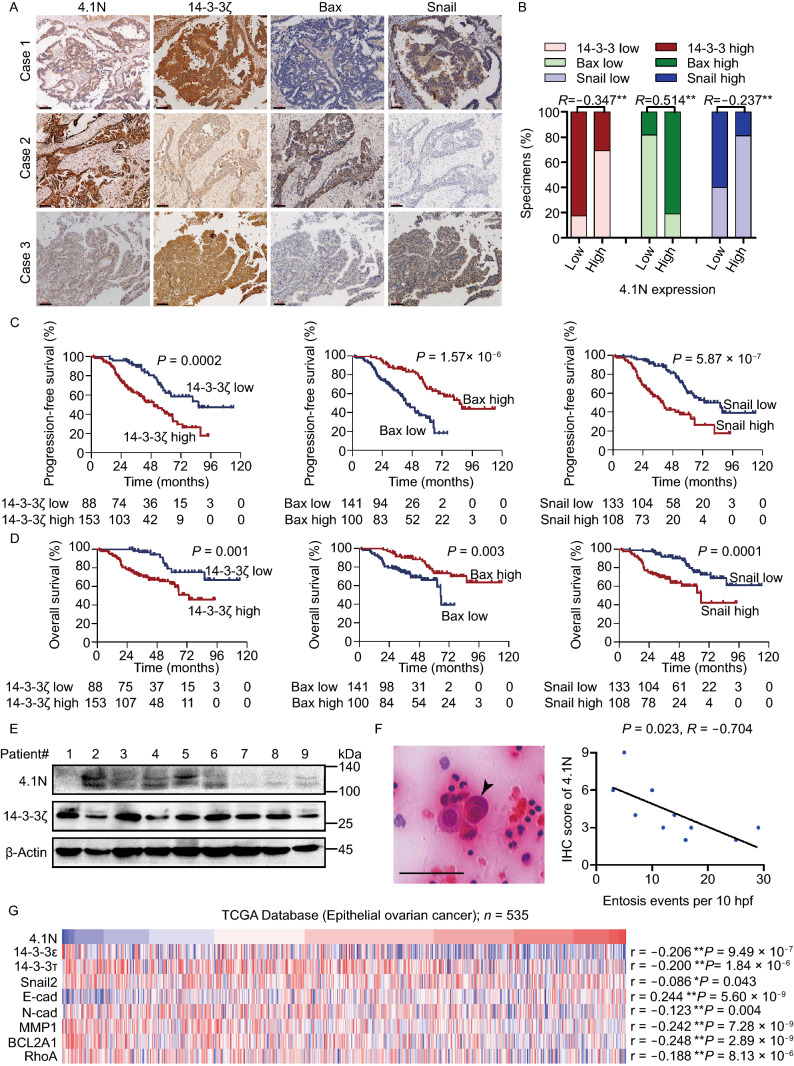
Epithelial ovarian cancer (EOC) is one of the leading causes of death from gynecologic cancers and peritoneal dissemination is the major cause of death in patients with EOC. Although the loss of 4.1N is associated with increased risk of malignancy, its association with EOC remains unclear. To explore the underlying mechanism of the loss of 4.1N in constitutive activation of epithelial-mesenchymal transition (EMT) and matrix-detached cell death resistance, we investigated samples from 268 formalin-fixed EOC tissues and performed various in vitro and in vivo assays. We report that the loss of 4.1N correlated with progress in clinical stage, as well as poor survival in EOC patients. The loss of 4.1N induces EMT in adherent EOC cells and its expression inhibits anoikis resistance and EMT by directly binding and accelerating the degradation of 14-3-3 in suspension EOC cells. Furthermore, the loss of 4.1N could increase the rate of entosis, which aggravates cell death resistance in suspension EOC cells. Moreover, xenograft tumors in nude mice also show that the loss of 4.1N can aggravate peritoneal dissemination of EOC cells. Single-agent and combination therapy with a ROCK inhibitor and a 14-3-3 antagonist can reduce tumor spread to varying degrees. Our results not only define the vital role of 4.1N loss in inducing EMT, anoikis resistance, and entosis-induced cell death resistance in EOC, but also suggest that individual or combined application of 4.1N, 14-3-3 antagonists, and entosis inhibitors may be a promising therapeutic approach for the treatment of EOC.
上皮性卵巢癌(EOC)是妇科癌症死亡的主要原因之一,腹膜播散是EOC患者死亡的主要原因。尽管4.1N的缺失与恶性肿瘤风险增加有关,但其与EOC的关联仍不清楚。为了探究4.1N缺失在上皮-间质转化(EMT)的组成性激活和基质脱离细胞死亡抗性中的潜在机制,我们研究了268例福尔马林固定的EOC组织样本,并进行了各种体外和体内实验。我们报告4.1N的缺失与临床分期进展以及EOC患者的不良生存相关。4.1N的缺失在贴壁EOC细胞中诱导EMT,其表达通过直接结合并加速悬浮EOC细胞中14-3-3的降解来抑制失巢凋亡抗性和EMT。此外,4.1N的缺失可增加内吞作用的速率,这加剧了悬浮EOC细胞中的细胞死亡抗性。此外,裸鼠异种移植瘤也表明4.1N的缺失可加剧EOC细胞的腹膜播散。使用ROCK抑制剂和14-3-3拮抗剂的单药治疗和联合治疗可不同程度地减少肿瘤扩散。我们的结果不仅确定了4.1N缺失在诱导EOC中的EMT、失巢凋亡抗性和内吞作用诱导的细胞死亡抗性中的重要作用,还表明单独或联合应用4.1N、14-3-3拮抗剂和内吞作用抑制剂可能是治疗EOC有前景的治疗方法。