Chamberlain Stephanie A, Estabrooks Carole A, Keefe Janice M, Hoben Matthias, Berendonk Charlotte, Corbett Kyle, Gruneir Andrea
1Department of Family Medicine, Faculty of Medicine & Dentistry, University of Alberta, Edmonton, Alberta T6G 2T4 Canada.
2Faculty of Nursing, University of Alberta, Edmonton, Alberta T6G 1C9 Canada.
Res Involv Engagem. 2020 May 15;6:24. doi: 10.1186/s40900-020-00199-1. eCollection 2020.
The Translating Research in Elder Care (TREC) program is a longitudinal partnered program of research in Western Canada that aims to improve the quality of care and quality of life for residents and quality of worklife for staff in long-term care settings. This program of research includes researchers, citizens (persons living with dementia and caregivers of persons living in long-term care), and stakeholders (representatives from provincial and regional health authorities, owner-operators of long-term care homes). The aim of this paper is to describe how we used priority setting methods with citizens and stakeholders to identify ten priorities for research using the TREC data.
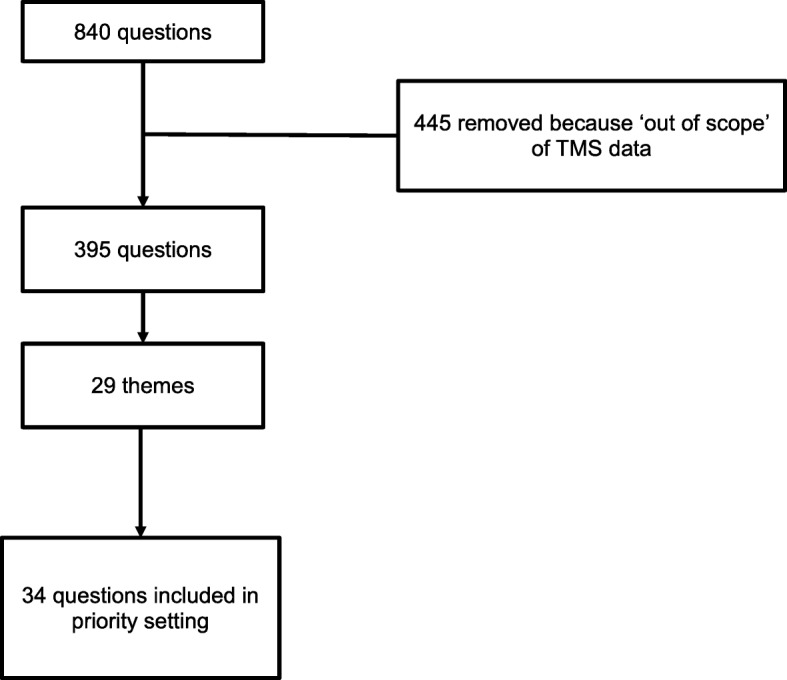
We adapted the James Lind Alliance Priority Setting Partnership method to ensure our citizens and stakeholders could identify priorities within the existing TREC data. We administered an online survey to our citizen and stakeholder partners. An in-person priority setting workshop was held in March 2019 in Alberta, Canada to establish consensus on ten research priorities. The in-person workshop used a nominal group technique and involved two rounds of small group prioritization and one final full group ranking.
We received 72 online survey respondents and 19 persons (citizens, stakeholders) attended the in-person priority setting workshop. The workshop resulted in an unranked list of their ten research priorities for the TREC program. These priorities encompassed a range of non-clinical topics, including: influence of staffing (ratios, type of care provider) on residents and staff work life, influence of the work environment on resident outcomes, and the impact of quality improvement activities on residents and staff.
This modified priority setting approach provided citizens and stakeholders with an opportunity to identify their own research priorities within the TREC program, without the external pressures of researchers. These priorities will inform the secondary analyses of the TREC data and the development of new projects. This modified priority setting may be a useful approach for research teams trying to engage their non-academic partners and to identify areas for future research.
老年护理翻译研究(TREC)项目是加拿大西部一个纵向合作研究项目,旨在提高长期护理机构中居民的护理质量和生活质量以及工作人员的工作生活质量。该研究项目包括研究人员、公民(痴呆症患者及长期护理机构居民的照料者)和利益相关者(省级和地区卫生当局代表、长期护理院的业主经营者)。本文旨在描述我们如何与公民和利益相关者运用优先事项设定方法,利用TREC数据确定十个研究优先事项。
我们采用了詹姆斯·林德联盟优先事项设定合作方法,以确保我们的公民和利益相关者能够在现有TREC数据范围内确定优先事项。我们对公民和利益相关者合作伙伴进行了在线调查。2019年3月在加拿大艾伯塔省举办了一次面对面的优先事项设定研讨会,就十个研究优先事项达成共识。该面对面研讨会采用了名义群体技术,包括两轮小组优先排序和一轮最终的全组排名。
我们收到了72份在线调查回复,19人(公民、利益相关者)参加了面对面的优先事项设定研讨会。该研讨会得出了一份未排序的TREC项目十个研究优先事项清单。这些优先事项涵盖了一系列非临床主题,包括:人员配备(比例、护理提供者类型)对居民和工作人员工作生活的影响、工作环境对居民结果的影响以及质量改进活动对居民和工作人员的影响。
这种改进后的优先事项设定方法为公民和利益相关者提供了一个机会,使其能够在没有研究人员外部压力的情况下,在TREC项目中确定自己的研究优先事项。这些优先事项将为TREC数据的二次分析和新项目的开发提供参考。这种改进后的优先事项设定方法可能是研究团队吸引非学术合作伙伴并确定未来研究领域的有用方法。