Nair Amit, Ingram Nicola, Verghese Eldo T, Wijetunga Imeshi, Markham Alexander F, Wyatt Judy, Prasad K Rajendra, Coletta P Louise
Leeds Institute of Medical Research, St James's University Hospital, Leeds, LS9 7TF, UK.
Department of Histopathology, St James's University Hospital, Leeds, LS9 7TF, UK.
Cell Oncol (Dordr). 2020 Oct;43(5):835-845. doi: 10.1007/s13402-020-00530-8. Epub 2020 May 28.
The current treatment outcomes in cholangiocarcinoma are poor with cure afforded only by surgical extirpation. The efficacy of targeting the tumoural endothelial marker CD105 in cholangiocarcinoma, as a basis for potential microbubble-based treatment, is unknown and was explored here.
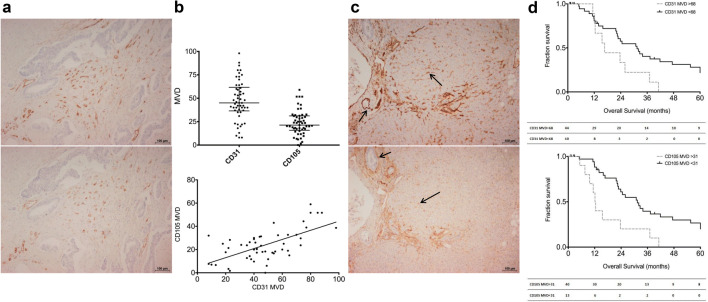
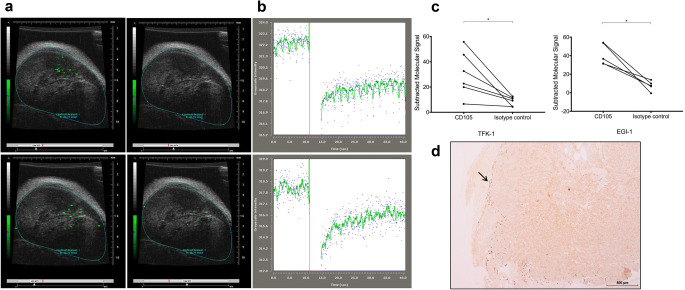
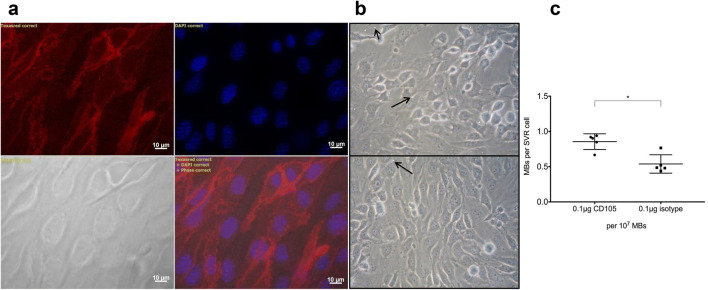
Tissue expression of CD105 was quantified using immunohistochemistry in 54 perihilar cholangiocarcinoma samples from patients who underwent resection in a single centre over a ten-year period, and analysed against clinicopathological data. In vitro flow assays using microbubbles functionalised with CD105 antibody were conducted to ascertain specificity of binding to murine SVR endothelial cells. Finally, CD105-microbubbles were intravenously administered to 10 Balb/c nude mice bearing heterotopic subcutaneous human extrahepatic cholangiocarcinoma (TFK-1 and EGI-1) xenografts after which in vivo binding was assessed following contrast-enhanced destruction replenishment ultrasound application.
Though not significantly associated with any examined clinicopathological variable, we found that higher CD105 expression was independently associated with poorer patient survival (median 12 vs 31 months; p = 0.002). In vitro studies revealed significant binding of CD105-microbubbles to SVR endothelial cells in comparison to isotype control (p = 0.01), as well as in vivo to TFK-1 (p = 0.02) and EGI-1 (p = 0.04) mouse xenograft vasculature.
Our results indicate that CD105 is a biomarker eminently suitable for cholangiocarcinoma targeting using functionalised microbubbles.
胆管癌目前的治疗效果较差,只有通过手术切除才能实现治愈。靶向肿瘤内皮标志物CD105在胆管癌中的疗效作为基于微泡的潜在治疗基础尚不清楚,本文对此进行了探索。
使用免疫组织化学对来自单一中心在十年期间接受手术切除的54例肝门部胆管癌样本中的CD105组织表达进行定量,并与临床病理数据进行分析。使用用CD105抗体功能化的微泡进行体外流动分析,以确定与小鼠SVR内皮细胞结合的特异性。最后,将CD105微泡静脉注射给10只携带异位皮下人肝外胆管癌(TFK-1和EGI-1)异种移植瘤的Balb/c裸鼠,在应用对比增强破坏补充超声后评估体内结合情况。
虽然与任何检查的临床病理变量均无显著相关性,但我们发现较高的CD105表达与较差的患者生存率独立相关(中位生存期12个月对31个月;p = 0.002)。体外研究显示,与同型对照相比,CD105微泡与SVR内皮细胞有显著结合(p = 0.01),在体内与TFK-1(p = 0.02)和EGI-1(p = 0.04)小鼠异种移植瘤血管也有显著结合。
我们的结果表明,CD105是一种非常适合使用功能化微泡靶向胆管癌的生物标志物。