Salerno Simona, Tasselli Franco, Drioli Enrico, De Bartolo Loredana
CNR-ITM, Institute on Membrane Technology, National Research Council of Italy, via P. Bucci, cubo 17/C, I-87036 Rende, Italy.
Department of Energy, Engineering, Hanyang University, Seoul 04763, Korea.
Membranes (Basel). 2020 May 27;10(6):112. doi: 10.3390/membranes10060112.
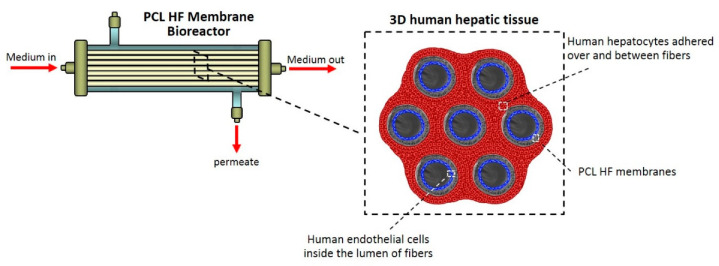
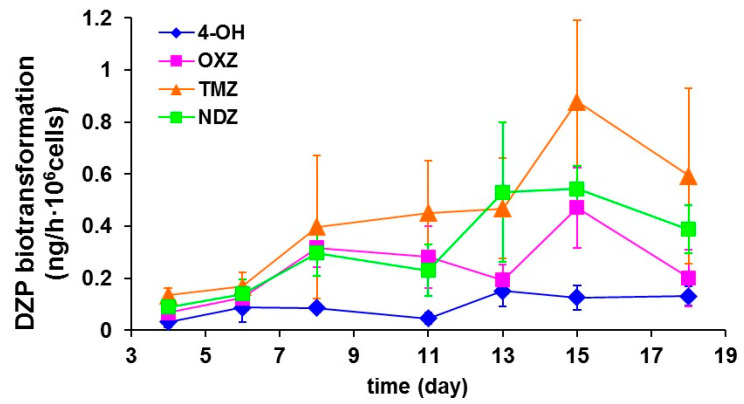
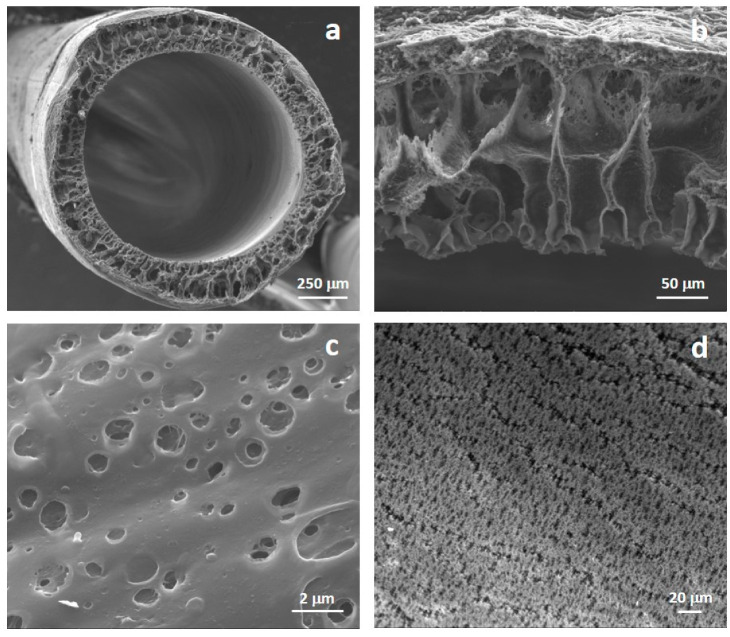
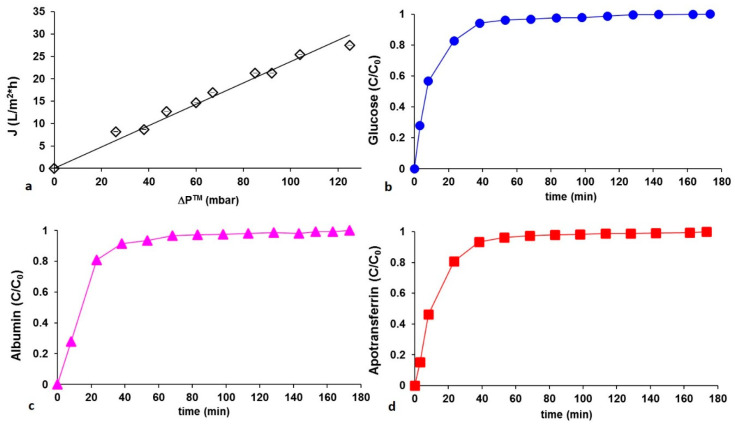
The creation of a liver tissue that recapitulates the micro-architecture and functional complexity of a human organ is still one of the main challenges of liver tissue engineering. Here we report on the development of a 3D vascularized hepatic tissue based on biodegradable hollow fiber (HF) membranes of poly(ε-caprolactone) (PCL) that compartmentalize human hepatocytes on the external surface and between the fibers, and endothelial cells into the fiber lumen. To this purpose, PCL HF membranes were prepared by a dry-jet wet phase inversion spinning technique tailoring the operational parameters in order to obtain fibers with suitable properties. After characterization, the fibers were applied to generate a human vascularized hepatic unit by loading endothelial cells in their inner surface and hepatocytes on the external surface. The unit was connected to a perfusion system, and the morpho-functional behavior was evaluated. The results demonstrated the large integration of endothelial cells with the internal surface of individual PCL fibers forming vascular-like structures, and hepatocytes covered completely the external surface and the space between fibers. The perfused 3D hepatic unit retained its functional activity at high levels up to 18 days. This bottom-up tissue engineering approach represents a rational strategy to create relatively 3D vascularized tissues and organs.
构建能够重现人体肝脏微观结构和功能复杂性的肝组织,仍然是肝组织工程面临的主要挑战之一。在此,我们报道了一种基于聚(ε-己内酯)(PCL)可生物降解中空纤维(HF)膜开发的三维血管化肝组织,该膜将人肝细胞分隔于外表面和纤维之间,而将内皮细胞置于纤维内腔。为此,采用干喷湿相转化纺丝技术制备PCL HF膜,并对操作参数进行调整,以获得具有合适性能的纤维。经表征后,通过在其内表面接种内皮细胞、在外表面接种肝细胞,将这些纤维用于构建人血管化肝单元。将该单元连接至灌注系统,并对其形态功能行为进行评估。结果表明,内皮细胞与单个PCL纤维的内表面大量整合,形成类血管结构,肝细胞则完全覆盖外表面及纤维间空间。灌注的三维肝单元在长达18天的时间内保持较高水平的功能活性。这种自下而上的组织工程方法是构建相对三维血管化组织和器官的合理策略。