Animal Husbandry and Animal Wealth Development Department, Faculty of Veterinary Medicine, Damanhour University, Damanhour 22511, Egypt.
Department of Poultry, Faculty of Agriculture, Zagazig University, Zagazig 44511, Egypt.
Poult Sci. 2020 Jun;99(6):3070-3078. doi: 10.1016/j.psj.2020.03.011. Epub 2020 Apr 10.
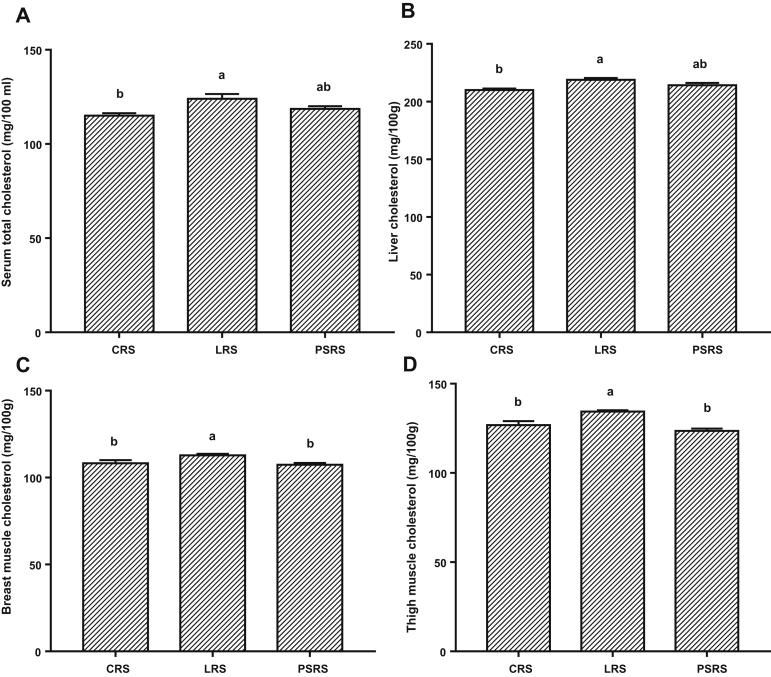
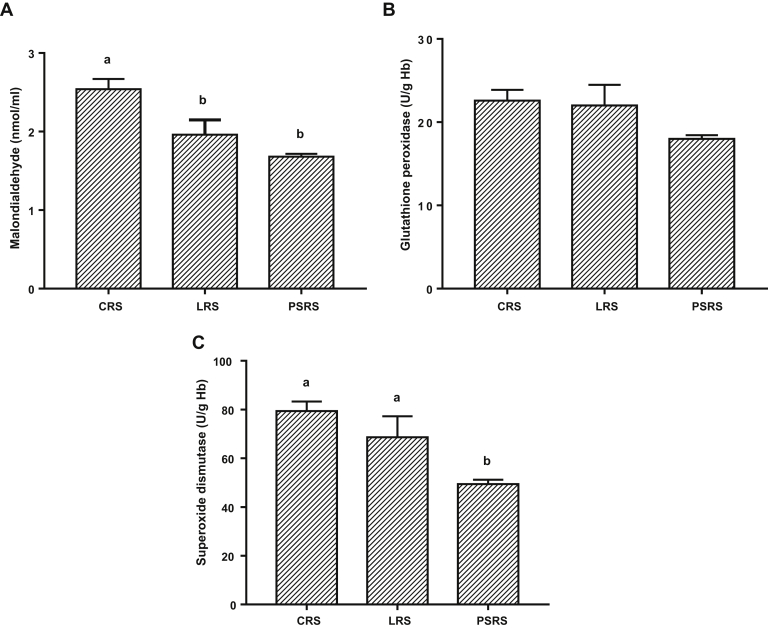
The effects of different rearing systems (RS) including cage rearing systems (CRS), litter rearing systems (LRS), and perforated plastic slate rearing systems (PSRS) on the productive performance, carcass traits, blood hematological and biochemical parameters, and humoral immunity in broiler chickens exposed to heat stress were investigated. A total of 270 1-day-old Avian 48 chicks were randomly assigned to 3 groups equally, each was divided into 9 replicates (each of 10 birds) housed in studied RS. Results revealed that CRS had higher (P < 0.001) body weight and weight gain at all experimental periods (except in the sixth wk for weight gain) followed by LRS. Birds housed in PSRS consumed lower (P < 0.001) feed than those in CRS (during the fourth to sixth and overall periods) and LRS (during all experimental periods except the second one). Best values of feed conversion ratio and European broiler index were shown in CR birds. All carcass traits were not altered by different RS except the percentages of dressing, liver, breast, and left filet, which were elevated (P < 0.05) in caged birds. Eosinophil, lymphocyte, basophil, and monocyte counts and phagocytic index and activity were reduced (P < 0.05 or P < 0.01) in LRS. Humoral immune response against the Newcastle disease virus and avian influenza were not differed. Birds in LRS showed higher (P < 0.05) serum cholesterol, uric acid, and lactate dehydrogenase as well as liver and muscle cholesterol contents. Lipid peroxidation was reduced (P < 0.05) in the LRS and PSRS groups, whereas superoxide dismutase was elevated (P < 0.05) in CRS and LRS. Thus, CRS and LRS were preferred for better growth performance and carcass traits of heat-stressed broilers, whereas CRS and PSRS were better in reducing tissue cholesterol under the conditions of our study.
本研究旨在探讨不同饲养系统(笼养系统、垫料饲养系统和穿孔塑料石板饲养系统)对热应激肉鸡生产性能、胴体特性、血液血液学和生化参数以及体液免疫的影响。将 270 只 1 日龄爱拔益加(Avian 48)雏鸡随机分为 3 组,每组 9 个重复,每个重复 10 只鸡。结果表明,CRS 组各试验期(第 6 周体重增重除外)的体重和体重增重均显著高于其他两组(P < 0.001),其次是 LRS 组。PSRS 组的采食量显著低于 CRS 组(第 4-6 周和整个试验期)和 LRS 组(整个试验期,第 2 周除外)(P < 0.001)。CR 组的饲料转化率和欧洲肉鸡指数最佳。不同饲养系统对所有胴体特性均无影响,除笼养组的屠宰率、肝脏、胸部和左侧鱼片的百分比升高(P < 0.05)外。嗜酸性粒细胞、淋巴细胞、嗜碱性粒细胞和单核细胞计数、吞噬指数和活性在 LRS 中降低(P < 0.05 或 P < 0.01)。新城疫病毒和禽流感的体液免疫反应无差异。LRS 组的血清胆固醇、尿酸和乳酸脱氢酶以及肝脏和肌肉胆固醇含量较高(P < 0.05)。LRS 和 PSRS 组的脂质过氧化水平降低(P < 0.05),而 CRS 和 LRS 组的超氧化物歧化酶水平升高(P < 0.05)。因此,在本研究条件下,CRS 和 LRS 更有利于热应激肉鸡的生长性能和胴体特性,而 CRS 和 PSRS 更有利于降低组织胆固醇。