Rieger Sebastian W, Stephan Klaas Enno, Harrison Olivia K
Oxford Centre for Human Brain Activity, Wellcome Centre for Integrative Neuroimaging, Department of Psychiatry, University of Oxford, Oxford, United Kingdom.
FMRIB Centre, Wellcome Centre for Integrative Neuroimaging, Nuffield Department of Clinical Neurosciences, University of Oxford, Oxford, United Kingdom.
Front Hum Neurosci. 2020 May 12;14:161. doi: 10.3389/fnhum.2020.00161. eCollection 2020.
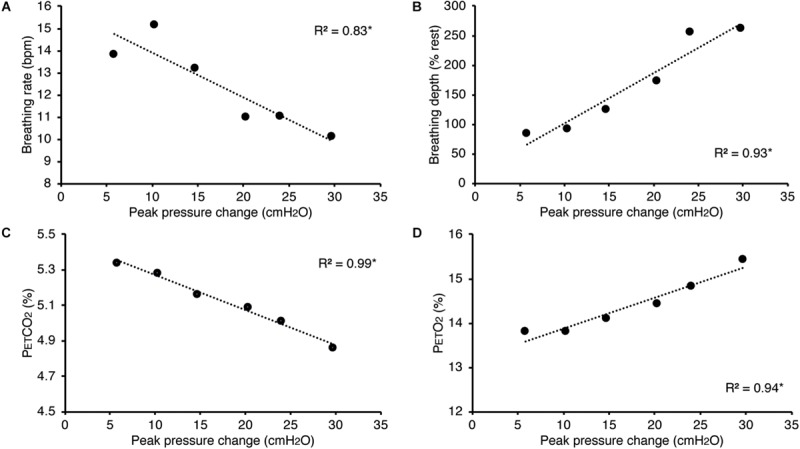
Research on how humans perceive sensory inputs from their bodies ("interoception") has been rapidly gaining momentum, with interest across a host of disciplines from physiology through to psychiatry. However, studying interoceptive processes is not without significant challenges, and many methods utilized to access internal states have been largely devoted to capturing and relating naturally occurring variations in interoceptive signals (such as heartbeats) to measures of how the brain processes these signals. An alternative procedure involves the controlled perturbation of specific interoceptive axes. This is challenging because it requires non-invasive interventions that can be repeated many times within a subject and that are potent but safe. Here we present an effective methodology for instigating these perturbations within the breathing domain. We describe a custom-built circuitry that is capable of delivering inspiratory resistive loads automatically and precisely. Importantly, our approach is compatible with magnetic resonance imaging (MRI) environments, allowing for the administration of complicated experimental designs in neuroimaging as increasingly required within developing fields such as computational psychiatry/psychosomatics. We describe the experimental setup for both the control and monitoring of the inspiratory resistive loads, and demonstrate its possible utilities within different study designs. This methodology represents an important step forward from the previously utilized, manually controlled resistive loading setups, which present significant experimental burdens with prolonged and/or complicated sequences of breathing stimuli.
关于人类如何感知来自身体的感觉输入(“内感受”)的研究正在迅速发展,从生理学到精神病学等众多学科都对此感兴趣。然而,研究内感受过程并非没有重大挑战,许多用于获取内部状态的方法主要致力于捕捉内感受信号(如心跳)中自然发生的变化,并将其与大脑处理这些信号的方式的测量联系起来。另一种方法涉及对特定内感受轴进行可控扰动。这具有挑战性,因为它需要非侵入性干预,这种干预可以在受试者体内多次重复,并且有效但安全。在这里,我们提出了一种在呼吸领域引发这些扰动的有效方法。我们描述了一种定制的电路,它能够自动且精确地施加吸气阻力负荷。重要的是,我们的方法与磁共振成像(MRI)环境兼容,能够按照计算精神病学/身心医学等发展领域日益增长的需求,在神经成像中进行复杂实验设计。我们描述了用于控制和监测吸气阻力负荷的实验设置,并展示了其在不同研究设计中的可能用途。这种方法相较于以前使用的手动控制阻力负荷设置有了重要进展,后者在长时间和/或复杂的呼吸刺激序列中会带来重大实验负担。